-p-500%20(1).png)
Dealing with ACB Receivables Management Harassment and Complaints
Need Help Reviewing Your Account?
Contact UsYou check your mail and there's a letter from "ACB Receivables Management" demanding payment on a debt you don't recognize. Or maybe your phone rings from an unfamiliar number, and a voice on the other end starts reciting an account number and a dollar amount. Either way, your stomach drops.
Many consumers face this exact situation, and the uncertainty is often worse than the debt itself. Is this company even real? Is the amount they're claiming accurate? And are the calls crossing a legal line into harassment?
This guide breaks down who ACB Receivables Management is, how to verify whether an agency contacting you is legitimate, what federal law actually protects you under the Fair Debt Collection Practices Act (FDCPA), and the concrete steps to take next.
Key Takeaways
- Verify ACB Receivables Management’s current status before responding; it has historically operated from Asbury Park, NJ, often on healthcare debt.
- Under the FDCPA, demand written debt validation and dispute inaccurate entries within 30 days of first contact.
- BBB and CFPB show no active complaint profile under ACB’s exact name, so confirm legitimacy through other channels.
- A cease-and-desist letter sent by certified mail legally limits how a collector may contact you.
- Forest Hill Management offers a compliance-focused path to resolve past-due accounts, regardless of the original agency.
Who Is ACB Receivables Management, Inc.?
ACB Receivables Management, Inc. is a third-party debt collection agency that has historically been associated with Asbury Park, New Jersey. Anyone contacted under this name should independently confirm the company's status before sending a single payment.
Company Background & Contact Information
Public records commonly list ACB's registered address as 19 Main St, Asbury Park, NJ 07712-7012.
Multiple phone numbers have been tied to this company over time. Collection agencies change contact details, relocate, or dissolve entirely, so treat any number you're given with caution. Ask for a callback number, then verify it independently rather than trusting caller ID.
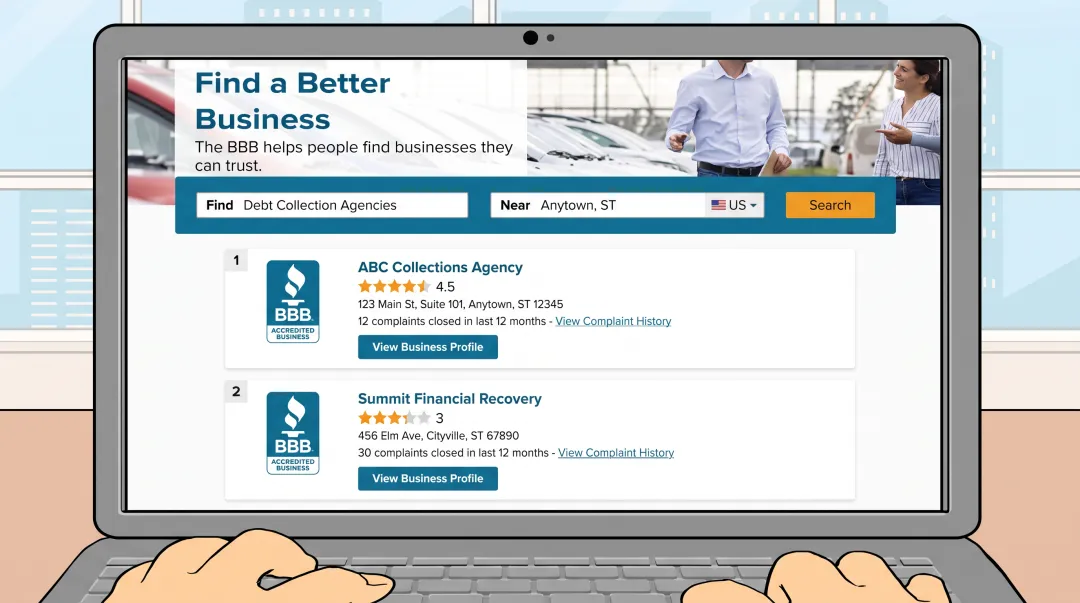
Some BBB listings referencing this business note returned mail and an inactive website — signals that raise real questions about whether the company is still actively collecting. Before making a payment or handing over personal details, confirm current standing directly through the BBB.
Who Does ACB Receivables Management Collect For?
ACB has been reported to primarily collect healthcare-related debt. Most consumers contacted under this name likely have an outstanding medical bill.
If someone calls claiming to represent ACB:
- Ask them to name the original creditor — the hospital, clinic, or medical provider tied to the account
- Request the original account number and date of service
- Don't confirm any personal or financial information until they've answered both
Medical debts are frequently sold or reassigned between collectors, so the name on the letter you received may not match the original biller at all.
Is ACB Receivables Management Legitimate? Reviewing Complaints and Business Status
Legitimacy isn't something you can judge from a single phone call or a letter with official-looking letterhead. Confirm it through official channels: BBB accreditation, state licensing records, and CFPB complaint history.
BBB and CFPB Complaint History
As of this writing, a direct search of the BBB's business database does not return an active profile for ACB Receivables Management under its exact name.
The CFPB's complaint search tool likewise shows zero complaints filed against the company using that precise name.
What this means in practice:
- Empty search results do not prove the company is legitimate
- Zero complaints do not mean the company is problem-free
- Alternate trade names often hide agencies from standard database searches
- A missing profile may mean the business closed, rebranded, or never registered under that name
Treat a lack of complaints as inconclusive, not reassuring.
Current Operating Status
Given the returned mail and deactivated website referenced in some records, ACB may no longer be actively collecting under this identity. Verify directly with the BBB before paying anything or sharing sensitive information.
Watch out for "zombie debt" scenarios — old accounts resold to other collectors, or even scammers, using a defunct company's name to sound credible. If someone claims to represent ACB or a "successor" to ACB:
- Request written validation before discussing payment
- Cross-check their name and license against your state's collection agency licensing database
- Confirm the debt amount and original creditor match what you actually owe
.webp)
Add one more check when the caller cites New Jersey: collection agencies there must keep a bond on file with the state's Collection Agency Bond Unit. Verify that bond before you trust the caller's claims or share personal details.
FDCPA Violations Reported Against ACB & Your Consumer Rights
Consumers researching debt collectors online often encounter complaints about tactics that, if true, would violate federal law. Whether or not those specific allegations apply to ACB, you still need to know what crosses the line and what rights you have no matter who's calling.
Common Complaints and Alleged FDCPA Violations
Behaviors that would violate the FDCPA include:
- Inflating the amount owed beyond what's contractually valid
- Failing to mark an account as disputed after a consumer formally disputes it
- Continuing contact after receiving a written cease request
- Skipping proper validation notices when first reaching out to a consumer
If any collector engages in these actions, they violate the Fair Debt Collection Practices Act, the federal law that restricts unfair, deceptive, or abusive collection tactics.
Your Rights Under the FDCPA
Regardless of which agency contacts you, federal law gives you specific, enforceable protections:
- Debt validation: Request it in writing within 30 days of first contact. Collection must pause until they provide proof of the debt.
- Cease-and-desist: A written stop-contact request ends further communication, except to confirm cessation or notify you of specific legal action.
- Prohibited tactics: No calls before 8 a.m. or after 9 p.m., abusive language, third-party debt discussions, or false threats of arrest.
According to the FTC's guidance on debt collection, these protections apply no matter how old the debt is or who currently owns it.
Steps to Take If ACB Receivables Management Contacts You
If you're contacted, resist the urge to pay immediately just to make it stop. Instead, work through these steps.
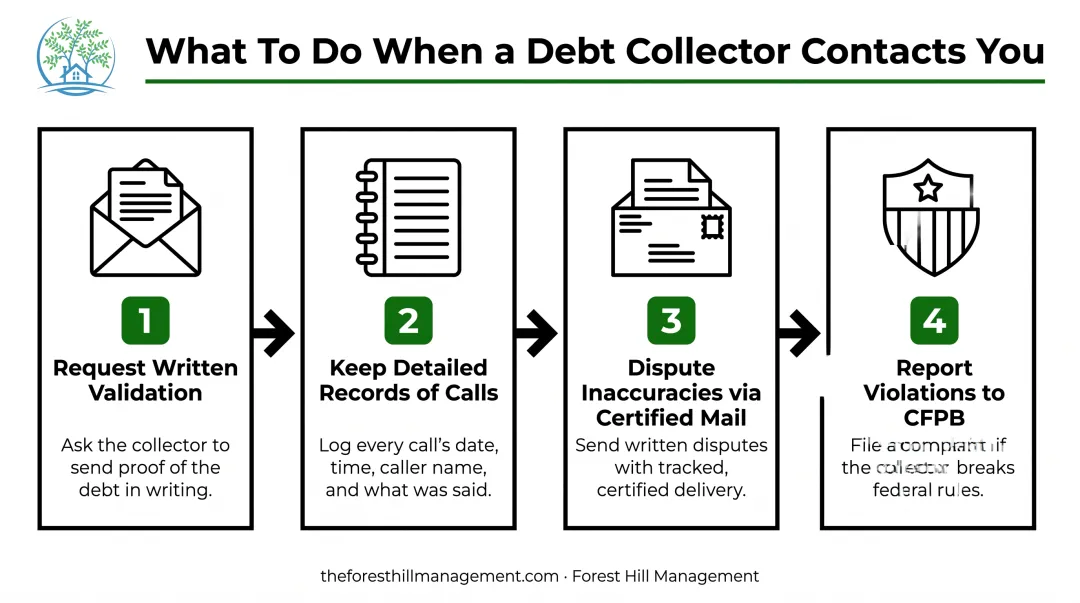
- Request written validation before making any payment. Don't rely on verbal reassurances from a caller.
- Keep detailed records — dates, times, caller names, and what was said on every call.
- Dispute inaccuracies in writing via certified mail. That paper trail shows the collector got your dispute if the account later hits your credit report or ends up in court.
- Report suspected violations to the CFPB and your state attorney general. The CFPB's guidance on old debt covers time-barred debt and what collectors can and can't legally do.
If a violation is confirmed, you may be entitled to actual damages plus statutory damages of up to $1,000 under federal law, along with court costs and attorney's fees in a successful case.
How Forest Hill Management Can Help You Resolve Past-Due Debt
Whether you're dealing with ACB, a similar agency, or an account passed between multiple collectors, past-due debt keeps hitting your credit and finances until you address it.
Forest Hill Management helps consumers resolve transferred past-due accounts with portfolio management built around your situation. Support typically includes:
- Reviewing account details and confirming the original creditor on the balance
- Setting flexible payment arrangements based on what you can actually afford
- Using a structured dispute process (and online form) if the account or amount looks wrong, or if you want collection contact to stop
- Sending written confirmation once the account is resolved for your records
If you're juggling multiple collection contacts or a messy account history, a quick consultation can clarify what you owe and which options fit. Learn more about the written dispute process or call (888) 471-0109 to speak with an advisor.
Frequently Asked Questions
Q. Are ACB Receivables Management services legitimate?
Verify current licensing and BBB status before you engage. Check the CFPB complaint database and your state attorney general’s records, and do not share personal or payment information until you confirm the collector is properly licensed.
Q. Who does ACB Receivables Management collect for?
ACB has most often been linked to healthcare debt. Require any caller to name the original creditor and medical provider on the account before you discuss payment or account details.
Q. How do I stop ACB Receivables Management from contacting me?
Send a written cease-and-desist letter by certified mail and cite your FDCPA rights. Certified delivery creates a paper trail and limits further contact to narrow legal exceptions.
Q. Can ACB Receivables Management sue me for an unpaid debt?
Yes, if the debt is valid and still within the statute of limitations. Validate the debt in writing first so you know whether legal risk actually applies to your account.
Q. What should I do if ACB reported inaccurate information to my credit report?
Dispute the entry in writing with the credit bureaus and with the collector. Attach supporting documents so the bureaus can correct or remove the inaccurate item.
Q. Is ACB Receivables Management still in business?
BBB records have noted possible inactivity, including returned mail and a deactivated website. Confirm the company’s status with the BBB before you send any payment.