-p-500%20(1).png)
Accounts Receivable on Financial Statements Explained
Need Help Reviewing Your Account?
Contact UsAccounts receivable (AR) is the money your customers owe you for goods or services you've provided but haven’t been paid for yet. On your financial statements, accounts receivable show where your business stands in terms of money owed by customers and its potential impact on cash flow management.
Knowing exactly how AR appears on financial statements helps you track your business’s liquidity, manage credit risk, and ensure you have enough cash to meet expenses.
For example, when you deliver products on credit, you record the amount as AR on the balance sheet as a current asset, reflecting future cash coming in. This visibility lets you plan better and avoid surprises.
Let’s explore precisely where and how accounts receivable show up on financial reports, and why it matters for your business stability.
Key Takeaways:
- Accounts receivable appear as a current asset on the balance sheet, showing money owed by customers expected within one year.
- It influences the income statement indirectly through revenue recognition and directly via bad debt expense, impacting net income.
- On the cash flow statement, increases in accounts receivable reduce cash inflows, while decreases indicate improved cash collections.
- Effective accounts receivable management improves cash flow, reduces risk, and strengthens customer relationships through clear policies and automation.
- Investing in accounts receivable automation software delivers faster collections, better accuracy, and a strong ROI by lowering costs and boosting productivity.
Where Accounts Receivable Appears on Financial Statements
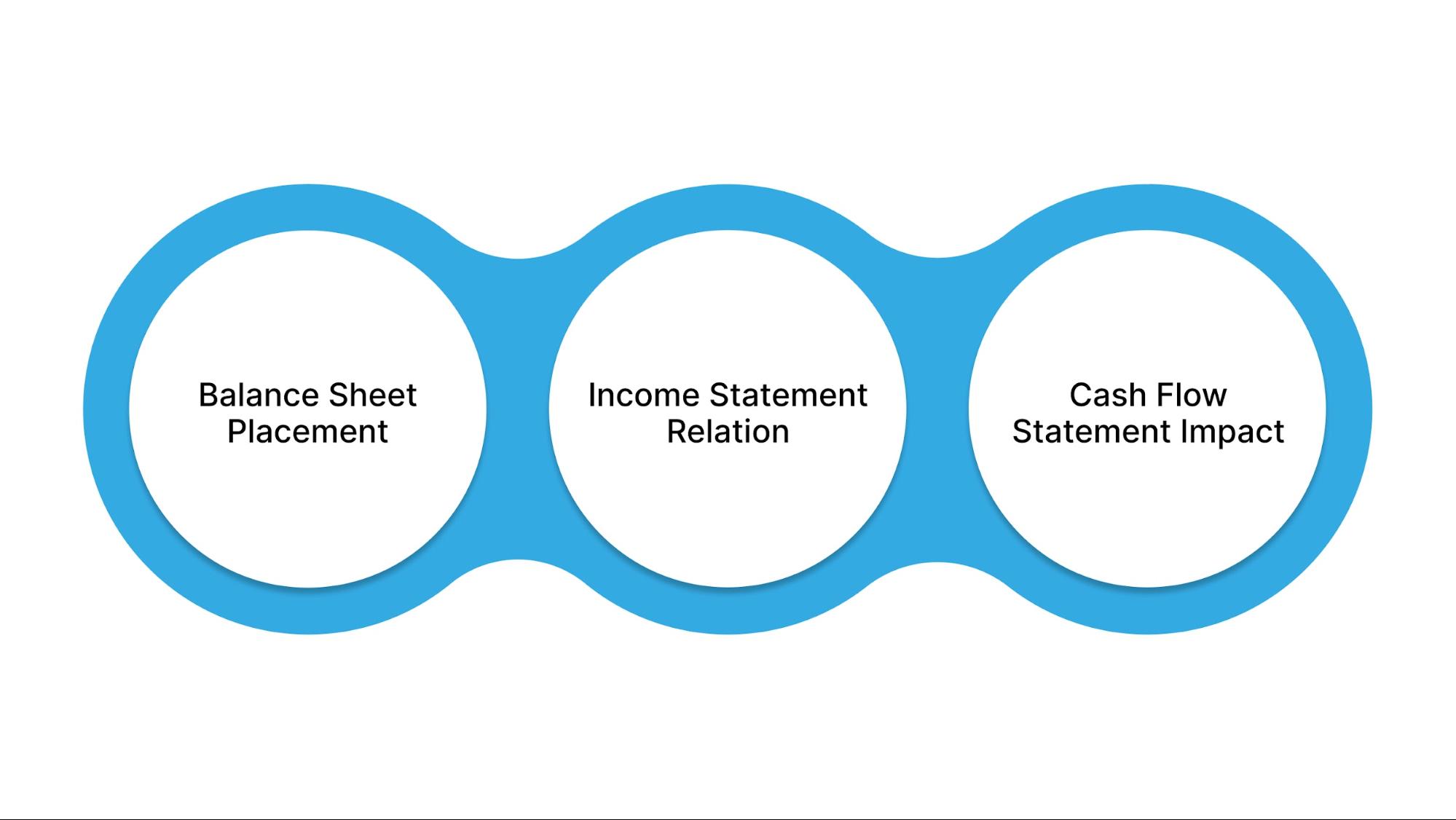
Accounts receivable primarily appear on the balance sheet but also influence the income statement and cash flow statement. Recognizing its correct placement reveals how it affects your business’s financial health.
Balance Sheet Placement
AR appears under current assets on the balance sheet. It usually ranks after cash and marketable securities because it's a short-term asset expected to convert into cash within a year.
The balance shows the gross amount owed by customers minus any allowance for doubtful accounts (bad debt reserve). This net realizable value reflects the expected collectible amount.
Income Statement Relation
Though AR itself does not appear on the income statement, the revenue that gave rise to accounts receivable does. The income statement shows sales revenue recognized when earned, including credit sales leading to AR.
Cash Flow Statement Impact
AR affects the operating activities section of the cash flow statement. Increases in AR reduce cash flow (since more sales are on credit).
While decreases improve cash flow when customers pay their dues, this impact highlights cash management efficiency.
Also Read: Calculating and Managing Days in Accounts Receivable
Accounts Receivable on the Balance Sheet Detailed
The balance sheet highlights accounts receivable as a vital current asset, showing amounts owed by customers expected to be collected soon. Accurate reporting ensures clarity in liquidity evaluation and risk management.
Current Assets Section
Accounts receivable is listed with other easily convertible assets. In order, it typically follows cash and cash equivalents and precedes inventory.
This ordering helps stakeholders evaluate how quickly the company can free cash from assets.
Gross vs. Net Accounts Receivable
The balance sheet usually presents:
- Gross Accounts Receivable: Total amount owed by customers before deductions.
- Allowance for Doubtful Accounts: Estimated amount unlikely to be collected.
- Net Accounts Receivable: Gross minus allowance, representing realistic collectible value.
This differentiation is essential for investors and lenders to assess the health of receivables.
Supporting Schedules and Disclosures
Companies often provide aging reports showing how long receivables have been outstanding.
They may also disclose credit quality policies, steps for bad debt management, and customer concentration risks. These offer transparency about collectability and potential risks.
Also Read: Difference Between Trade Receivables and Accounts Receivable
How Accounts Receivable Affects the Income Statement
Accounts receivable itself does not appear directly on the income statement, but its impact is felt through revenue recognition and related expenses.
Understanding this connection helps you see how credit sales influence your business's profitability.
Revenue Recognition and AR
When you make a sale on credit, you recognize revenue at the point of sale, not when cash is received. This means accounts receivable increase as your sales grow. Revenue is recorded on the income statement, reflecting the value of goods or services you delivered.
Recording Bad Debt Expense
Some receivables may never be collected. To account for this, businesses estimate bad debt expense based on historical data or aging analysis. This expense reduces net income and is recorded on the income statement.
Collection Costs and Impact
Costs associated with collecting receivables, such as administrative expenses or outsourced collection fees, also appear on the income statement. These reduce overall profit but are necessary to manage your accounts receivable effectively.
Monitoring revenue and expenses related to accounts receivable gives you a clear picture of your business’s financial performance.
For tailored guidance on managing your portfolio and improving your cash flow, contact The Forest Hill Management today.
Also Read:
How Accounts Receivable Impacts the Cash Flow Statement
Accounts receivable plays a significant role in your company's cash flow, which measures how money moves in and out of your business. On the cash flow statement, changes in accounts receivable affect the operating activities section.
When your accounts receivable balance increases, it means more sales have been made on credit, but the cash hasn’t been collected yet.
This increase reduces your cash inflow because more money is tied up in unpaid invoices. Therefore, an increase in AR appears as a cash outflow or deduction from net income in the cash flow statement.
Conversely, when accounts receivable decrease, it indicates customers have paid their outstanding debts. This collection boosts your available cash and appears as a cash inflow or addition on the cash flow statement.
Why This Matters for Your Business
Cash flow management is crucial to paying bills, salaries, and investing in growth. If your cash is tied up in accounts receivable for too long, it can strain your liquidity even if your business shows profits on paper.
Tips to Improve Cash Flow via AR Management
- Implement clear credit policies to avoid excessive credit sales.
- Use timely invoicing and follow-up reminders to speed up collections.
- Consider factoring or financing options to convert AR into immediate cash.
- Monitor Days Sales Outstanding (DSO) to measure how long it takes to collect payments.
Managing your accounts receivable efficiently is essential to maintaining healthy cash flow and ensuring your business can meet its financial commitments.
Allowance for Doubtful Accounts: Protecting Your Business from Unpaid Debts
When your business sells on credit, not every customer pays in full or on time. To account for this, companies create an Allowance for Doubtful Accounts (also called a bad debt reserve).
This is a contra-asset account that reduces your total accounts receivable balance on the balance sheet to reflect only the amount you realistically expect to collect.
A contra-asset account is an account that offsets a related asset account on the balance sheet; in this case, it reduces accounts receivable to reflect the amount realistically expected to be collected.
Why Is This Important?
The allowance provides a more accurate view of your business’s financial health. It helps avoid overstating assets and aligns your expenses with the revenues they generated, following accounting principles like matching.
How Is It Calculated?
Businesses use different methods to estimate the allowance, including:
- Percentage of Sales: Applying a fixed percentage of total credit sales based on historical bad debt experience.
- Aging of Accounts Receivable: Categorizing receivables by how long they’ve been outstanding and applying higher percentages to older debts.
- Risk Classification: Assigning risk scores to customers based on their payment history and current standing.
For example, if your total AR is $50,000 and you estimate a 2% bad debt rate, you’d create an allowance of $1,000. This reduces your AR net value to $49,000 on the balance sheet.
Accounting for the Allowance
When recognizing this allowance, you record a bad debt expense on the income statement, reducing your net income.
If an account is later deemed uncollectible, it is written off by reducing both the allowance and AR balances, but no additional expense is recorded.
Keeping an accurate allowance protects your business from surprises and improves financial reporting accuracy.
Need help estimating and managing your allowance for doubtful accounts? Contact The Forest Hill Management for expert advice tailored to your business.
Common Challenges in Managing Accounts Receivable—and How to Overcome Them
Managing accounts receivable (AR) is vital for your business's cash flow, but it brings challenges that can cause delays, errors, and lost revenue.
Recognizing these challenges and applying practical solutions will safeguard your financial health.
1. High Days Sales Outstanding (DSO)
When customers take too long to pay, your cash inflows slow, increasing working capital needs.
Solution: Offer early payment discounts and send automated payment reminders. Monitor DSO regularly to spot rising trends early.
2. Inaccurate or Delayed Invoicing
Paper-based or manual invoicing leads to errors, misplaced bills, and longer payment cycles.
Solution: Use electronic invoicing systems integrated with your sales and accounting software to ensure timely and accurate invoicing.
3. Lack of Clear Credit Policies
Inconsistent credit terms or poor assessment of customer creditworthiness leads to uncollectible receivables.
Solution: Create clear credit policies specifying who qualifies for credit and the terms. Regularly evaluate customers’ payment histories.
4. Inefficient Dispute and Payment Resolution
Unresolved billing disputes delay payments and strain client relationships.
Solution: Establish a defined process for handling disputes quickly and keep communications open.
5. Limited Resource and Staff Expertise
Small teams juggling multiple tasks may lack AR management skills or capacity.
Solution: Provide staff training, automate routine tasks, and consider outsourcing collections for complex cases.
6. Compliance and Documentation Issues
Failure to maintain proper records risks legal penalties and audit problems.
Solution: Adopt software with audit trails, stay updated on regulations, and employ standard documentation procedures.
Taking proactive steps to address these common AR management challenges will help improve your cash flow and business stability.
Also Read: Portfolio Management Steps and First Step Explained
Best Practices for Managing Accounts Receivable
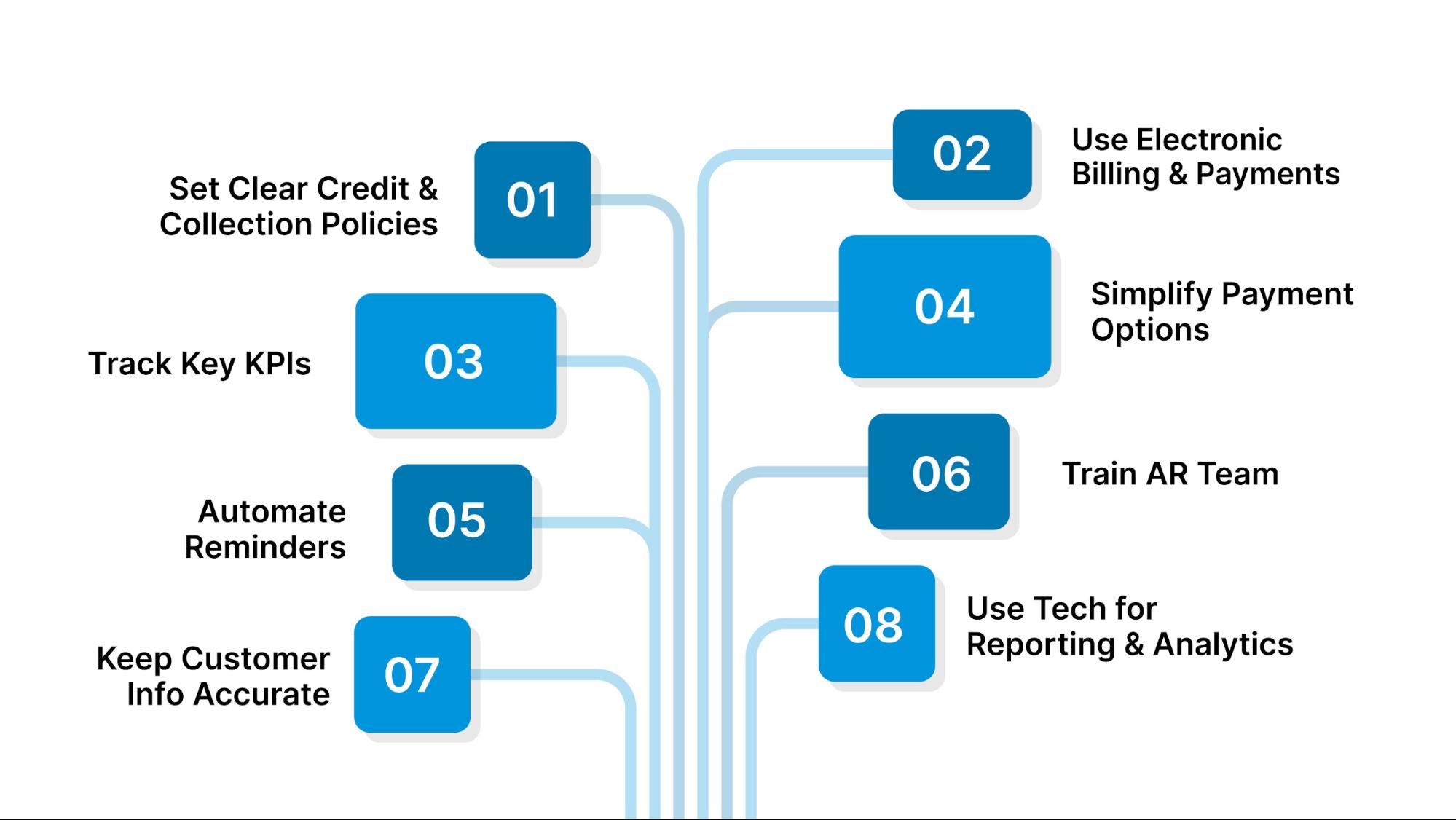
Managing accounts receivable (AR) efficiently is key to keeping your business financially healthy. It ensures steady cash flow, reduces bad debts, and strengthens customer relationships. Here are proven best practices to improve your AR management:
1. Establish Clear Credit and Collection Policies
Set clear rules on who qualifies for credit and how much credit to extend. Define payment terms upfront and stick to them. Establish proactive collection procedures focusing on friendly reminders before payments are overdue.
2. Use Electronic Billing and Online Payments
Move away from paper invoices and checks. Use electronic invoicing and online payment portals to make it easy for customers to pay promptly. Automated systems reduce errors and speed up cash collection.
3. Monitor Key Performance Indicators (KPIs)
Track metrics like:
- Days Sales Outstanding (DSO),
- Average Days Delinquent (ADD),
- and Collection Effectiveness Index (CEI)
To gauge how quickly you collect payments and identify potential issues early.
4. Make Payment Easy and Accessible
Offer multiple payment options like credit cards, ACH, mobile wallets, and online portals. The simpler the process, the more likely customers will pay on time.
5. Automate Follow-ups and Reminders
Automated payment reminders and follow-up emails help reduce late payments without manual effort. Tailor communication for different customer segments to maximize effectiveness.
6. Train Your AR Team Regularly
Ensure your accounts receivable staff is up-to-date on procedures, dispute handling, and collection techniques. Well-trained staff improve efficiency and customer communication.
7. Maintain Accurate Customer Information
Keep your customer database current with updated contact and billing info. Accurate records avoid delays caused by lost or misdirected invoices.
8. Leverage Technology for Reporting and Analytics
Use AR management software for real-time dashboards, aging reports, and predictive analytics. Data-driven insights empower better cash flow decisions.
Effective accounts receivable management can transform your business’s cash flow and reduce financial stress.
Also Read: Accounts Receivable Management Tips and Guide
Conclusion
Accounts receivable plays a critical role in your financial statements, especially the balance sheet. Managing AR well improves cash flow, profitability, and business stability. Regular review and use of technology make tracking easier.
When facing collection challenges, professional help is wise. Forest Hill Management offers solutions tailored for businesses managing receivables and concerned about financial health.
Start managing your portfolio proactively today!
Contact The Forest Hill Management for expert guidance and technology-backed solutions.
Frequently Asked Questions (FAQs)
1. What is accounts receivable, and why is it important for a business?
Accounts receivable is the money owed to a company by customers for sales made on credit. It’s vital for maintaining healthy cash flow and supporting ongoing operations.
2. Where does accounts receivable appear on financial statements?
Accounts receivable appear on the balance sheet under current assets. It reflects money expected to be received within one year.
3. Does accounts receivable show up on the income statement?
No, but it affects revenue because sales on credit increase accounts receivable. Bad debt expenses related to uncollected receivables do appear on the income statement.
4. What is the allowance for doubtful accounts?
It’s a reserve for estimated uncollectible receivables, reducing the accounts receivable balance to its net realizable value.
5. How can businesses speed up accounts receivable collections?
By setting clear credit policies, sending prompt invoices, offering multiple payment options, and using automated reminders.
6. What are common mistakes in accounts receivable management?
Delayed invoicing, poor follow-up on overdue accounts, manual errors, and weak credit assessment.
7. How does accounts receivable affect cash flow?
An increase in accounts receivable means money is tied up in unpaid invoices, reducing cash flow. Faster collections improve cash available for operations.
8. Can automation improve accounts receivable management?
Yes, automation accelerates invoicing, collections, and cash application and provides real-time metrics, enhancing efficiency and reducing errors.