-p-500%20(1).png)
Chase Debt Collection: What You Need to Know

Need Help Reviewing Your Account?
Contact UsA letter from Chase collections, an unfamiliar phone number, a new line item on your credit report, or a court summons can all trigger the same panic. Understandably so. Each of these situations requires a different response, and getting it wrong can cost you money or legal protections.
The right move depends on two things: who currently owns the debt and how far along the collection process has gone. A debt still held by Chase works differently than one sold to a third-party buyer. A collection call is a different animal than a lawsuit.
This guide walks through how Chase collections typically progress, your rights under federal law, ways to verify and resolve the debt, and what to do if you're served with a lawsuit. Collection timelines and legal deadlines vary by account type and state, so treat this as a starting point, not a substitute for advice from a licensed attorney about your specific situation.
Key Takeaways
- Chase may collect in-house, assign the account, or sell the debt to a buyer
- Credit reporting windows and lawsuit deadlines expire on different timelines
- Verify every debt in writing, save all documents, and never ignore a summons
- Settlement, hardship plans, counseling, and legal defense affect cost and credit differently
How Chase Debt Collection Typically Progresses
Not every past-due Chase account follows an identical path, but most move through recognizable stages.
The typical sequence looks like this:
- Missed payment — You miss a payment by the due date, often triggering a late fee
- Delinquency — The account stays unpaid for weeks or months; under Chase's cardmember agreement, a missed minimum payment is an event of default
- Charge-off — Chase writes off the balance as a loss for accounting purposes
- Collection activity — Chase, an internal collections team, a third-party agency, or a debt buyer attempts to collect
- Credit reporting — The delinquency and any collection status appear on your credit reports
- Litigation — In some cases, a lawsuit follows
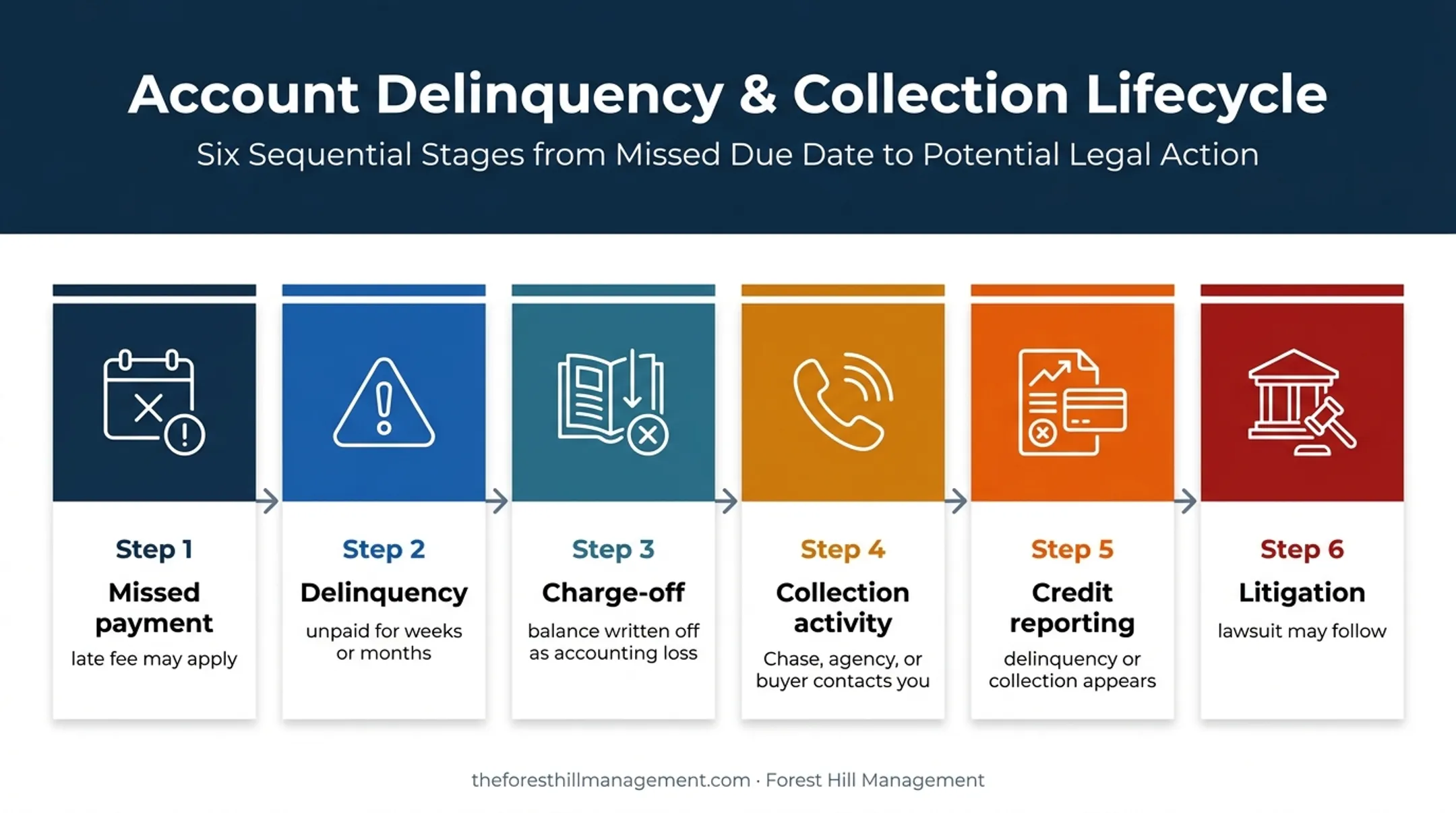
There's no single nationwide rule dictating exactly when Chase moves an account to collections. Bank regulatory guidance points to 180 days past due as a common benchmark for charge-off on open-end retail credit, but this is supervisory policy, not a guarantee for any individual account.
Who's Actually Contacting You?
Your rights and next steps depend on who is contacting you:
- Chase directly, still collecting on its own account
- An internal Chase collections department, working the same original debt
- A third-party collection agency, hired to collect on Chase's behalf
- A debt buyer, which purchased the account and now claims ownership
Whoever reaches out, a charge-off does not erase the debt. Chase still treats the balance as owed after the internal write-off: charge-off is an accounting event, not forgiveness.
Credit Reporting vs. Statute of Limitations
These two clocks run independently, and confusing them is a common mistake.
The credit reporting period under the Fair Credit Reporting Act generally runs seven years from the date of the delinquency that led to the charge-off or collection.
The statute of limitations (how long a creditor or collector has to sue you) is set by state law. It varies by debt type and other case-specific factors, according to the CFPB.
A debt can be time-barred (too old to sue over) while still legally collectible through calls and letters. Don't assume an old debt is harmless just because a lawsuit isn't likely.
Verify the Debt and Identify Who Owns It
Before you pay anyone or agree to anything, confirm the debt is real, accurate, and actually yours.
Run through this checklist:
- Compare the collection notice against your old Chase statements — does the account number and balance match?
- Identify exactly who is contacting you: Chase, an agency, or a debt buyer
- Confirm the collector's contact information independently (don't rely solely on a number in a text message or email)
- Never send sensitive personal or financial information through an unverified link or caller request
Request Written Validation
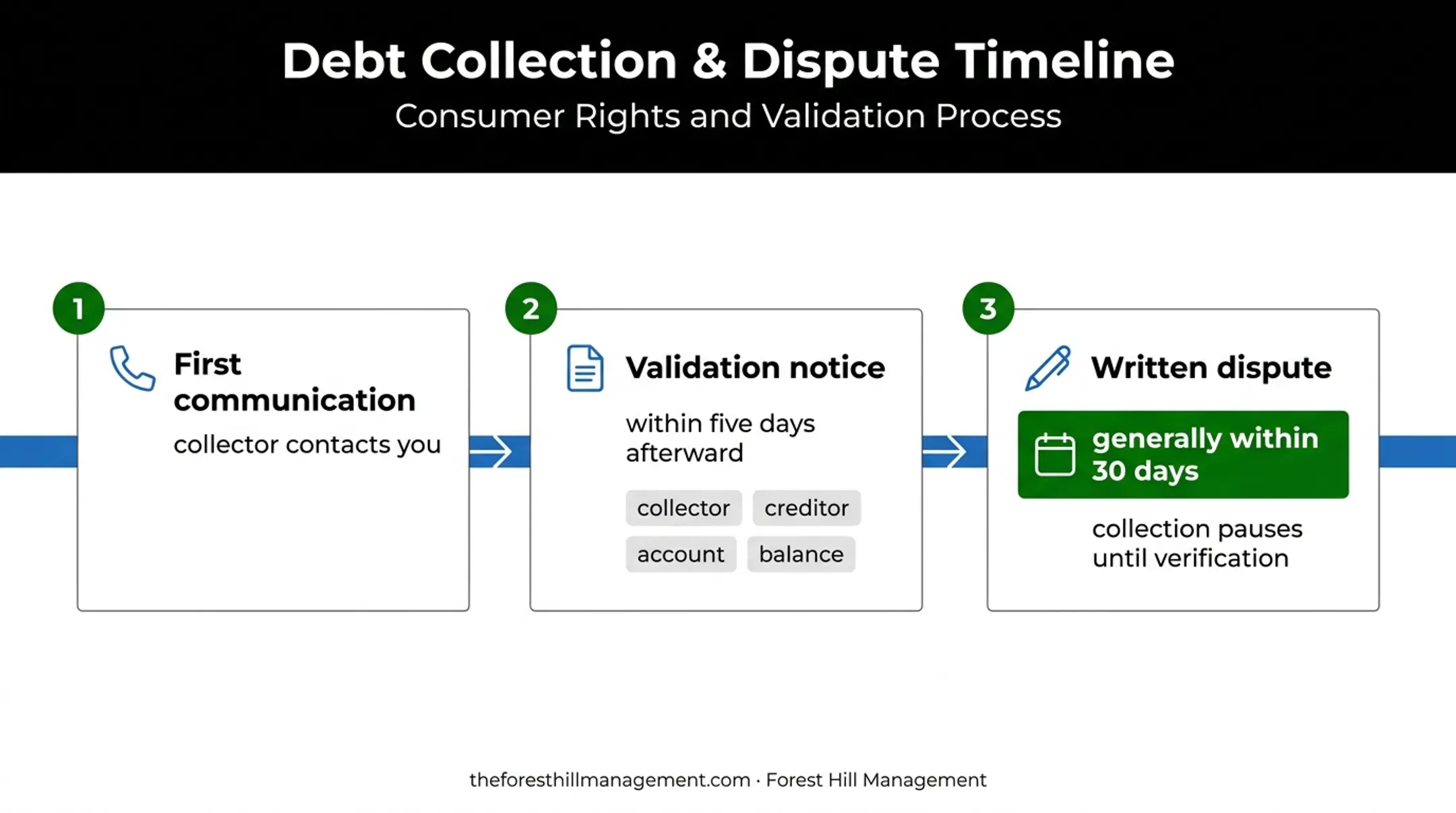
Under Regulation F (the CFPB's debt collection rule), a collector must provide validation information in its first communication or within five days afterward. That notice should include:
- Collector name and current creditor
- Account number
- Itemized breakdown of the balance
You generally have 30 days after receiving that notice to dispute the debt in writing. A timely written dispute requires the collector to pause collection until it sends verification.
Keep Complete Records
Save copies of:
- Collection letters and envelopes (postmarks matter)
- Emails and text messages
- Call logs and notes from phone conversations
- Account statements and payment confirmations
- Credit reports showing the tradeline
This record becomes essential if you need to dispute the debt, negotiate a settlement, file a complaint, or defend yourself later.
Your Rights When Chase or a Collector Contacts You
Federal law limits what collectors can say and do, but the specific protections depend on who's calling.
FDCPA Protections
The Fair Debt Collection Practices Act generally covers third-party collectors and debt buyers, but not Chase collecting its own debt under its own name. When it does apply, covered collectors cannot:
- Call before 8 a.m. or after 9 p.m.
- Use threats, harassment, or deceptive statements
- Contact you at work if they know your employer prohibits it
- Continue contacting you directly once they know you're represented by an attorney
If Chase itself is collecting, other consumer protection laws and Chase's own account terms may still apply, so read any notices carefully.
Those contact limits are only part of the picture—you can also set the rules for how you're reached.
Controlling Communication
You can request written-only communication or dispute inaccurate information at any point. You can also send a cease-communication request. Stopping calls doesn't erase the debt and doesn't necessarily prevent a lawsuit.
Fixing Credit Report Errors
If a collection account is wrong, duplicated, or tied to someone else's debt, you have the right to dispute it with the credit bureau and the company that reported it (the furnisher). Furnishers generally have 30 days to investigate and respond.
Spotting a Scam
Some "collectors" aren't legitimate. Watch for:
- Demands for immediate payment via gift cards or wire transfer
- Threats of arrest or police involvement
- Refusal to provide a mailing address or written proof of the debt
- Pressure for your full Social Security number before they validate the debt
If something feels off, you can report suspected fake debt collectors to both the FTC and the CFPB. A complaint to the CFPB, FTC, or your state attorney general won't resolve the debt on its own, but it creates a record and can trigger an investigation.
Ways to Respond and Resolve Chase Debt
Once you've verified the debt, you have several realistic paths forward. The right option depends on your finances and how far collection has already progressed.
Negotiating a Settlement
If you go this route:
- Assess what you can realistically afford before making an offer
- Never promise more than you can pay
- Keep all communication factual and documented
- Get every agreement in writing before you send money
Put these terms in the written agreement:
- Settlement amount and payment schedule
- How interest and fees will be handled
- How the account will be reported afterward
Chase notes that a settlement may look less favorable on a credit report than paying in full. Your overall credit history still drives the score impact.
Don't Overlook Tax Consequences
If part of your debt is forgiven, the IRS may treat that canceled amount as taxable income. Creditors typically issue a Form 1099-C for cancellations of $600 or more. There are exclusions, including insolvency, reported using Form 982, but confirm your specific situation with a tax professional before assuming a settlement is tax-free.
Getting Help Managing Past-Due Accounts
If you're juggling multiple past-due balances, a portfolio servicer can help you review documentation, set a realistic payment plan, and keep communication organized. Forest Hill Management works with consumers on transferred past-due accounts through payment plans, account records, and dispute support. Results depend on your balance and circumstances—no servicer can guarantee a specific outcome.
Red Flags in Debt-Relief Offers
Be cautious of any company that:
- Guarantees results before reviewing your case
- Pressures you to stop communicating with your creditor
- Charges upfront fees before performing any service
- Won't put its terms in writing
Check licensing, read the fee structure closely, and confirm your cancellation rights before signing anything.
If You Receive a Chase Debt Lawsuit
A lawsuit is not the same as a collection letter, and treating it that way is one of the costliest mistakes consumers make.
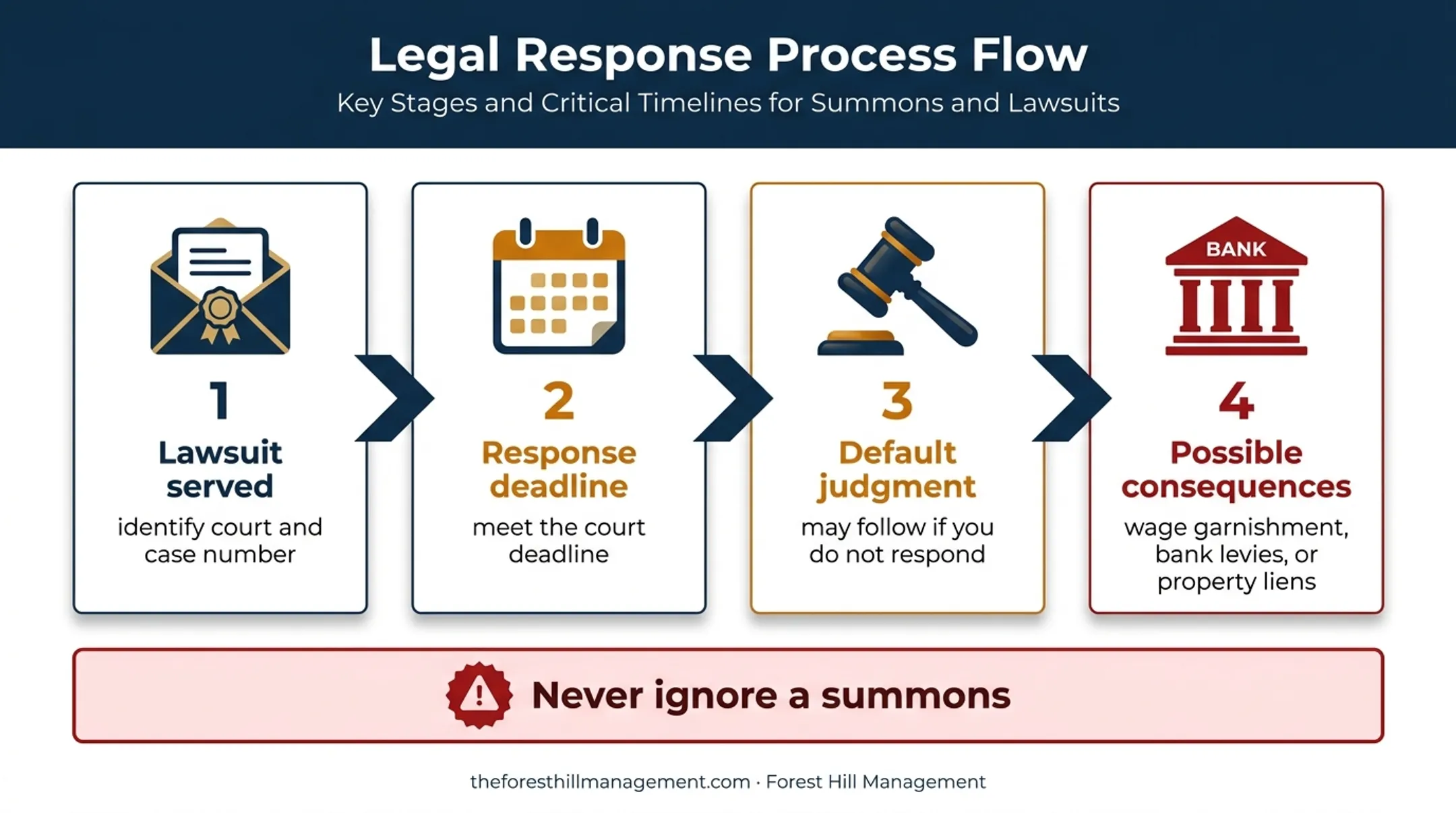
The moment you're served, identify:
- The court and case number
- The plaintiff (Chase, a collector, or a debt buyer)
- The alleged balance
- The date you were served
- Your response deadline
Why the Deadline Matters
Ignoring a lawsuit doesn't make it go away. If you don't respond by the deadline, the court can enter a default judgment against you.
That judgment can lead to wage garnishment, bank account levies, or property liens, depending on your state. Never rely on a verbal promise from a collector's attorney that "it'll be fine." Get everything in writing and meet your court deadline regardless.
What to Gather Before You Respond
- The complaint itself
- Account statements and payment history
- Any collection letters you received
- Identity theft records, if the debt isn't yours
- Evidence disputing the amount owed or account ownership
How to File Your Response
File a timely written response following your court's specific rules, or get a qualified attorney to do it for you. Filing procedures differ by state and even by county, so don't assume instructions for one jurisdiction apply to yours.
Settlement talks can still happen after a lawsuit starts. If you reach an agreement, make sure it explicitly addresses:
- Dismissal of the case
- Payment terms
- Release of the claim
- What happens if a payment is missed
If you're facing a tight deadline, garnishment risk, identity theft, or a debt you genuinely dispute, talk to a licensed attorney or a legal-aid organization. This article is educational information, not legal advice.
Frequently Asked Questions
What happens if my Chase credit card goes to a collection agency?
Chase may assign or sell your account. Under the FDCPA, the new collector must identify itself and send debt validation details within five days of first contact. Verify the account, check your credit report, and respond promptly to any notices.
How long before Chase sends a credit card account to collections?
There's no single guaranteed timeline. It depends on delinquency status, charge-off timing, and your specific account terms. Review your cardmember agreement and any written notices you receive.
What happens if Chase sues me for credit card debt?
Review the summons carefully, note your response deadline, and file the required answer or get legal help. Ignoring the lawsuit can lead to a default judgment against you.
How can I settle my Chase credit card debt?
Verify the debt first, then assess what you can realistically afford. Negotiate in writing, get the settlement terms documented, and consider both credit and tax consequences before finalizing.
Will settling with a collection agency hurt my credit?
Settlement usually reports as “settled” rather than “paid in full,” which can weigh more on your score than full payment. How much it hurts still depends on your overall credit history.
Does Chase ever forgive credit card debt?
Full forgiveness is rare. Most resolutions involve hardship programs or negotiated settlements for less than the full balance. Always confirm terms in writing and check for potential tax reporting before agreeing.