-p-500%20(1).png)
How to Negotiate Credit Card Debt: Complete Guide
Need Help Reviewing Your Account?
Contact UsCredit card debt negotiation can lower your monthly payment, reduce interest, waive fees, or in some cases reduce the total balance you owe. But there's a catch: creditors aren't required to accept any offer you make. Outcomes depend on your account status, your documented hardship, the creditor's internal policy, and your actual ability to pay.
Many people confuse two very different paths. Requesting hardship assistance or a structured payment plan is not the same as negotiating a lump-sum settlement for less than you owe. The second option can affect your credit report and, in some cases, trigger a tax bill on the forgiven amount.
This guide walks through assessing your readiness, building an offer, contacting the right department, documenting any agreement, spotting scams, and weighing alternatives before you commit to a strategy.
Key Takeaways
- Contact your card issuer early—before collections—and state exactly what you can afford.
- Prepare a full financial picture and a specific dollar offer, not a vague ask for help.
- Never treat a phone rep's promise as binding. Get written terms before you pay a dime.
- Weigh direct negotiation against hardship plans, DMPs, consolidation, or bankruptcy based on repayment ability and credit goals.
How to Negotiate Credit Card Debt
Negotiating credit card debt follows a predictable sequence. Skip a step, and you risk an offer that gets rejected or an agreement that doesn't actually protect you.
Step 1: Assess Your Debt and Financial Position
Start by listing every card you owe money on. For each one, record:
- Current balance and interest rate
- Minimum payment and due date
- Payment status (current, late, charged-off)
- Whether the account is still with the original issuer or has moved to a collector
Compare your total required payments against your income and essential expenses. This tells you whether you need a lower rate, waived fees, a temporary hardship pause, a longer payment plan, or a settlement for less than the balance. Decide the maximum amount you can safely commit to before you pick up the phone.
Step 2: Prepare Your Hardship Explanation and Negotiation Offer
Creditors want specifics, not generalities. Be ready to describe:
- What happened (job loss, reduced hours, medical bills, divorce, or another documented event)
- When it started and whether it's temporary or ongoing
- What you can realistically pay, and whether that's a lump sum or installments
The CFPB recommends explaining why the minimum payment is unaffordable, how much you can pay instead, and when you expect to resume normal payments.
Gather only the records you need. Keep sensitive details like full account numbers protected until you verify who you're speaking with. Set a fallback offer that still leaves room for rent, utilities, and other essentials.
Step 3: Contact the Correct Creditor or Account Representative
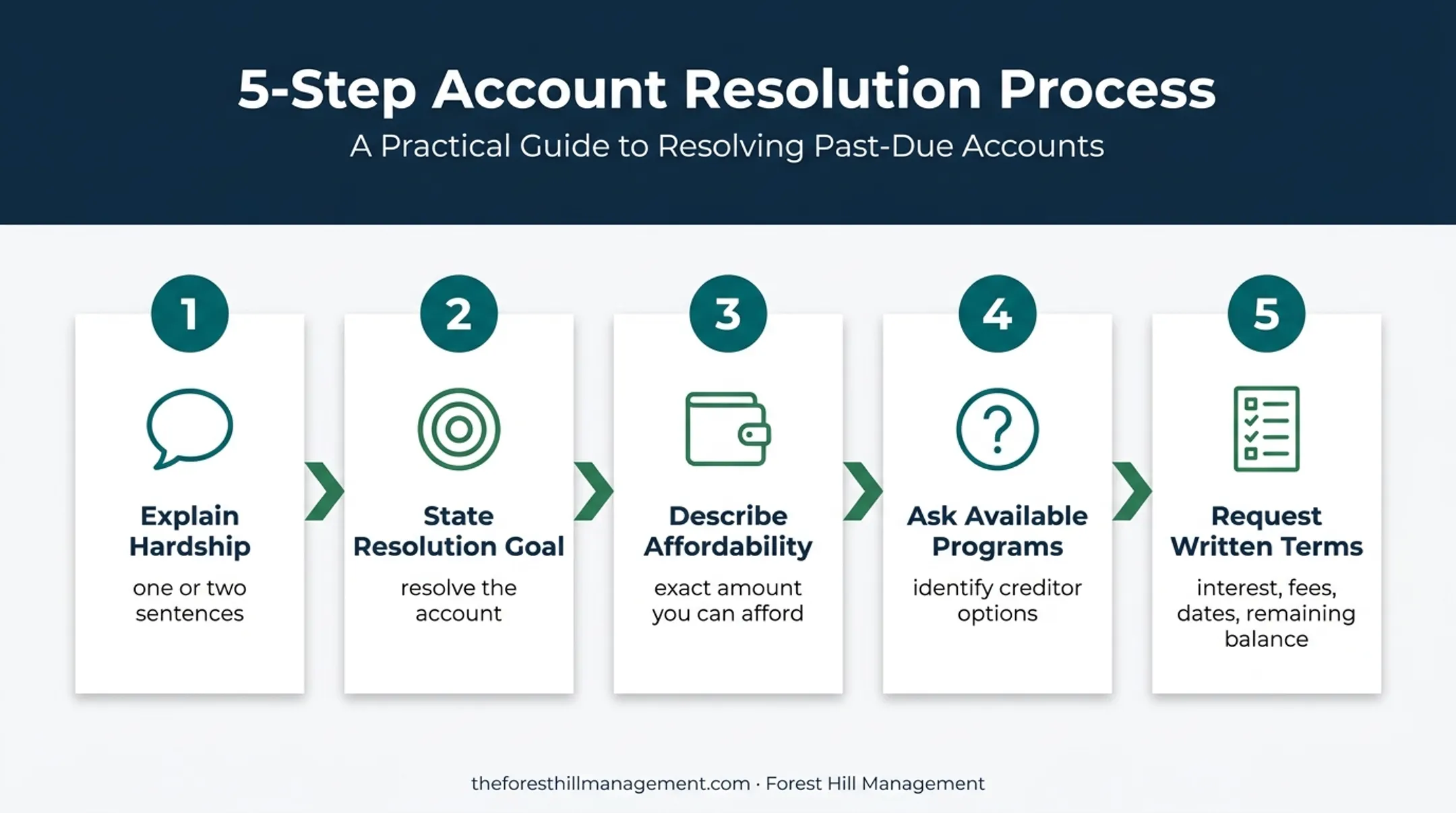
Use the phone number printed on your card or billing statement, not one from an unsolicited call or text. Ask specifically for the hardship, loss-mitigation, or settlement department. During the call:
- Explain your hardship in one or two sentences
- State that you want to resolve the account
- Describe exactly what you can afford
- Ask which programs are available
- Request that any offer specify the interest, fees, payment dates, and effect on the remaining balance
Log the call details before you hang up:
- Representative's name
- Date and time
- Reference or account number
If the debt sits with a receivables company, get the same details from them. Confirm the original creditor first—Forest Hill Management lists that information on account letters and can help you verify who you originally owed before you negotiate terms.
Step 4: Review the Agreement and Complete the Resolution
Before you send a single payment, confirm the written agreement lists the creditor or collector, account number, total amount, payment schedule, deadline, and whether the payment satisfies the account in full or just settles part of it. Then:
- Keep every statement, confirmation, and call log
- Pay exactly as agreed, on the agreed dates
- Check later statements and your credit report to confirm the balance updates correctly
Do not send payment until the written terms match what you agreed on the call.
When Should You Negotiate and What You Need Before Starting
Negotiation makes sense when your minimum payments are unaffordable, a temporary hardship has interrupted repayment, or you have funds available for a documented settlement. Skip negotiation if a lower rate or structured payment plan already makes the debt manageable.
Account Status and Timing
Your options shift depending on where the account stands:
- Current accounts may qualify for rate reductions or hardship programs, but rarely for settlements.
- Recently delinquent accounts often have more flexibility since the issuer wants to avoid a charge-off.
- Charged-off accounts have already been written off the issuer's books, but that does not erase the debt. The CFPB notes that charged-off balances typically move to internal recovery, third-party collection, litigation, or debt sale.
- Collection accounts may offer more settlement room, but require extra verification steps.
Check your creditor's current policies before assuming any timeline works in your favor.
Financial Preparation
Build a written budget before you negotiate anything. Include:
- Take-home income
- Essential expenses (housing, utilities, food, healthcare, taxes)
- Available cash and assets
- All outstanding debts
- A sustainable monthly amount you can commit to
Never offer money that's earmarked for priority obligations. A settlement that costs you your electricity bill isn't a win.
Information and Verification Checklist
Gather these items before you call:
- Account statements and account numbers
- Payment history
- Hardship documentation
- Creditor or servicer contact details
Verify who you're talking to before sharing a Social Security number, bank account, or payment information by phone.
If Forest Hill Management or another receivables organization is managing your account, use only verified official contact information—not a number from a text. Get every resolution term in writing before you agree.
Common Mistakes and Troubleshooting Problems During Negotiation
Failed negotiations usually trace back to an unrealistic offer, incomplete preparation, the wrong department, or agreeing to terms nobody fully explained.
The Creditor Rejects the Offer or Won't Reduce the Balance
This usually happens because the account is current, the creditor doesn't offer settlements on that type of account, the offer is too low, or the rep simply doesn't have the authority to approve it. If this happens:
- Ask about a hardship plan, lower rate, or fee waiver instead
- Request a supervisor review
- Follow up later—escalation does not guarantee a different answer
The Proposed Payment Is Unaffordable or the Agreement Is Unclear
Before accepting anything, confirm:
- The offer includes all fees and interest
- The payment schedule fits your budget
- What happens if you miss a payment (some agreements cancel after one missed date)
Don't let pressure tactics rush you into signing something you haven't read carefully.
The Account Is Sent to Collections, a Lawsuit Is Threatened, or a Caller Seems Suspicious
Verify the debt and the collector before paying anything. The FTC outlines your rights under the FDCPA, including protection from harassment and false threats. If you receive actual court papers, respond by the deadline listed. The CFPB warns that ignoring a lawsuit, even on an old debt, can still lead to a judgment against you.
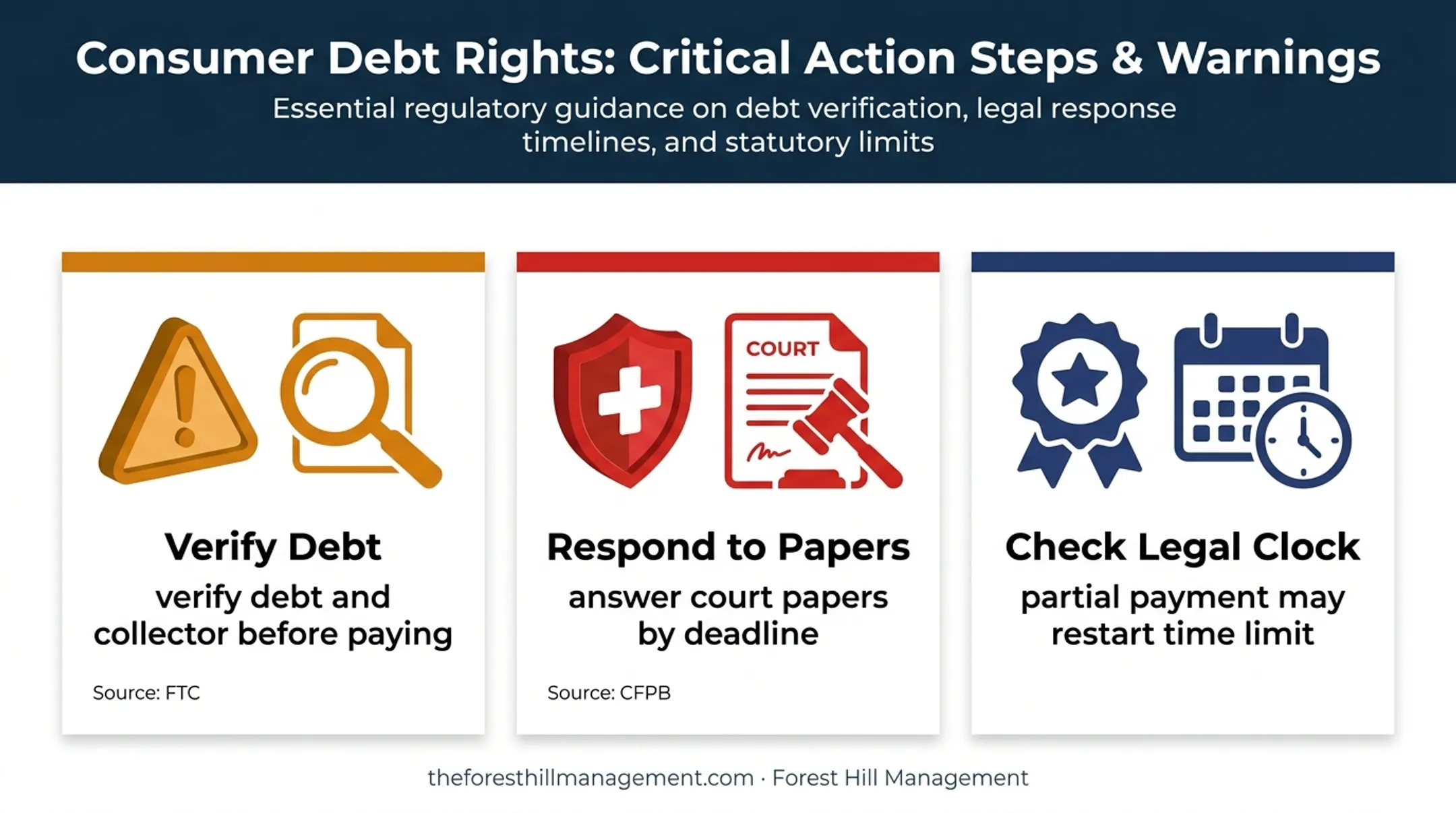
A partial payment or written acknowledgment on an old, time-barred debt can sometimes restart the legal clock in certain states. Research your state's rules or talk to an attorney before paying a debt you haven't dealt with in years.
Alternatives to Directly Negotiating Credit Card Debt
Direct negotiation isn't the only path. Compare total cost, monthly affordability, credit impact, time commitment, and risk before choosing.
Hardship Program or Direct Payment Plan
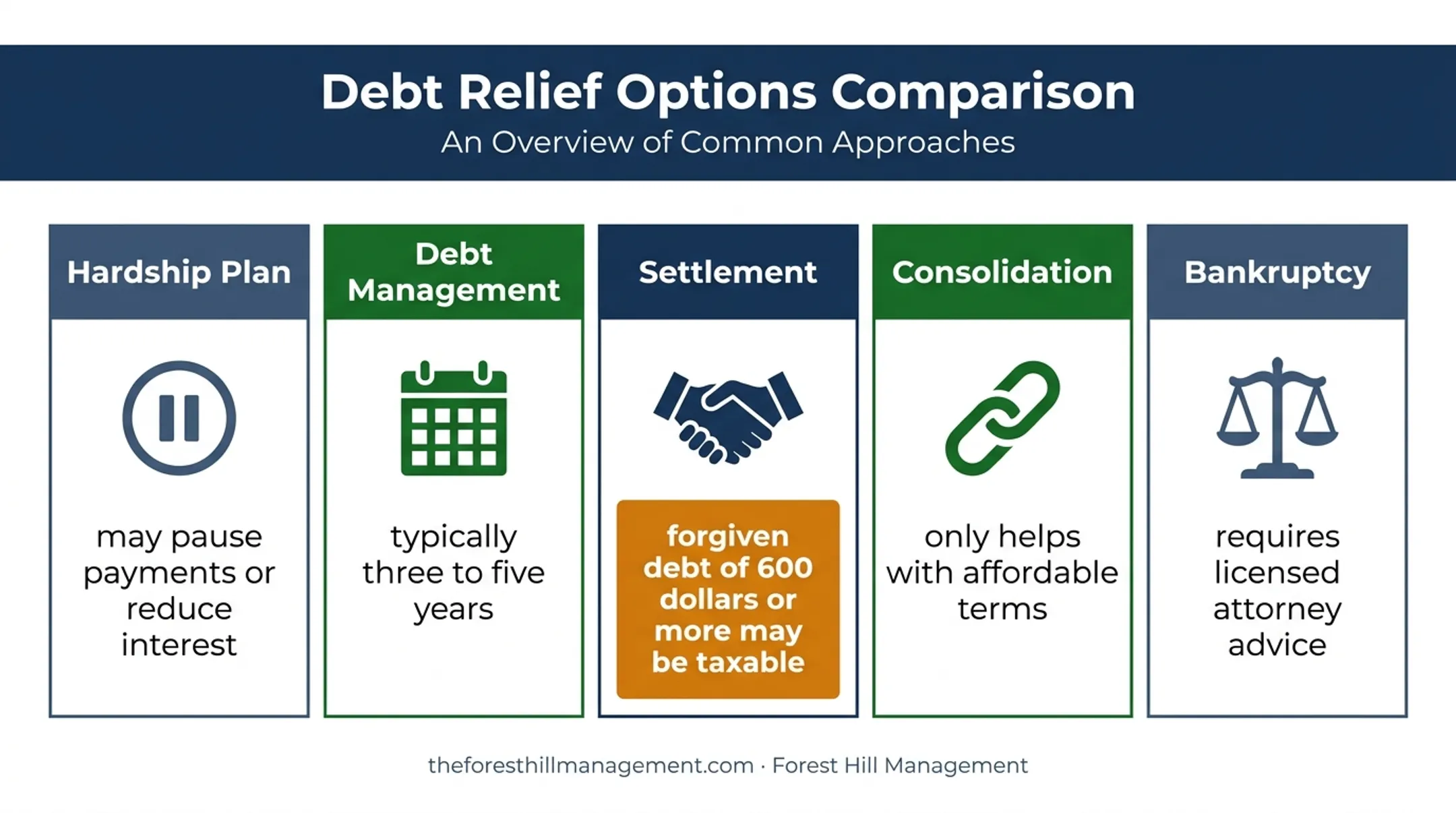
If you can repay the principal over time, a hardship program might beat a settlement. These programs may pause payments temporarily, reduce your interest rate, or lock in a fixed payment.
Forest Hill Management, for instance, offers customized payment plans tailored to each consumer's financial situation.
Nonprofit Credit Counseling and a Debt Management Plan
A nonprofit counselor reviews your full budget and may set up a single monthly payment distributed across your unsecured debts. According to NFCC guidance, these plans typically run three to five years, and creditors may reduce interest or waive overdue fees, though it isn't guaranteed.
Before enrolling, verify:
- Agency fees and total cost
- Which creditors actually participate
- Whether accounts must close
- Whether the monthly payment fits your budget
Debt Settlement, Consolidation, or Bankruptcy Consultation
Settlement can reduce your balance, but it comes with trade-offs:
- Forgiven debt of $600 or more is often reported to the IRS on Form 1099-C and may count as taxable income unless an exception, like insolvency, applies
- Consolidation only helps if you qualify for genuinely affordable terms
- Bankruptcy requires individualized advice from a licensed attorney, not a debt relief company
Provider-vetting checklist before signing up with anyone:
- Avoid companies guaranteeing a specific settlement percentage
- Never pay upfront fees before a debt is actually settled
- Be wary of anyone pushing you to stop paying without explaining the consequences
- Confirm fees and cancellation terms in writing
- Check your state's consumer protection resources before enrolling
Conclusion
Effective negotiation comes down to a few non-negotiables:
- Build a realistic budget before you call
- Document a hardship or repayment proposal
- Contact a verified creditor or account manager
- Get every term in writing before you pay
The right resolution balances affordability, total cost, credit impact, and legal or tax consequences against what you can actually follow through on. If the numbers still don't work—or legal action is already underway—get professional advice before you commit.
Frequently Asked Questions
Does negotiating credit card debt work?
Sometimes. Creditors may agree to lower interest, reduced fees, a smaller payment, or a reduced payoff, but nothing is guaranteed. Account status, documented hardship, and your specific offer all factor into the outcome.
What percentage will a credit card company settle for?
There's no universal settlement percentage. What you pay depends on your hardship, account age, available funds, creditor type, potential taxes, and how the payoff gets reported to credit bureaus.
Can I negotiate a payment plan with a credit card company?
Yes. Explain your hardship, share basic financial details if asked, and request a manageable schedule. Get the interest rate, fees, payment dates, and consequences of missed payments in writing before agreeing.
How can I resolve credit card debt?
Options include direct negotiation, budgeting and standard repayment, nonprofit credit counseling, debt management plans, consolidation, settlement, or bankruptcy consultation. The right choice depends entirely on your individual finances.
How can I legally get rid of my credit card debt?
Repayment, a negotiated settlement, qualifying bankruptcy relief, or another legally recognized arrangement can resolve the debt. A charge-off or a quiet collector doesn't mean the debt has disappeared.
Is a debt resolution program a good idea?
It depends on affordability, the type of debt, your credit priorities, fees, completion risk, and possible tax consequences. Compare direct creditor assistance and nonprofit counseling before enrolling in any program.