-p-500%20(1).png)
Can Debt Collection Agencies Take You to Court?
Need Help Reviewing Your Account?
Contact UsYes, a debt collection agency, debt buyer, or collection law firm may be able to sue you over an unpaid consumer debt. But a phone call demanding payment or a letter marked "final notice" is not a lawsuit, and it doesn't create a court judgment by itself.
Whether legal action actually happens depends on several factors: who owns the debt, how old the account is, what documentation the claimant has, your state's laws, and whether the statute of limitations has already run out.
Many consumers struggle to tell the difference between an aggressive collection tactic and a genuine legal filing, and that confusion sometimes leads people to pay debts they don't owe or ignore paperwork they shouldn't. This article covers how to read a collection notice, what to do before a suit is ever filed, how to recognize real court papers, and why ignoring a summons is one of the costliest mistakes you can make.
Key Takeaways
- Collectors usually need a court judgment before wage or bank garnishment (state and federal exemptions apply).
- No universal balance or waiting period guarantees a lawsuit will be filed.
- Verify the debt, keep all records, and check your state's statute of limitations before paying.
- Never ignore a summons—respond by the deadline and contact an attorney or legal aid provider.
Can a Debt Collection Agency Take You to Court?
Yes—in some cases. The original creditor can sue if it still owns the account. A debt buyer that purchased your debt can sue as the plaintiff. A third-party collection agency may help a creditor bring a lawsuit, but calling you does not mean it owns the debt. Some agencies refer accounts to a collection law firm instead of filing suit themselves.
Not every player has the same standing to sue. Here's how the roles typically break down:
- Original creditor – Issued the credit and can sue if it still holds the claim
- Third-party collector – Hired to collect; may lack authority to file suit
- Debt buyer – Bought the account and can sue, but must often prove ownership
- Collection law firm – Represents the creditor or buyer in court; does not own the account
Who holds the debt shapes what happens next if the account escalates.
How the Escalation Typically Plays Out
Most accounts follow a similar path:
- Missed payments and early creditor outreach
- Collection calls, letters, and a validation notice
- Attempts to resolve or settle the balance
- A filed complaint only if those steps fail (many never reach this stage)
- Service of court papers, possible judgment, then enforcement such as garnishment
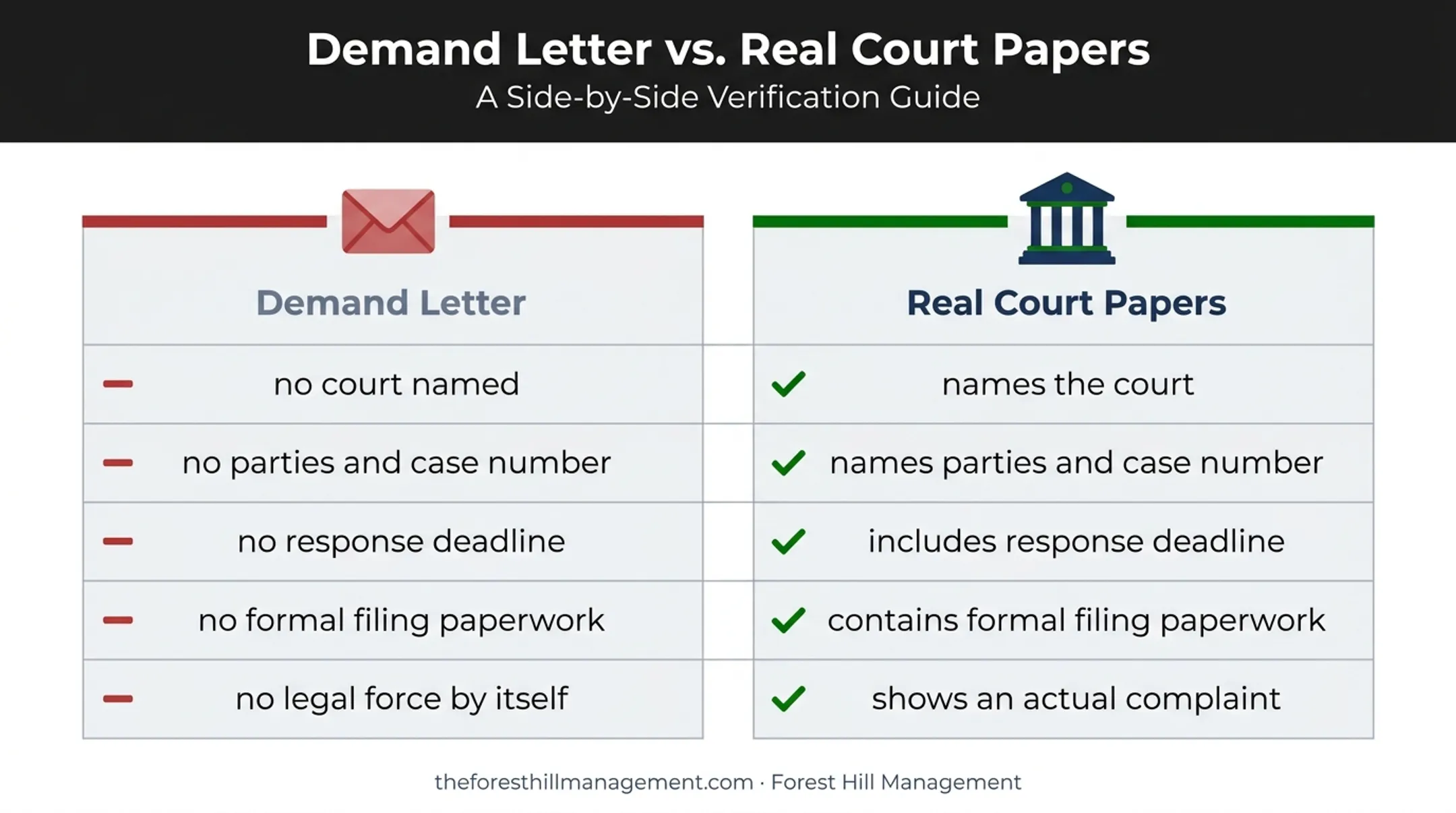
A collector cannot skip straight to court. Phrases like "legal action pending" or "final demand" have no legal force unless a complaint has actually been filed. Real court documents name the court, the parties, a case number, a response deadline, and formal filing paperwork, according to California's official debt-lawsuit guidance. A demand letter has none of these features.
A Lawsuit Doesn't Automatically Mean You Owe It
Being sued does not prove the debt is valid or the balance is correct. Common problems include:
- Mistaken identity or a similar name
- Inaccurate or inflated balances
- Missing proof of ownership after a debt sale
- Improper fees added to the original balance
- Identity theft
- An expired statute of limitations
Forest Hill Management acquires and services past-due accounts assigned by original creditors. Its consumer notices include an "Original Creditor" section that shows where the account started. Check that detail against your own records before treating any notice as accurate.
What Makes a Debt Collection Lawsuit More or Less Likely?
There's no nationwide dollar threshold or fixed calendar that triggers a lawsuit. Anyone who tells you "they always sue after $500" or "they wait exactly 90 days" is guessing. What actually drives the decision is a mix of economics and documentation.
The Money Math Behind Litigation
Filing a lawsuit costs money: court fees, attorney time, and the risk of never collecting even after winning. A 2016 CFPB study of third-party collectors found that firms weigh:
- The account balance against filing and service costs
- Whether the consumer has locatable assets or employment
- The likelihood of actually collecting on a judgment
- Prior attempts to resolve the account
Some firms use internal minimum balances, but these vary by company and aren't legal rules.
Documentation and Legal Requirements
A claimant also needs paperwork to win. That typically includes:
- The original agreement and payment history
- An itemized balance
- A clear chain of ownership (especially for debt buyers)
- Correct defendant information
- Confirmation the statute of limitations hasn't expired under your state's law
Missing documentation can stop a suit before it starts, or sink it in court.
Why Debt Type Matters
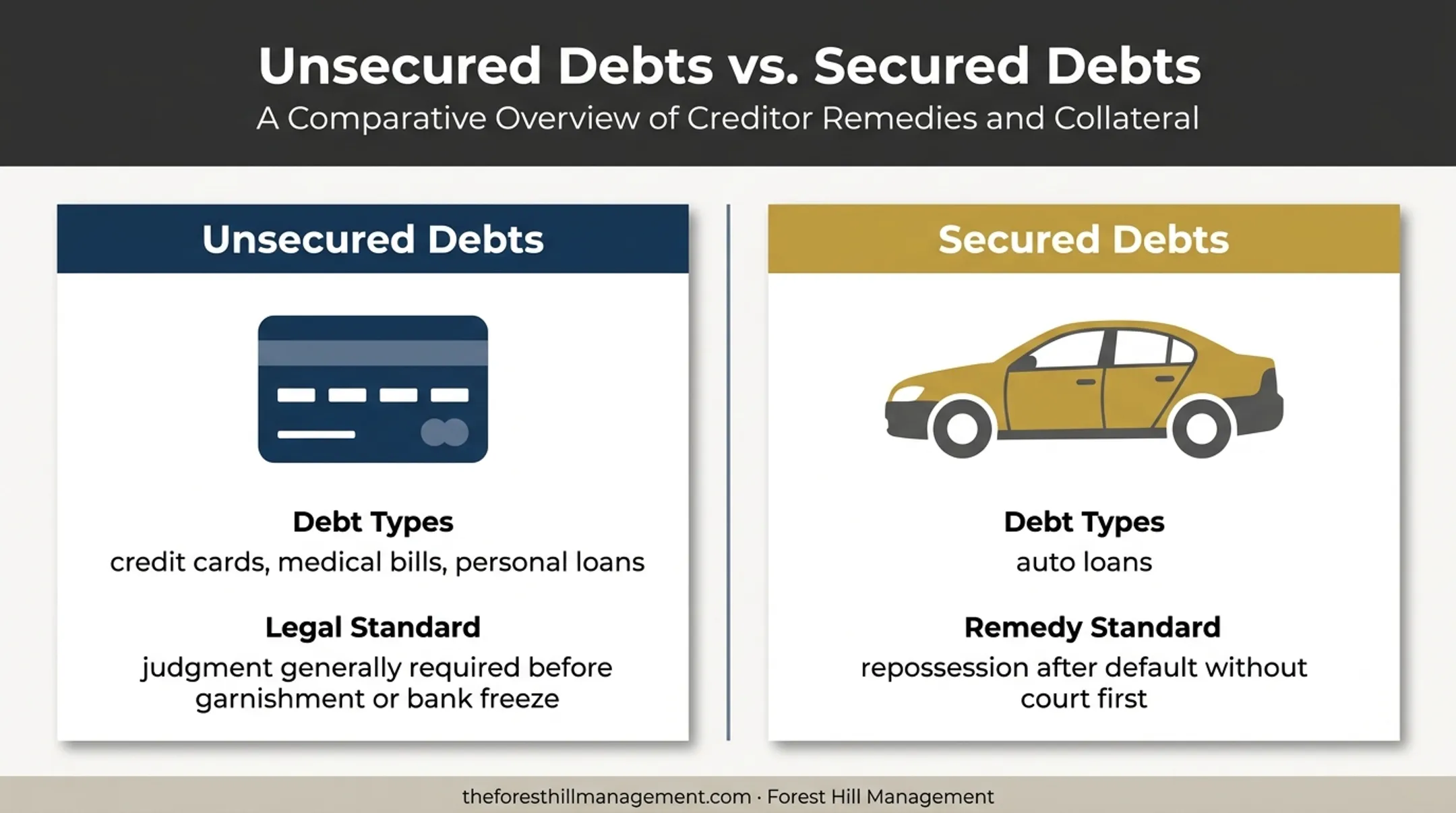
Unsecured debts—most credit cards, medical bills, and personal loans—generally require a judgment before a creditor can garnish wages or freeze a bank account.
Secured debts work differently. An auto lender, for instance, may repossess a vehicle after default without going to court first, since that remedy comes from the loan contract rather than a lawsuit.
Debt type shapes the available remedies, but how you respond to collection activity still affects escalation risk. Ignored notices, unresolved disputes, and missed payment arrangements can all increase the chance an account moves toward suit. Never acknowledge or pay a potentially time-barred debt without legal advice first. Doing so can sometimes restart the clock on an expired debt under state law.
What Should You Do Before a Lawsuit Is Filed?
Preparation now saves headaches later. Start by building a simple records file.
Keep copies of:
- The validation notice and creditor name
- Account number and balance breakdown
- Full payment history
- Every letter and call log
- Proof of any payments or agreements
Verify Before You Share Anything
Before giving out financial information, confirm the collector is legitimate. Look up contact details independently rather than trusting numbers in a suspicious letter. Watch for red flags:
- Threats of arrest or jail time
- Guarantees of "certain" legal consequences
- Demands for gift cards, wire transfers, or other unusual payment methods
Resolution Options Worth Considering
You generally have a few paths:
- Request validation of the debt
- Dispute inaccurate information
- Negotiate a payment plan or settlement
- Reach out to a nonprofit credit counselor
Whatever you agree to, get it in writing before sending any payment.
If Forest Hill Management is the collector named on your notice, use the contact information printed on that notice—or the company's verified channels—to discuss your account and possible resolution options. That conversation doesn't guarantee a settlement or provide legal protection, but it's a reasonable first step toward understanding what's actually owed.
What Should You Do If a Debt Collector Sues You?
If you've been served, don't panic, and don't ignore it. Start by reading the summons and complaint carefully.
- Identify the court and case number – confirm this is a real, filed case
- Find the response deadline – this is usually printed directly on the summons
- Verify the documents are official – a phone threat is not the same as a court filing
Ignoring a lawsuit is the single worst move you can make. Courts can enter a default judgment against you without ever hearing your side. More than 70% of debt collection suits end in default judgment in jurisdictions Pew reviewed. File your response by the deadline and show up to any scheduled hearings.
Questions to Bring to an Attorney or Legal-Aid Provider
- Does the plaintiff actually own this debt?
- Is the amount accurate?
- Was I served properly under my state's rules?
- Has the statute of limitations expired?
- Did the collector violate consumer-protection law, such as the FDCPA?
What Happens After a Judgment
A judgment can open the door to wage garnishment, a bank-account freeze, or a property lien. Still, ordinary consumer debts generally require a court judgment before garnishment can happen—it's not automatic just because a suit was filed.
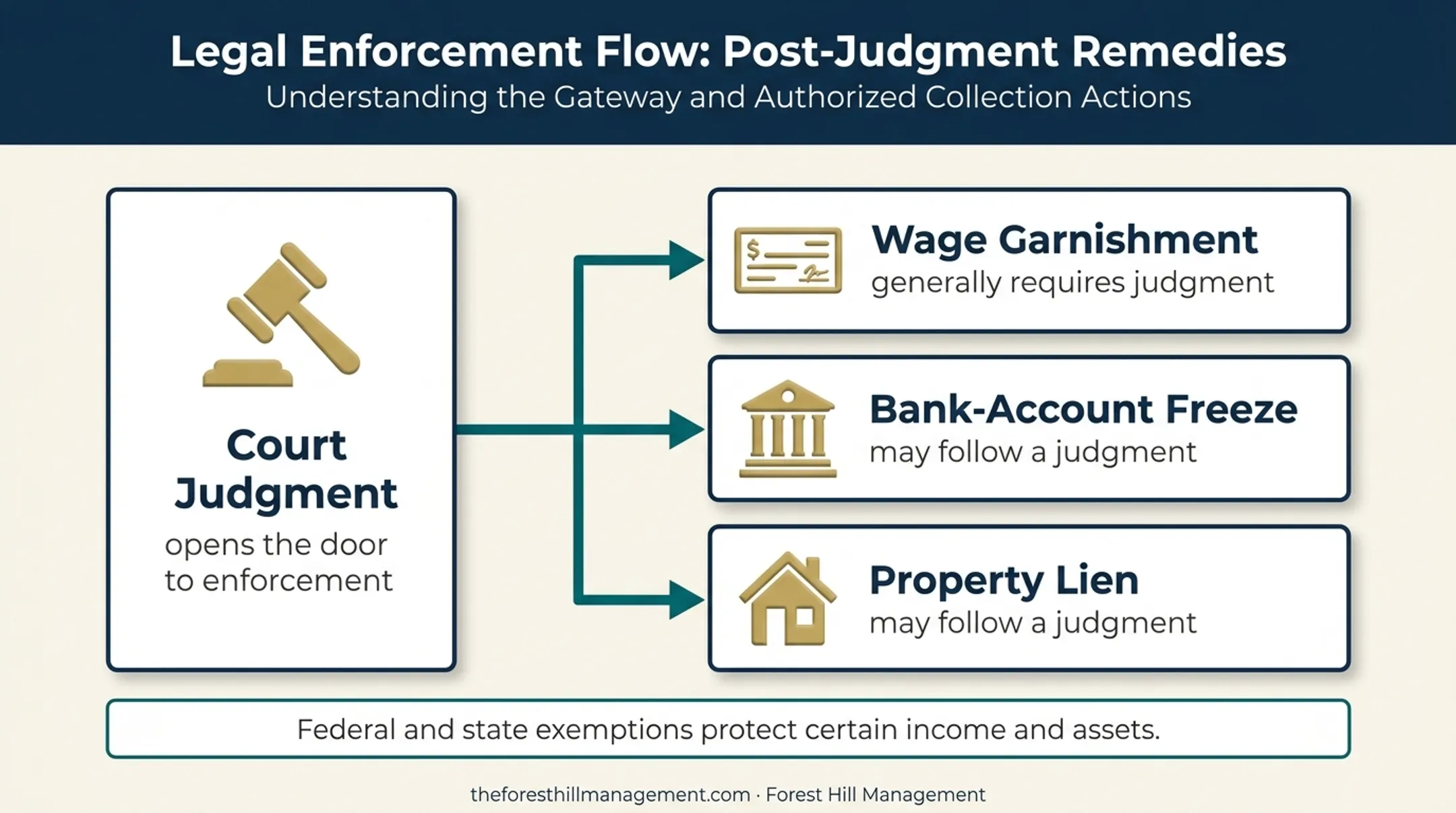
Federal and state exemptions protect certain income and assets, so research what applies where you live.
Even after a suit is filed, negotiation is still possible. If you reach an agreement, get every detail in writing:
- Settlement amount
- Dismissal terms
- Payment schedule
- How it will be reported to credit bureaus
- Release of further liability
Keep copies of everything.
Frequently Asked Questions
Do I have to pay my debt if it was sold to a debt collector?
Selling or assigning a debt does not erase what you owe. The collector still must identify the account and amount accurately, so request validation and confirm ownership before you pay.
How long before a debt collection agency takes you to court?
There is no fixed waiting period. Timing usually depends on your state's statute of limitations, the account's age and documentation, the balance, and the collector's own practices.
How likely is a debt collection agency to take you to court?
Likelihood varies and can't be predicted from balance alone. Documentation quality, collectability, debt type, account age, and prior resolution attempts all play a role.
What happens if I never pay a debt collection agency?
You may face continued collection contacts, credit-reporting consequences, and potential litigation that could lead to a judgment. Outcomes depend heavily on the specific debt and applicable state law.
What should I do if a debt collector sues me?
Don't ignore the summons. Respond by the deadline, keep copies of every document, and contact a consumer attorney or legal aid as soon as you can.
Can a debt collector garnish my wages without going to court?
Generally, no. For ordinary consumer debts, wage garnishment requires a court judgment first. Exceptions and protected-income rules vary by state, so check your state's laws.