-p-500%20(1).png)
How to Identify Legitimate Debt Collectors vs. Scams
Need Help Reviewing Your Account?
Contact UsIntroduction
Your phone rings. An unfamiliar voice says you owe money, names an account you barely remember, and pushes you to pay right now or face consequences. That moment of pressure is exactly when mistakes happen.
The call could be about a real debt. It could involve mistaken identity, an account long past its statute of limitations, or an outright scam built to exploit fear.
The Consumer Financial Protection Bureau received roughly 387,400 debt-collection complaints in a recent reporting period. That volume reflects widespread confusion, not proof that every contact was fraudulent.
Pause before you pay. Request written validation, verify the caller independently, and use the protections U.S. law already gives you.
This guide covers how to check the debt, spot red flags, interpret what you find, and respond without handing over information you can't take back.
Key Takeaways
- Request written validation before paying or admitting you owe anything.
- Verify the company, creditor, and contact details independently — never rely solely on caller ID or a link in the message.
- Treat arrest threats, gift-card demands, and refusal to provide documentation as major red flags.
- Dispute inaccurate debts in writing and keep records of every communication.
- Even a legitimate collector must follow federal and state collection laws.
Verify the Collector and the Debt
No single clue proves a collector is legitimate. A real-sounding name, an accurate account number, or a familiar-looking logo can all be faked or scraped from a data breach. Verification means comparing several pieces of evidence at once — not accepting one and moving on.
What You Need to Check
Before responding, gather everything the contact included:
- The envelope, email headers, or text message itself
- Caller's name, phone number, and claimed company name
- The alleged creditor and account reference number
- The amount demanded and any payment instructions
Preserve screenshots and voicemails immediately. Then request the information collectors are legally required to disclose, including their identity, the creditor's name, the claimed balance, and an explanation of your dispute rights.
Method 1: Review the Validation Information
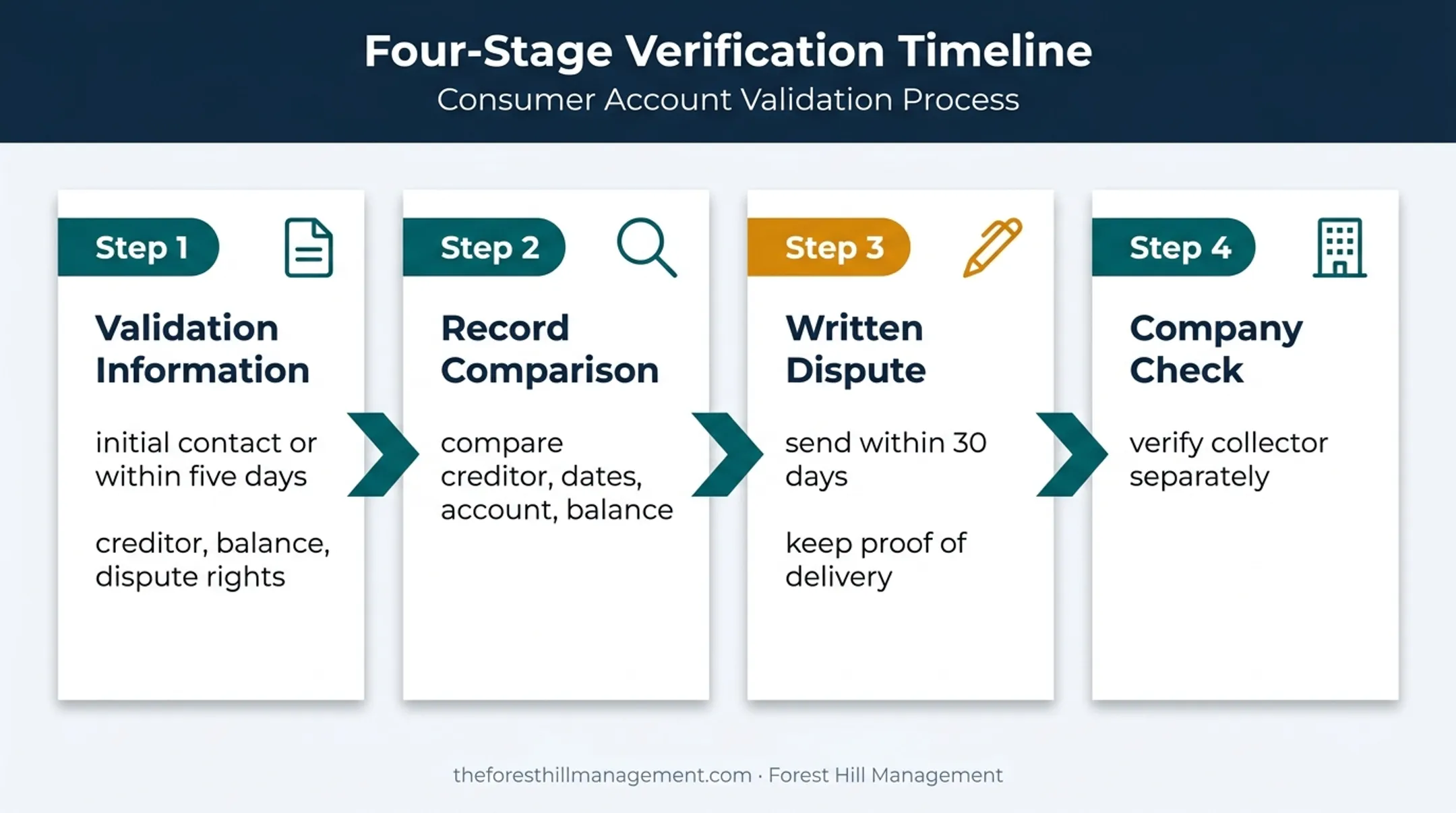
Under federal rules, a covered debt collector must generally provide validation information in the initial communication or within five days of first contact, including the creditor's name, an itemized balance, and instructions for disputing the debt.
Steps to follow:
- Compare the creditor, account type, dates, and balance against your own records.
- Note anything missing, inconsistent, or unfamiliar.
- Send a written dispute within 30 days if something doesn't add up, and keep proof of delivery.
Written validation builds a paper trail and can expose a fake claim, but it still doesn't prove the sender is authorized to collect—that takes a separate company check.
Method 2: Verify the Company Independently
Ask for the agency's legal name, street address, phone number, and professional license number where the state requires one. Then confirm those details through sources you found yourself, not the ones the caller handed you.
- Search state licensing or registration databases where applicable
- Call the original creditor using a number from your own statement or the creditor's official website
- Compare the address and phone number against what appears in trusted, independently sourced records
This step matters because scammers can spoof caller ID to display a real company's name and number. A license lookup confirms identity and authorization — it doesn't confirm the specific balance is accurate.
Method 3: Check Financial Records and Credit Reports
Pull your credit reports and compare them against the claim. Look for duplicate entries, unfamiliar accounts, or amounts that don't match what you remember paying or owing.
An absent listing doesn't automatically mean the debt is fake, and a listed one doesn't automatically confirm it's yours. Use credit reports alongside the validation notice and creditor confirmation, not as a standalone verdict.
Apply the same independent-check rule to any named agency, including Forest Hill Management: use contact details you locate yourself (official site or original-creditor records), not the number or email in the inbound message, and request written account documentation before you treat the claim as accurate.
Quick verification checklist:
- Match creditor, account, and balance to your records and the validation notice
- Confirm the agency’s legal name, address, and license via sources you found
- Call the original creditor on a number from your statement or its official site
- Cross-check credit reports for unfamiliar accounts or mismatched amounts
- Keep screenshots, voicemails, and proof of any written dispute
Interpret What You Find
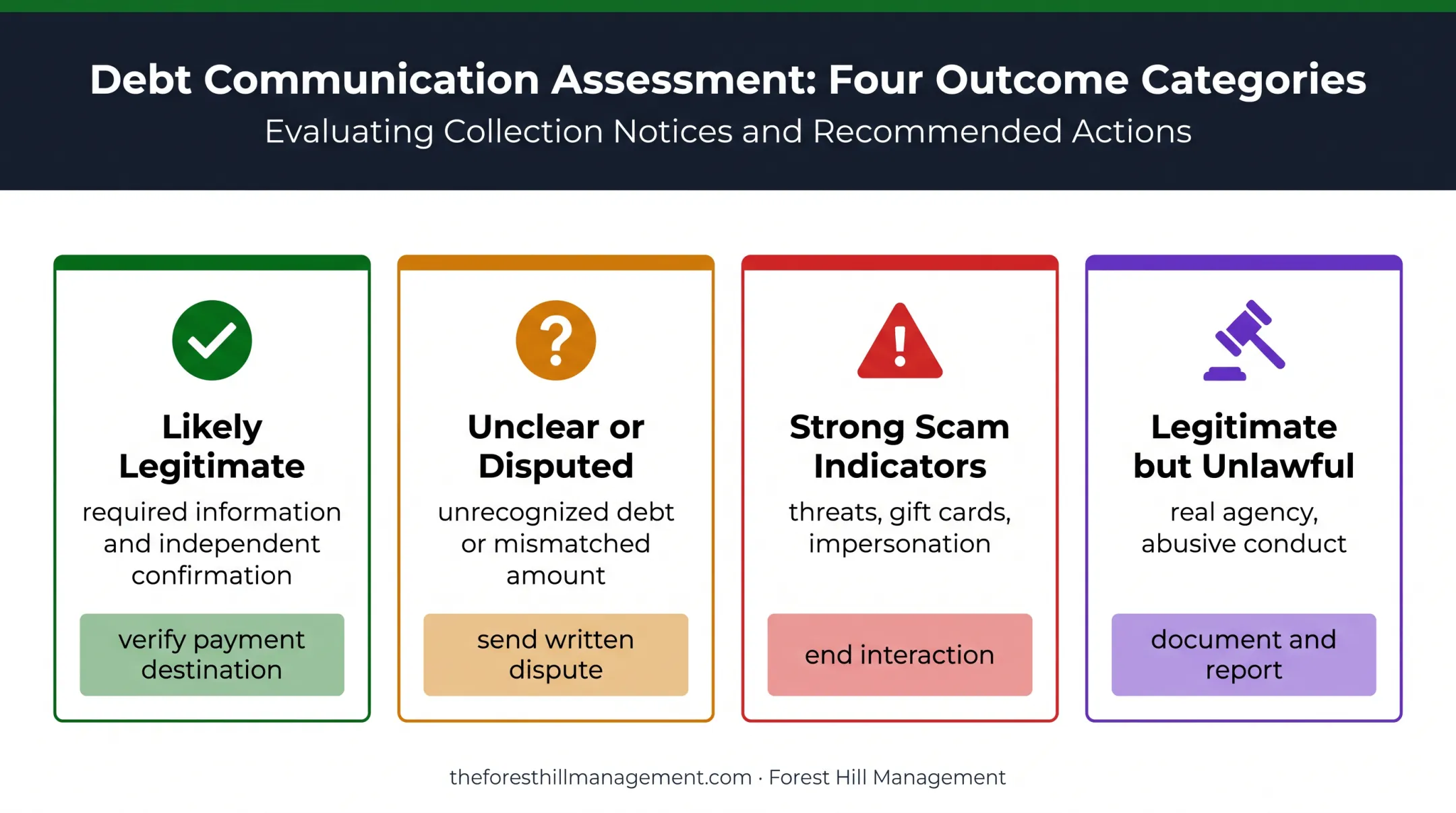
Verification typically produces one of four outcomes, and each calls for a different response.
Likely legitimate and consistent. The collector provides required written information, clearly identifies the creditor and balance, and you can confirm independently. Even here, verify the payment destination before arranging anything.
Unclear, inaccurate, or disputed. You don't recognize the debt, the amount doesn't match your records, or the collector refuses adequate documentation. Check current dispute deadlines, then send a written dispute and preserve every piece of evidence.
Strong scam indicators. Walk away if you see:
- Demands for immediate payment or threats of arrest
- Refusal to provide a mailing address or written details
- Requests for gift cards, cryptocurrency, or wire transfers
- Impersonation of law enforcement or a court
Don't debate the caller or send money to "prove your innocence." End the interaction.
In one 2024 case, the FTC alleged a Georgia-based operation collected more than $7.6 million in bogus debt while threatening consumers with jail. Treat those tactics as red flags, not one-off flukes.
Legitimate identity, unlawful conduct. A real, licensed collection agency can still cross the line into harassment, deception, or abusive contact. Being a genuine company doesn't excuse illegal pressure. Document the conduct. Consider a CFPB or state attorney general complaint, or contact legal aid.
Common Mistakes When Checking a Debt Collector
Most people don't fall for elaborate scams. They fall for small shortcuts that feel reasonable in the moment.
- Trusting caller ID or logos. Scammers can spoof numbers and copy branding convincingly; neither proves legitimacy.
- Calling back only the number provided. That number alone doesn't prove who they are—look up the agency yourself, and never click links or share your Social Security number before you verify.
- Ignoring every collection contact. Some debts are valid, and ignoring them can mean missed dispute windows or credit-reporting issues.
- Assuming credit reports settle it. A debt isn't automatically valid because it appears on your report, or automatically fake because it doesn't. Compare it against validation information and creditor records every time.
Safety and Best Practices
Slow down. Don't pay under pressure. Communicate only through a channel you verified yourself. That's the whole rule, and it applies whether you're protecting yourself from a scam or simply confirming a legitimate obligation.
Protect Personal and Financial Information
Knowing part of your data doesn't prove someone's identity. Scammers buy fragments of personal information constantly. Withhold sensitive details like your full Social Security number or bank account information until you've confirmed who you're talking to.
Avoid payment methods that can't be reversed. The FTC warns that gift cards and cryptocurrency payments are difficult or impossible to recover once sent, unlike ordinary trackable payments.
Keep a dated file of every call, letter, email, and payment confirmation. Never alter or discard those records.
Respond and Report Appropriately
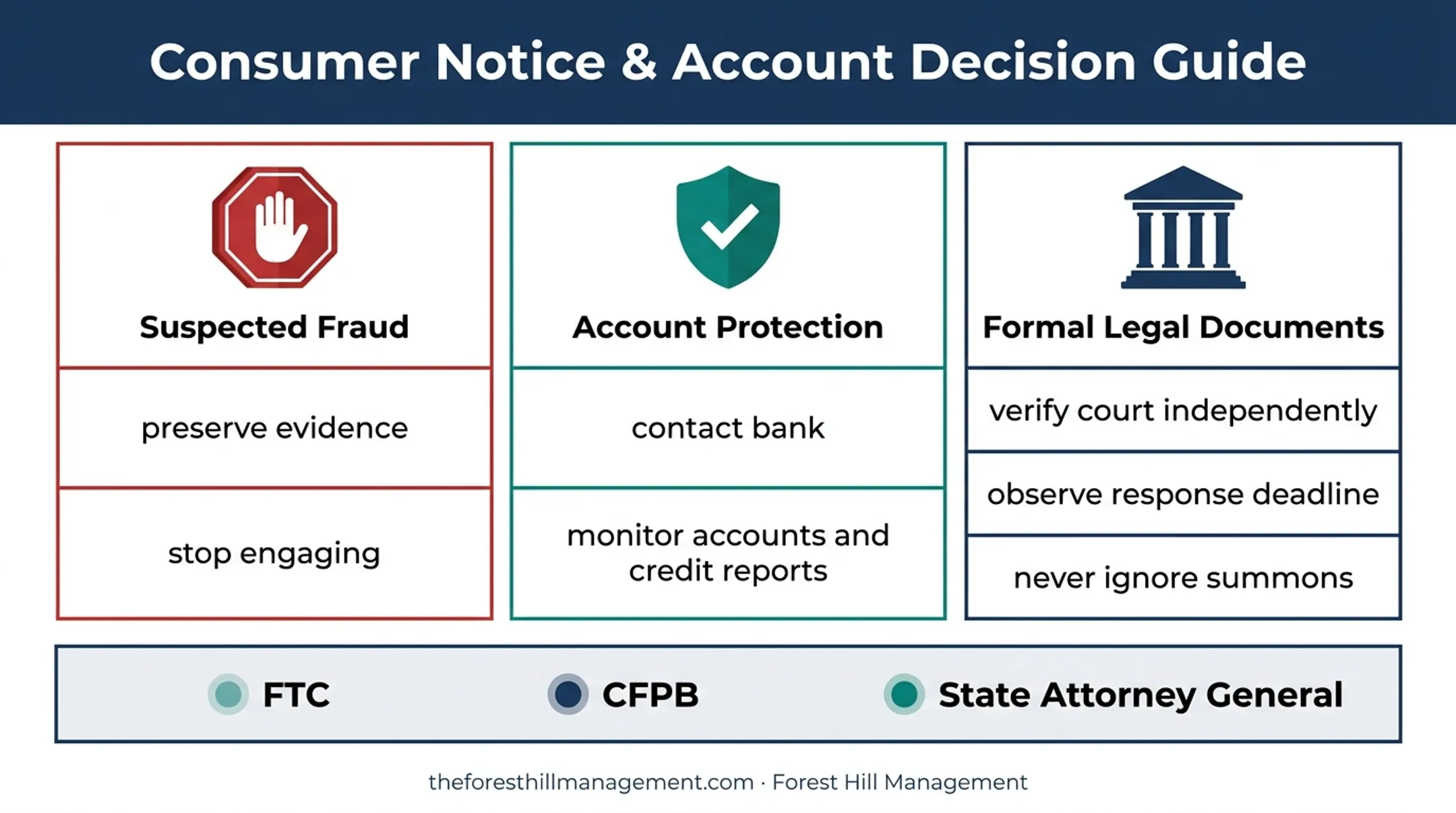
If the claim looks fraudulent, stop engaging after you've preserved the evidence. Contact your bank immediately if you shared any account information, then monitor your accounts and credit reports for unusual activity.
Report suspected scams or unlawful collection tactics to:
- The Federal Trade Commission (ReportFraud.ftc.gov)
- The Consumer Financial Protection Bureau's complaint portal
- Your state attorney general or licensing regulator
Reporting doesn't replace responding to an actual court summons. If you receive formal legal documents, verify the court independently and observe the response deadline. A missed court date can lead to a default judgment, no matter how suspicious earlier contacts seemed.
When Communication Should Stop
You can request, in writing, that a collector stop contacting you. Once received, a covered collector generally must comply, though it may still send limited notices about ending efforts or pursuing legal remedies.
A stop-contact request doesn't erase the debt or prevent a lawsuit. It only limits communication. Check current federal and state rules before sending one.
Conclusion
A convincing name, a professional-looking website, or an accurate caller ID isn't enough on its own. Before you pay or share details, lock in these steps:
- Confirm the debt itself
- Verify the company independently
- Protect your sensitive information
- Document every contact and request
You can resolve a valid debt without handing over control. An unfamiliar claim, aggressive threats, or missing paperwork are all good reasons to pause and dig deeper.
When the stakes are high, use contact details you found yourself and rely on current government resources like the CFPB and FTC—not anything supplied by the person contacting you.
Frequently Asked Questions
What should I do if I get a call or email from a suspected debt collector?
Pause before sharing information or paying. Request written validation, verify the collector and creditor independently, and preserve the original message or voicemail for your records.
How do I know if a debt collection agency is legit?
Look for consistent written validation, a verifiable company identity with a real address and phone number, and independent confirmation from the original creditor. Also confirm there are no scam red flags, such as demands for gift-card payment.
What words or steps can I use to tell a debt collector to stop contacting me?
A written stop-contact request can limit further communication under federal rules, but it doesn't erase the debt or block all legally permitted notices. Check current federal and state requirements before sending one.
Can a debt collector take you to court?
Yes, depending on the debt, documentation, and applicable statute of limitations. Never ignore an actual court summons, even if earlier contact from the same case felt suspicious.
What happens if I ignore a debt collection agency?
It depends on whether the debt is valid. Consequences can include continued contact, credit reporting, or litigation, so verification is safer than automatic payment or automatic silence.
Do I have to pay my debt if it was sold to a debt collector?
Selling or assigning a debt doesn't by itself confirm the claimed balance is accurate. Review the validation information, confirm the new collector's authority, and dispute any errors before paying.