-p-500%20(1).png)
How to Create a Debt Repayment Plan: Complete Guide
Need Help Reviewing Your Account?
Contact UsJuggling multiple credit cards, a personal loan, and maybe a medical bill or two means juggling different balances, interest rates, minimum payments, and due dates every single month. A debt repayment plan turns that chaos into a structured path toward becoming debt-free, one that tells you exactly what to pay, when, and in what order.
Building that plan sounds simple on paper. In practice, results vary based on the type of debt you carry, how much income you have available, the interest rates attached to each account, your creditors' specific terms, and how consistently you can stick to the plan when unexpected expenses show up.
This guide walks through how to list and prioritize your debts, calculate a payment you can actually afford, choose a repayment method that fits your situation, monitor your progress, avoid the mistakes that derail most plans, and recognize when it's time to bring in outside help.
Key Takeaways
- List every debt and set a realistic monthly budget before you choose a payoff method.
- Pay at least the minimum on every account; put all extra toward one priority debt.
- Choose avalanche to cut interest or snowball for quick wins—and stick with it.
- Never sacrifice essential expenses or your entire emergency fund to pay off debt faster.
- If you can't make required payments, contact creditors or a nonprofit credit counselor immediately.
How to Create a Debt Repayment Plan
Nearly half of credit card holders (45%) reported carrying a balance at some point over the past year, according to the Federal Reserve's 2025 household survey. If that's you, these five steps will get your plan off the ground.
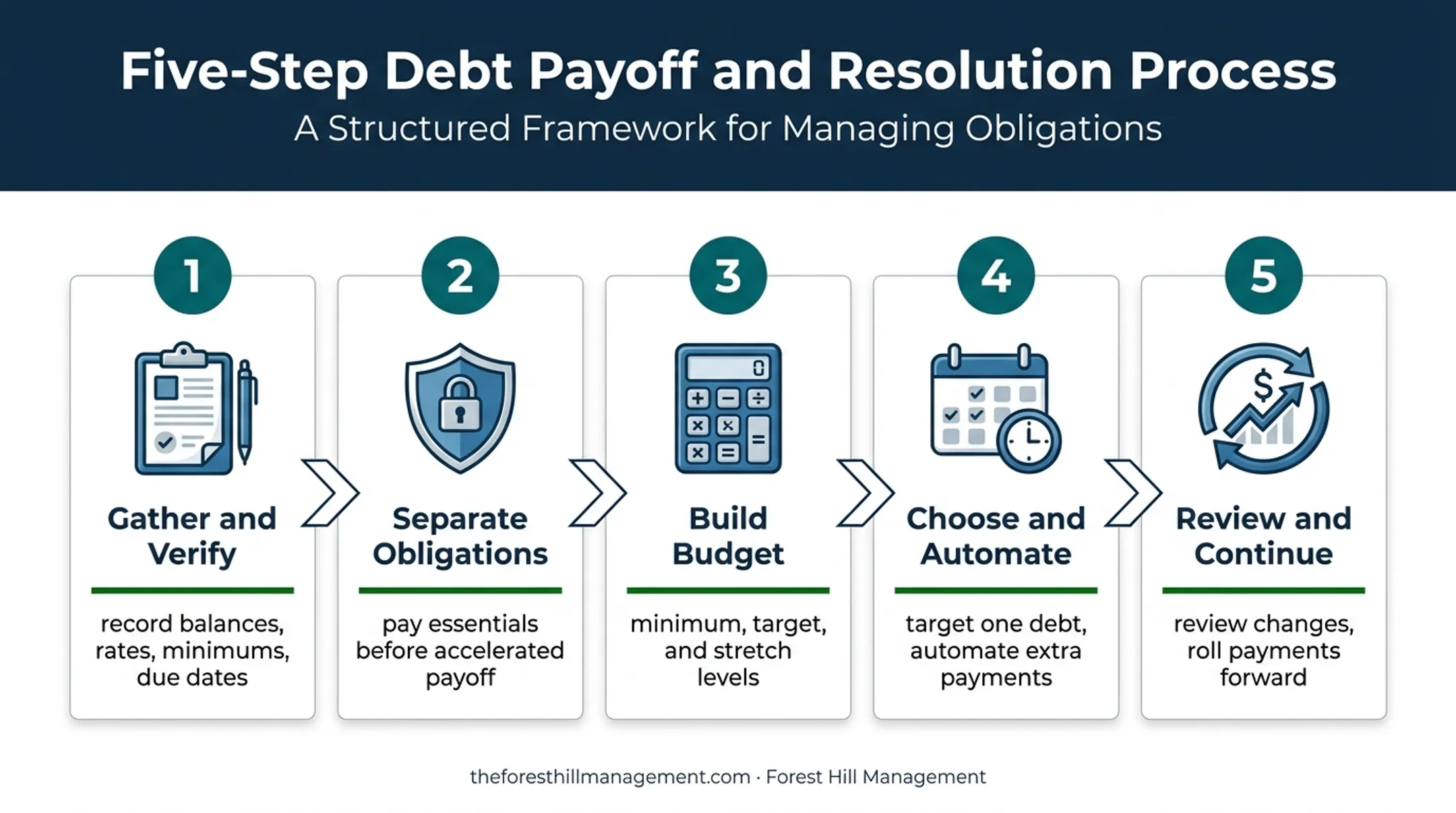
Step 1: Gather and Verify Every Debt
Pull together current statements, account notices, your credit reports, loan agreements, and any collection letters covering credit cards, personal loans, medical bills, student loans, and other obligations you owe.
For each account, record:
- Creditor or servicer name
- Current balance and interest rate (APR)
- Minimum payment and due date
- Account status (current, delinquent, in collections)
- Whether the debt is secured or unsecured
If a collection letter mentions an account you don't recognize, verify it before paying anything or sharing personal information. Under federal debt-collection rules, a collector generally must send validation information within five days of first contact, and a timely written dispute pauses collection until they provide proof.
Skipping a dispute does not mean you admit you owe the debt. It only means you are not challenging it yet.
Step 2: Separate Essential Obligations From Debts Targeted for Payoff
Not every bill carries the same consequences if you miss it. Housing payments, utilities, insurance premiums, child support, taxes, and secured auto or mortgage loans can trigger immediate fallout: eviction, shutoff notices, repossession, or legal action.
Keep these two buckets distinct:
- Required minimums and essential living costs — must be paid every month, no exceptions
- Extra money available for accelerated debt payoff — only what's left after the first bucket is covered
A debt repayment plan doesn't replace the need to deal with accounts that carry housing, legal, tax, or family-support consequences. Those get handled first, separately, regardless of your payoff strategy.
Step 3: Build a Realistic Monthly Debt Budget
Calculate your take-home income, then subtract housing, food, utilities, transportation, insurance, medical needs, childcare, and minimum debt payments. Whatever remains is your pool for extra debt payments — but don't assign all of it.
Build in three payment levels instead of one fixed number:
- Minimum — what you'll pay in a lean month
- Target — your standard extra payment in a typical month
- Stretch — what you can add when income allows
This structure keeps your plan usable even when hours get cut or an irregular bill shows up. If your income varies month to month, use conservative estimates and set aside money for predictable costs like insurance premiums or annual taxes rather than assuming every month looks the same.
Step 4: Choose a Payoff Order and Automate the Plan
Pick avalanche, snowball, or a hybrid approach (more on choosing below), then name one target debt for your extra payments while continuing minimums on everything else.
Practical setup tips:
- Schedule extra payments right after payday, not before, so funds are actually available
- Confirm processing dates with each creditor to avoid late postings
- Leave a buffer in your checking account so automatic payments don't trigger overdrafts
A written tracker or a budgeting app such as YNAB or Tally makes it easier to log payments, updated balances, accrued interest, fees, and your projected payoff date in one place instead of scattered across statements.
Step 5: Review, Adjust, and Continue
Check your plan monthly, and do a fuller review any time your income, expenses, interest rates, or account status changes. When life changes, update the plan to match.
When a windfall arrives (tax refund, bonus, or side gig payment), apply it in this order: urgent needs first, required payments second, your savings buffer third, and extra debt payoff last.
Document every creditor conversation, including dates, names, and agreements. Once an account is paid off, roll its former payment into your next target debt so avalanche and snowball plans keep accelerating.
When Is a Debt Repayment Plan Right, and Which Method Should You Use?
A self-managed plan works when you can cover essential costs and minimum payments and still have money left to consistently direct toward one target debt. If you can't, jump to the alternatives table later in this section.
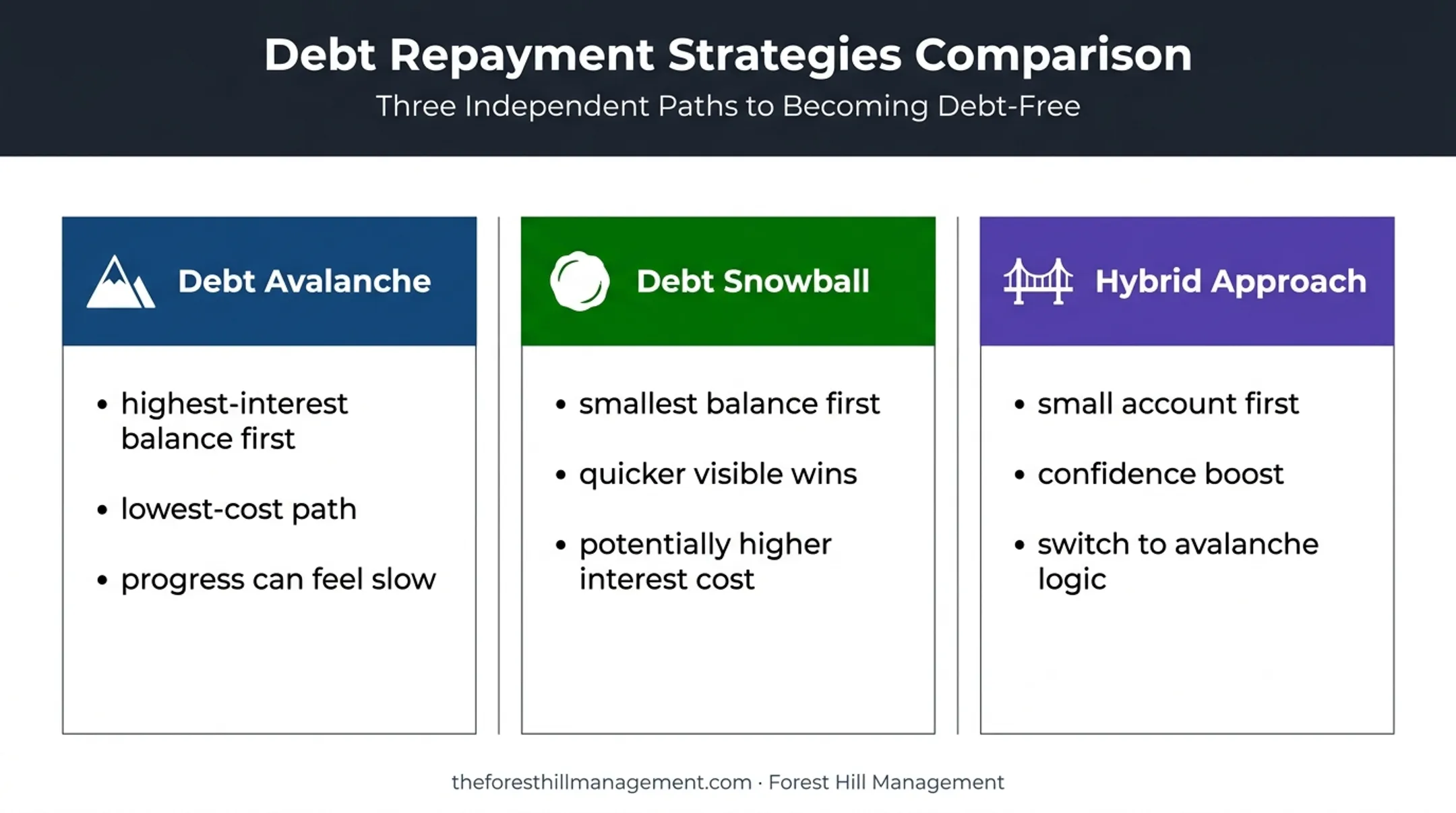
If a self-managed plan fits, choose a payoff order that matches your goal—lowest cost or quickest wins:
Debt avalanche targets your highest-interest balance first while paying minimums elsewhere. The CFPB's comparison of payoff methods supports this lowest-cost path, though progress can feel slow if that balance is large.
Debt snowball targets your smallest balance first, regardless of interest rate, then rolls that payment into the next-smallest debt. The same CFPB guidance notes this method offers quicker visible wins and can help with motivation, potentially at a higher total interest cost.
Hybrid approach works when you have one small account you can clear quickly for a confidence boost, alongside a large, high-interest balance that's costing you real money every month. Knock out the small one first, then switch to avalanche logic for the rest.
If a self-managed plan isn't realistic right now, consider these alternatives:
If you can't cover essential expenses or minimum payments at all, don't just build a more aggressive payoff plan — reach out to your creditors, a reputable nonprofit credit counselor, or a qualified legal professional promptly.
What You Need Before Creating the Plan
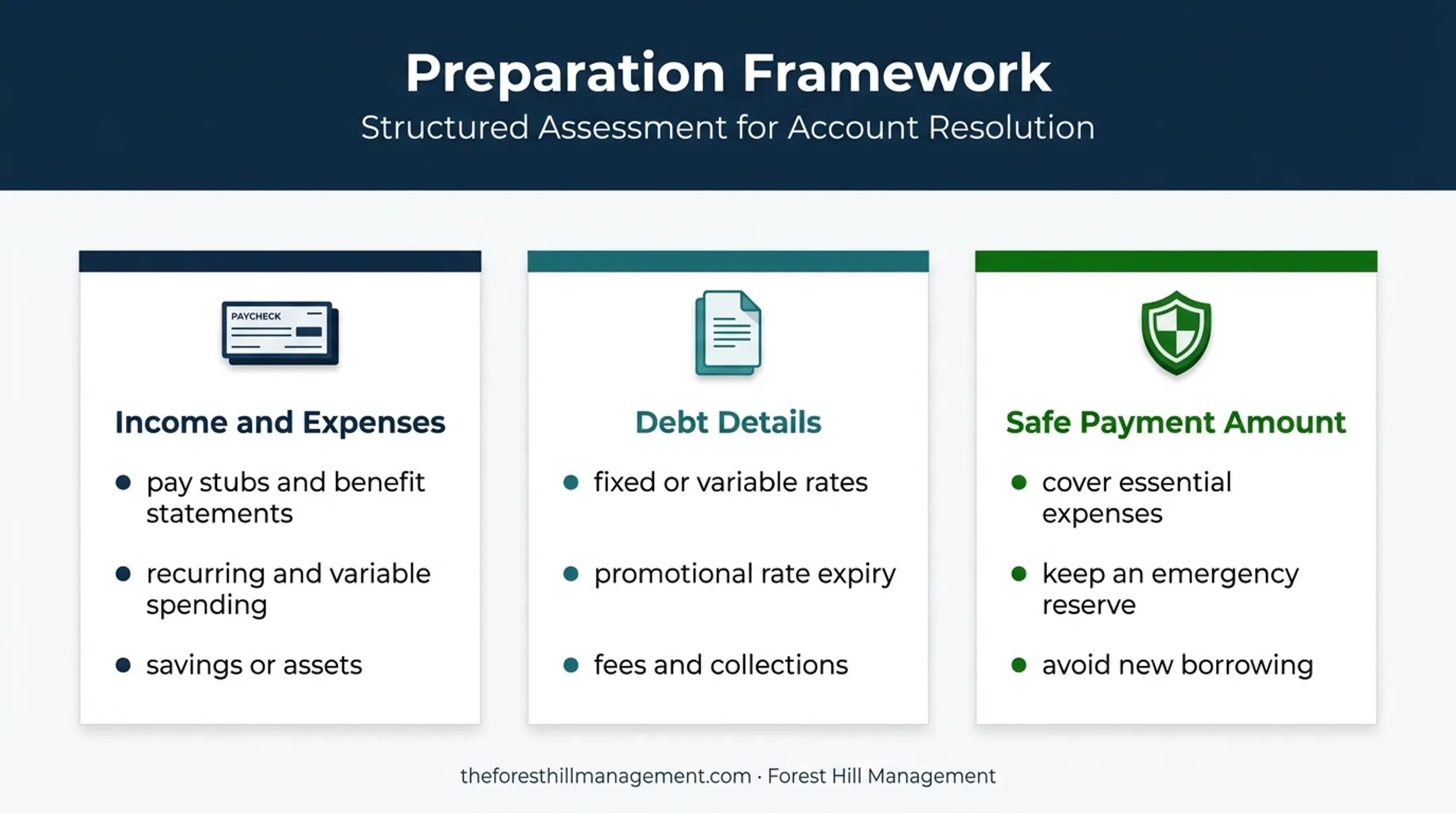
Income and Expense Information
Gather the documents that shape your budget:
- Recent pay stubs or benefit statements
- Recurring bills and variable spending
- Savings or assets that might factor into your plan
If your income is irregular, use conservative estimates. Set aside money for predictable costs (insurance, car repairs, medical visits) so they don't blow up your budget when they hit.
Debt Details and Repayment Conditions
Before you commit to a payoff order, confirm:
- Whether each rate is fixed or variable
- If a promotional rate is about to expire
- Late-fee terms and any prepayment restrictions
- Whether the account is already in collections
Not every debt fits neatly into a personal payoff plan or a formal debt management plan. Secured loans, tax debt, student loans, and court-ordered obligations often need separate handling rather than being lumped in with unsecured credit card balances.
A Safe and Sustainable Payment Amount
Your extra payment should never leave you unable to cover housing, utilities, food, transportation, health needs, insurance, or existing minimums.
Emptying your entire emergency fund to accelerate payoff can backfire. An unexpected expense afterward may force you right back onto high-cost credit. The CFPB notes that even a modest reserve can reduce reliance on new borrowing when something unplanned comes up.
If a past-due account has been transferred to a receivables management organization, verify the account details before sending any payment. Look for a clear reference to the original creditor in any letter or email you receive, and use a trusted contact method to discuss resolution options.
Forest Hill Management offers payment plans tailored to a consumer's situation. Account holders can call (888) 471-0109 to discuss options for a transferred account.
Key Variables, Common Mistakes, and Troubleshooting
A payoff method can be sound and the plan can still fail if the payment amount, account information, or timing is off.
Interest Rate and Balance
APR, compounding, fees, and balance size all affect how much a debt actually costs you and how it should be sequenced. Check regularly whether a promotional rate is set to expire, since interest and fees can start growing a balance faster than you planned for.
Cash Flow and Payment Timing
Match your payment dates to when income actually arrives, not just when bills are due. Confirm automatic payments won't cause an overdraft. If you miss a payment, contact the creditor promptly and ask about hardship or fee-relief options.
Update your budget before committing to a catch-up payment you can't sustain.
Credit and Account Status
- Closing an account, applying for new credit, or entering a creditor program can each affect your credit report differently
- Missed payments can generally remain on a credit report for up to seven years
- Pull your credit reports periodically to catch incorrect balances, duplicate collections, or accounts not updated after payment
Common Mistakes to Avoid
- Paying extra on one account while skipping minimums on others
- Ignoring priority debts (housing, utilities, court-ordered payments) in favor of unsecured balances
- Adding new debt while trying to pay off existing balances
- Relying on income you can't count on every month
- Sending money to an unfamiliar debt-relief company without checking its identity, fees, and complaint history
- Giving up after a rejected debt management plan instead of asking why, keeping minimums current, and requesting other hardship terms
Conclusion
An effective debt repayment plan starts with accurate information and steady execution:
- Verify every balance and keep documentation current
- Protect essential expenses before you free up extra cash
- Pay all minimums, then aim extra payments at one target debt
- Choose avalanche, snowball, hybrid, or a creditor arrangement based on cost, speed, and what you can sustain
Match the method to your budget, debt mix, motivation, and risk tolerance. Start with a verified inventory and a realistic budget.
If you fall behind—or face collection, legal, housing, or repossession pressure—get help early through a nonprofit credit counselor, legal aid, or your account servicer. Acting sooner usually preserves more options.
Frequently Asked Questions
What is a debt repayment plan?
A debt repayment plan is your own strategy for organizing debts, setting a payoff order, and tracking minimum and extra payments. It differs from a creditor-approved debt management plan, which a third-party organization runs.
What are my options if I can't pay my debts?
Consider creditor hardship programs, nonprofit credit counseling, a debt management plan, or consolidation if you qualify. For severe debt, get legal advice before bankruptcy, and protect essentials like housing and utilities first.
What is the best debt repayment method?
Avalanche saves the most on interest by targeting high-rate debt first; snowball builds motivation by clearing small balances first. The best method is whichever one you'll actually follow every month.
Is a debt repayment plan a good idea?
Yes, when it's affordable and realistic for your income. If you can't maintain minimum payments even with a plan in place, professional support like credit counseling may be the better first step.
Should I empty my savings to pay off my credit card?
No. Keep some emergency reserve, even a small one, so an unexpected expense doesn't force you back onto high-cost credit. Weigh the interest you'll save against the risk of having zero safety net.
What happens if creditors reject a debt management plan (DMP)?
Ask the counseling agency why and which creditors opted out. Keep making required payments, try a direct hardship arrangement with the creditor, and get reputable counseling or legal guidance if needed.