-p-500%20(1).png)
Financial Advisory Services Market Trends and Forecast
.jpg)
Need Help Reviewing Your Account?
Contact UsThe financial advisory services market is evolving rapidly, and keeping up with these shifts is essential for securing your financial future. Whether you’re planning for retirement, managing investments, or growing a business, understanding market trends can empower you to make informed decisions.
The global financial advisory services market, valued at USD 123.89 billion in 2024, is expected to reach USD 204.42 billion by 2030, with a compound annual growth rate (CAGR) of 8.7%. This growth highlights a vibrant industry brimming with possibilities. In this blog, you’ll dive into the latest trends, expert insights, and forecasts shaping this market, and see how they might influence your financial path.
Key Takeaways
- The Financial Advisory Services Market Is Growing Rapidly: Valued at $123.89 billion in 2024, it’s projected to hit $204.42 billion by 2030, driven by rising demand for expert, personalized financial advice.
- Technology is Reshaping Advisory Models: Robo-advisors, AI-driven analytics, and digital planning tools are transforming how financial advice is delivered—especially for younger and tech-savvy investors.
- Shift Toward Fee-Based Advisory Services: Advisors are increasingly charging transparent, fee-based structures instead of commissions, aligning their incentives with client outcomes.
- ESG and Personalization Are Rising Priorities: Clients now expect investment advice to reflect their values (like sustainability) and personal financial goals, leading to more tailored offerings.
Market Overview
To grasp where the financial advisory services market is headed, you need a clear picture of its current state. This market encompasses a broad spectrum of services, including investment management, tax planning, retirement strategies, and estate planning. It’s a varied field where traditional banks, independent advisors, and fintech companies all contribute, addressing the diverse needs of clients like you.
The market is segmented based on your specific circumstances. You might be a small business owner needing cash flow solutions or a high-net-worth individual focused on wealth preservation. Services are customized by asset type, company size, or industry. North America dominates geographically due to its robust financial systems, with Europe and the Asia-Pacific region not far behind. Emerging markets are also on the rise, driven by increasing incomes and growing financial awareness.
Key drivers of this expansion include the complexity of financial products, stricter regulations, and a rising recognition of the value of expert advice. These elements set the stage for the trends and predictions you’ll explore next.
Let’s move on to what analysts are observing about the market’s direction.
Also Read: How Can Compounding Investments Transform Your Financial Future?
Analyst Insights
Analysts tracking the financial advisory services market provide valuable insights into its future. They agree the market is on a consistent upward path, propelled by demand for customized advice and technology advancements. For example, most analysts agree that the financial advisory services market will grow by at least 6% CAGR over the next ten years, reflecting the need for expertise.
One major shift analysts note is the transition to fee-based services. Historically, advisors relied on commissions from product sales; however, they’re now increasingly charging fees tied to assets managed or flat rates. This fosters transparency and ensures your advisor’s goals align with yours. Technology is also a hot topic, with digital tools and AI making advice more efficient and appealing, especially to younger investors who prioritize convenience.
Another focus is the rise of environmental, social, and governance (ESG) considerations. Clients like you are increasingly interested in investments that align with your values, prompting advisors to incorporate ESG into their strategies. This shift reflects broader societal trends and isn’t merely temporary.
These insights reveal how the market is adapting, paving the way for the emerging trends you can expect to see next.
Emerging Market Trends
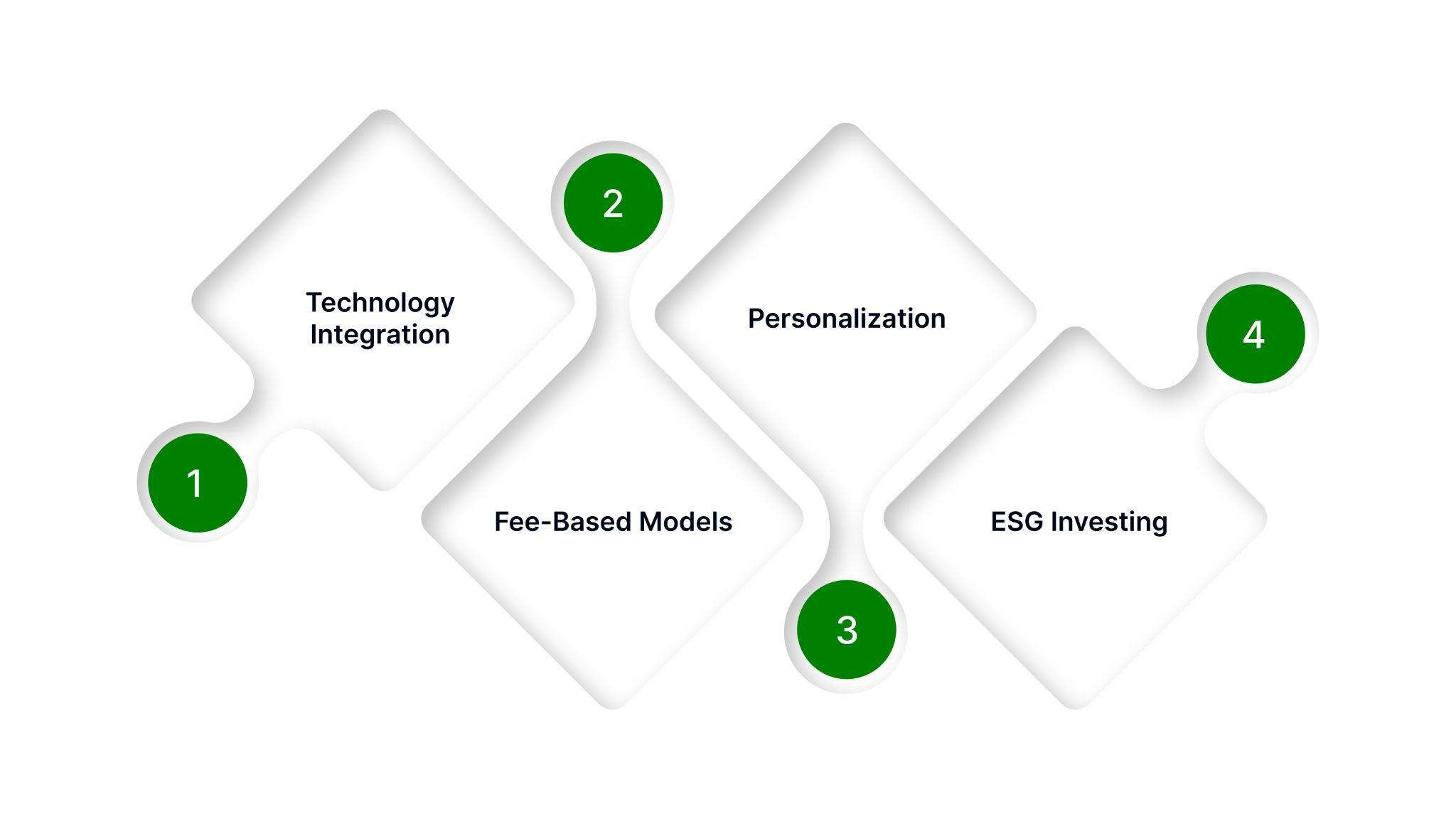
The financial advisory services market is undergoing changes that affect how you engage with these services. Here are the key trends shaping the industry:
- Technology Integration: Robo-advisors lead the charge, offering cost-effective, automated investment options through algorithms. They’re ideal if you prefer a low-touch approach and are broadening access to financial advice.
- Fee-Based Models: There’s a clear move toward advisors charging for their expertise rather than product commissions. This trend, spurred by client expectations and regulations, builds trust and clarity in your advisory relationship.
- Personalization: With the help of data and technology, advisors now craft strategies tailored to your unique goals and risk levels. This ties into a growing demand for comprehensive planning that covers all facets of your finances.
- ESG Investing: Sustainability is gaining traction, with an increasing number of clients like you seeking investments that align with their personal or societal values. Advisors are responding by factoring ESG into their recommendations.
These trends are making the market more responsive to your needs. They’re shaped by both local and global forces, which we’ll explore in the next section.
Local and Global Market Influences
The financial advisory services market is molded by local and global dynamics that impact how you receive services. Globally, economic growth drives demand as rising wealth prompts more individuals and businesses to seek advice. The complexity of international markets also calls for expert navigation of cross-border investments.
Regulations are another major influence. Governments are enforcing stricter rules to safeguard investors and boost transparency. In the U.S., for instance, new SEC guidelines encourage advisors to prioritize their interests, supporting the shift to fee-based models. These rules create a global ripple, raising industry standards.
Regionally, the market differs. North America offers a mature landscape with a focus on tailored planning, while the Asia-Pacific region sees rapid growth due to economic progress and increasing financial literacy. Local factors, like cultural preferences for family wealth management in some areas, also shape the advice you get. Technology’s role is consistent worldwide, though its uptake varies by region based on digital access.
These influences create distinct regional markets while feeding into broader trends. High-net-worth individuals, a key group affected by these shifts, deserve a closer look.
High Net Worth Individuals and Market Data
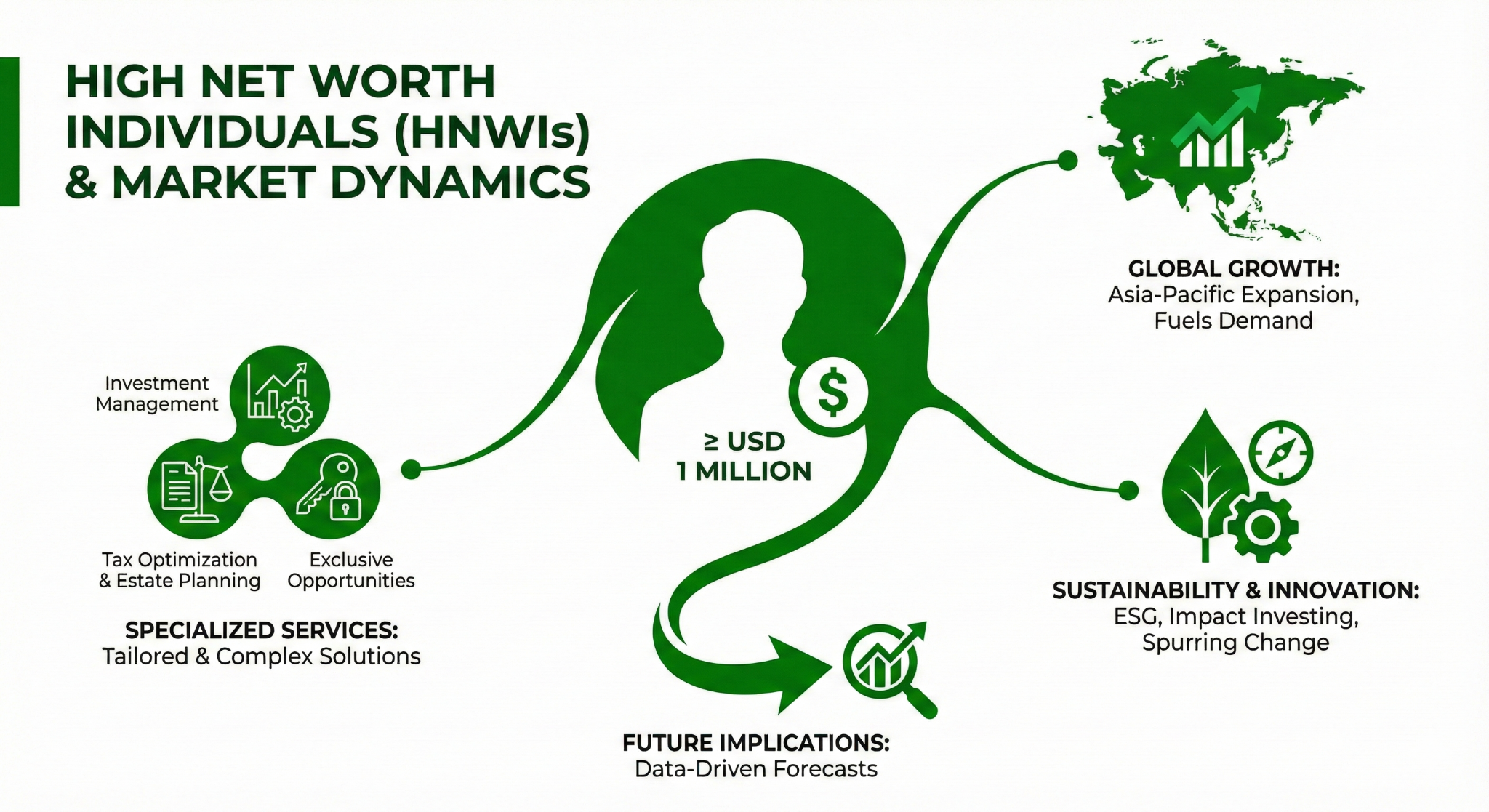
High-net-worth individuals (HNWIs), those with investable assets of USD 1 million or more, are a vital part of this market. If you’re among them, you likely need more than standard advice, seeking services such as investment management, tax optimization, estate planning, and exclusive opportunities, including private equity.
Data show that the HNWI population is expanding, especially in the Asia-Pacific region, where economic growth is generating new wealth. This fuels demand for advisors who are skilled in handling complex portfolios and implementing long-term strategies. You might aim to preserve wealth for future generations or pursue high-yield investments, and advisors are tailoring their offerings accordingly.
Sustainability matters to many HNWIs, too. Market data reveal a growing interest in ESG and impact investing, with clients seeking portfolios that reflect their values and principles. The wealth management sector, closely tied to HNWIs, is poised to continue growing as these needs evolve. HNWIs aren’t just driving demand; they’re spurring innovation.
To explore the potential implications, let’s examine how forecasts are developed.
Also Read: Asset vs Equity Purchase: Pros, Cons, and Key Considerations
Forecasting and Methodology
Forecasting the financial advisory services market blends data analysis with expert judgment. Analysts utilize tools like trend analysis and econometric models to forecast growth, such as the projected increase to USD 204 billion by 2030. They start with past data to identify patterns, then factor in current elements such as economic trends and technological developments.
Indicators like GDP growth, consumer spending, and the rising number of HNWIs help refine these projections, showing how the economy might impact your need for advice. Qualitative insights from industry leaders and clients like you add nuance to the numbers. Technology, including advanced analytics and AI, sharpens these forecasts by handling vast datasets.
This mix of data and expertise provides a reliable insight into the market’s future, helping you prepare for what’s ahead. With this groundwork in place, you’re ready to consider the bigger picture.
Conclusion
The financial advisory services market is undergoing rapid change, driven by technological advancements, personalization, and economic shifts. These developments present both opportunities and challenges, making it essential for you to stay ahead of the curve. Whether you’re building wealth or planning for the long term, understanding these trends equips you to make informed choices.
Forest Hill Management is here to support you through this dynamic landscape with expert, tailored advice. We know your financial goals are one-of-a-kind, and our team is ready to help you tackle today’s complexities. Reach out today to learn how we can design a strategy that fits your needs and drives your success.
Frequently Asked Questions (FAQs)
Q1. What is driving growth in the financial advisory services market?
Major growth drivers include increased financial complexity, greater wealth accumulation (especially in emerging markets), regulatory shifts, and rising demand for personalized and tech-enabled financial advice.
Q2. How are fee-based models different from commission-based ones?
In a fee-based model, advisors charge a flat fee or a percentage of assets under management, providing transparency. Commission-based models involve earning income through product sales, which may pose conflicts of interest.
Q3. What role does technology play in the advisory space?
Technology is central to advisory innovation. Robo-advisors automate investment decisions, while AI and digital tools allow for real-time insights, improved customer experiences, and more efficient portfolio management.
Q4. Why are ESG and sustainable investing trends important in this market?
Clients increasingly want their portfolios to reflect their environmental and social values. Advisors are responding by integrating ESG criteria into investment strategies, particularly for younger and high-net-worth investors.
Q5. Are financial advisory services only for wealthy individuals?
No. While high-net-worth individuals require more complex services, the market also caters to middle-income earners, small business owners, and young professionals—especially with the rise of digital advisory platforms.