-p-500%20(1).png)
Financial Management Explained: Meaning, Key Areas & Importance

Need Help Reviewing Your Account?
Contact UsFinancial management can sound like a technical term used in boardrooms or business meetings. But at its core, it's simply about keeping money organized so life doesn't feel financially out of control.
When bills start piling up, balances feel unclear, or payments feel harder to keep up with, the need for structure becomes more urgent.
Financial management helps create that structure by bringing clarity to what's owed, guiding financial decision making, and helping you move from uncertainty toward a more stable, manageable path forward.
This guide focuses on financial management in everyday personal financial situations, especially when managing bills, balances, and financial obligations.
Key Takeaways
- Financial management is the structured way money is planned, tracked, and handled to maintain stability and avoid unnecessary disruption.
- It connects financial planning, cash flow management, and budgeting and forecasting to create clarity around obligations and priorities.
- When financial information is organized, decisions become more informed, supporting steadier financial decision-making over time.
- Consistent tracking and planning reduce uncertainty, helping money management feel more predictable and less reactive.
- Structure, visibility, and realistic planning are what turn scattered financial activity into sustainable financial stability.
What Is Financial Management?
Financial management is the organized process of handling money through clear systems and informed financial planning. Instead of reacting to expenses as they appear, it focuses on tracking income, monitoring obligations, and making deliberate choices about how money is used.
This approach turns everyday money management into a structured process rather than a series of last-minute decisions.
It includes reviewing financial information regularly, setting realistic priorities, and adjusting plans when circumstances change. Applied in a business setting or in personal financial management, the goal is consistency: understanding how money flows, where it needs to go, and how to manage it responsibly over time.
Financial Management for Personal Financial Stability
Financial management is often discussed in business or corporate settings, but the same principles apply to everyday personal financial situations. In personal contexts, financial management is less about complex financial models and more about maintaining clarity, predictability, and control over obligations and expenses.
For individuals, financial management typically centres on understanding balances, tracking payment commitments, and keeping financial information organised. When account details, due dates, and payment outcomes are easy to follow, financial decisions become less stressful and more manageable.
Personal financial stability is closely tied to visibility. Knowing what is owed, when payments are due, and how payments affect balances reduces uncertainty and prevents small issues from growing into larger disruptions.
In practical terms, personal financial management often involves:
- Keeping track of outstanding balances and obligations
- Monitoring payment timing and due dates
- Maintaining records of payments and account updates
- Responding early to changes or notices
- Using secure systems to review account information
This perspective keeps financial management grounded in day-to-day financial reality rather than abstract financial theory.
Why Financial Management Matters?
Financial management matters because money decisions rarely affect just one moment. They shape what becomes possible next. Without structure, small financial issues can quietly grow into larger disruptions.
Surveys from the American Psychological Association show that money and financial issues consistently rank among the most significant sources of stress for adults, with around two-thirds of people reporting finances as a major stress factor. Financial worry has also been linked in research to negative effects on psychological well-being and decision-making under pressure.
A clear system brings stability by turning scattered information into something usable. When financial planning and cash flow management are consistent, uncertainty reduces and decision-making improves.
Financial management supports stability by:
- Creating visibility into where money is going
- Preventing avoidable financial surprises
- Reducing stress caused by unclear obligations
- Helping financial planning stay realistic over time
This shift from reaction to awareness is what makes financial management meaningful in everyday life.
5 Key Areas of Financial Management
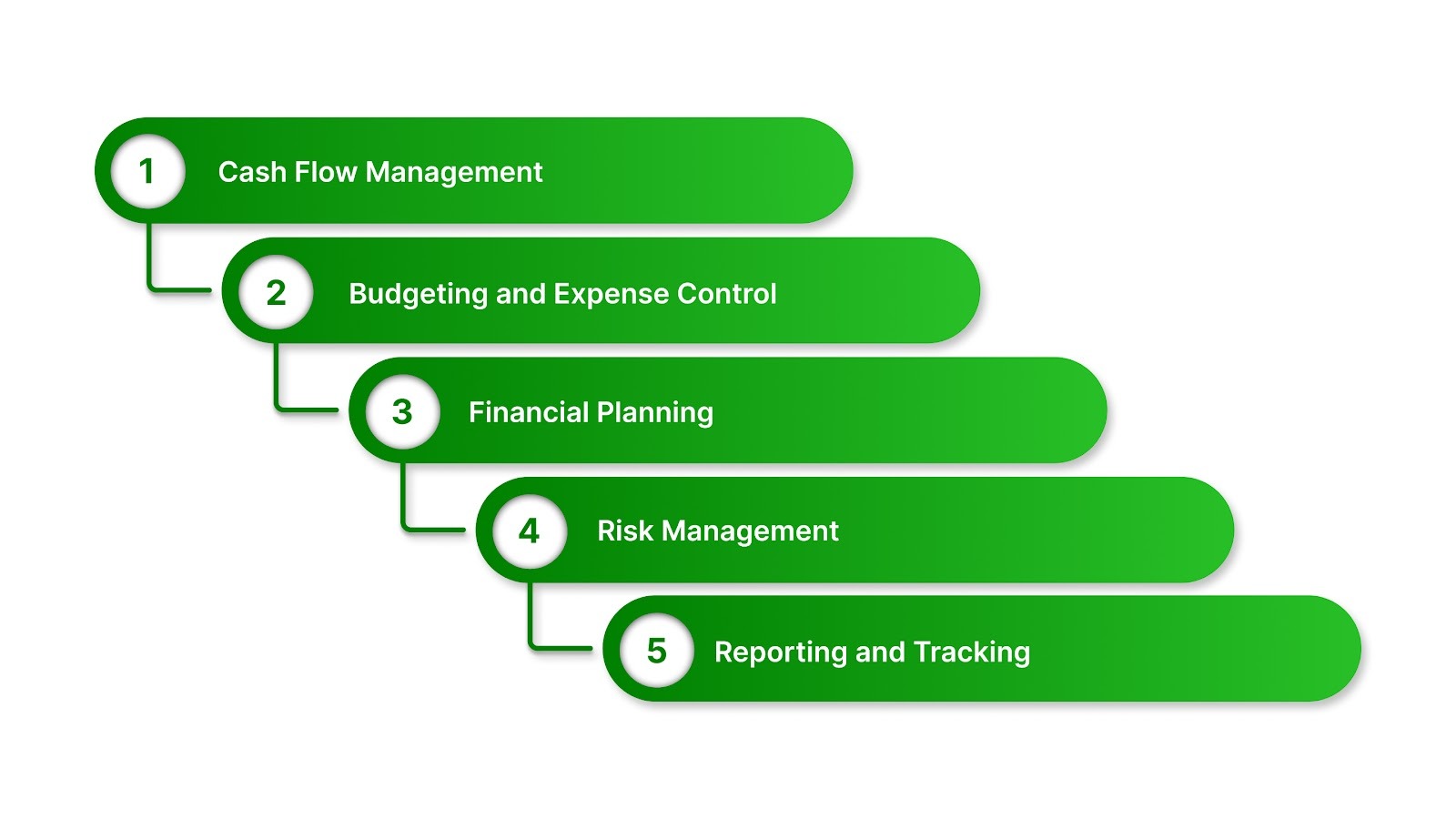
Financial management works through a few structured areas that bring clarity to how money is handled. These areas connect to each other, forming a system that helps finances stay organized instead of reactive.
1. Cash Flow Management
Cash flow management focuses on timing, when money is available versus when it is needed. Even if total income seems sufficient, poor timing can cause disruption.
It helps by:
- Tracking when income is expected
- Identifying which obligations are time-sensitive
- Preventing payment gaps that create penalties or added pressure
- Keeping essential commitments aligned with available funds
2. Budgeting and Expense Control
Budgeting and forecasting give structure to spending. Instead of reacting to expenses as they arise, this area assigns priorities in advance.
It involves:
- Separating essential costs from adjustable ones
- Reviewing spending patterns that may be creating strain
- Planning ahead for predictable expenses
- Adjusting commitments to keep obligations realistic
3. Financial Planning
Financial planning extends beyond the current month. It prepares for upcoming responsibilities before they become urgent.
This includes:
- Anticipating future obligations
- Adjusting plans when income or circumstances change
- Preventing repeated shortfalls
- Supporting consistent money management over time
4. Risk Management
Financial risk often builds quietly. Ignored balances or delayed responses can increase exposure to avoidable consequences.
Risk management focuses on:
- Staying aware of account status
- Responding early instead of waiting for escalation
- Reducing exposure to legal or credit-related issues
- Making decisions based on accurate financial information
5. Reporting and Tracking
Tracking creates visibility. Without it, financial decisions rely on assumptions.
This area supports:
- Monitoring balances and payment progress
- Keeping financial information current
- Identifying changes that require adjustments
- Supporting informed financial decision making
Together, these areas form the practical side of financial management, turning scattered money decisions into a structured approach that supports financial stability through consistent oversight and financial planning.
Core Objectives of Financial Management
Financial management has clear objectives that guide how money is handled, how decisions are made, and how stability is maintained over time.
At a practical level, these objectives help bring order to financial situations that might otherwise feel uncertain or hard to manage.
The core objectives include:
- Maintaining financial stability: Creating a system where obligations are handled in a consistent and manageable way.
- Reducing financial risk: Staying aware of balances, due dates, and commitments to prevent avoidable problems.
- Improving long-term money management: Building habits and structures that prevent repeated financial disruption.
- Creating predictability in financial planning: Anticipating upcoming expenses and adjusting before issues grow.
When these objectives are in place, financial management becomes less about reacting to situations and more about maintaining control through steady, realistic financial planning.
Also Read: Personal Finance and Money Management Guide
Financial Management for Businesses vs Individuals
Financial management applies to both organizations and people, but the focus shifts depending on the situation. The table below highlights how the concept works in each context.
For individuals facing financial strain, personal financial management often becomes about regaining clarity and structure.
This can include reviewing outstanding accounts, understanding available options, and reviewing available account resolution options through lawful, consumer-focused support, all of which help move finances from confusion toward stability.
4 Types of Financial Management
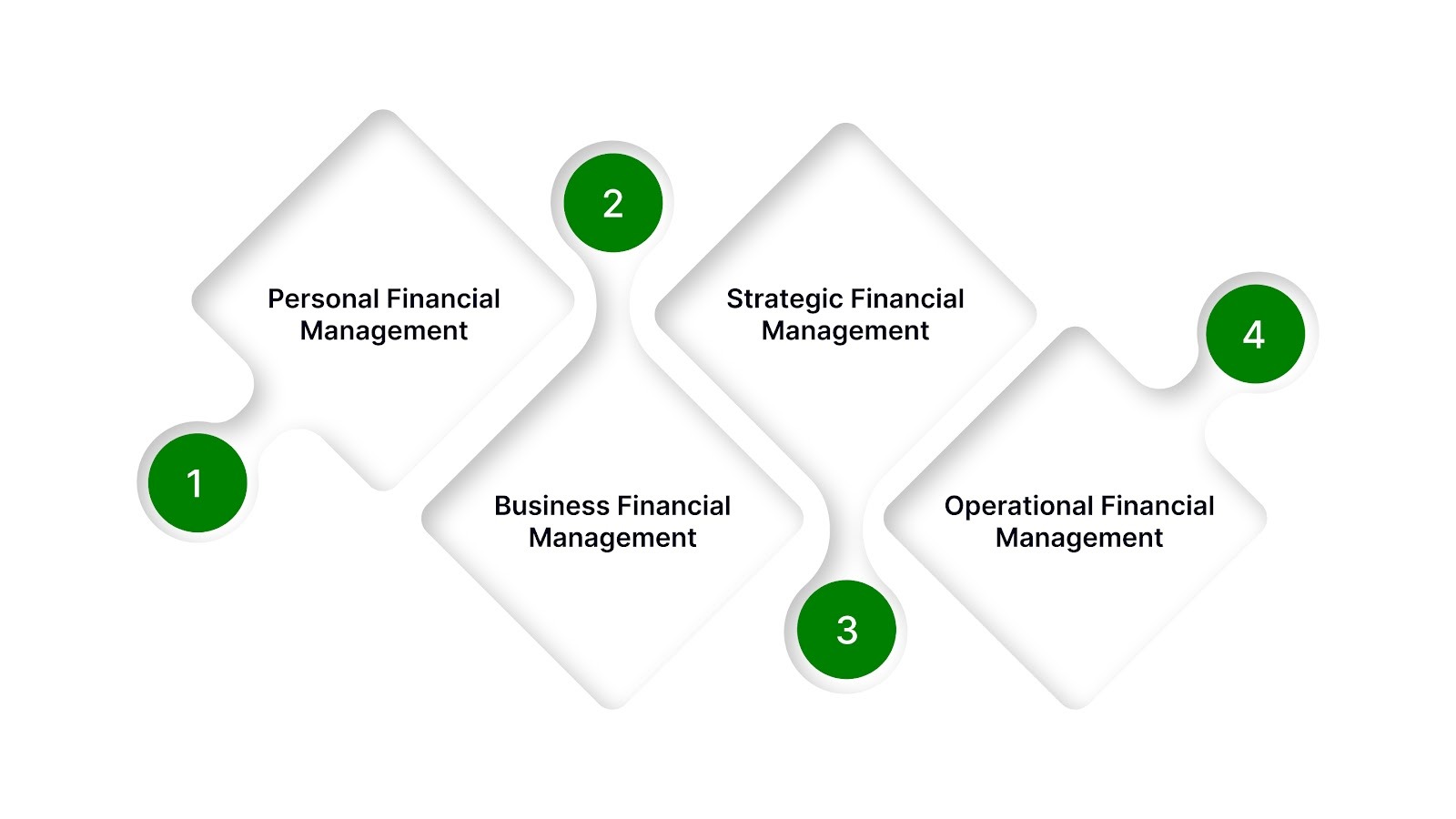
Financial management appears in different forms depending on the situation, but the purpose remains consistent: keeping money organized, visible, and manageable.
The main types include:
1. Personal Financial Management
Focuses on tracking income, obligations, and daily responsibilities. It supports improved money management and clearer financial planning.
2. Business Financial Management
Involves budgeting and forecasting, managing expenses, and overseeing cash flow management to maintain operational stability.
3. Strategic Financial Management
Looks beyond immediate needs. It connects financial planning with long-term goals so decisions today support future stability.
4. Operational Financial Management
Handles daily financial tracking, reporting, and financial control, keeping obligations consistent and organized.
Together, these forms show that financial management is both a daily practice and a long-term stability process.
Suggested Read: Top Personal Finance Blogs You MUST Read
Why Financial Management Becomes Critical During Financial Strain?
Financial management often becomes most important when accounts start falling behind or obligations feel harder to manage. In these moments, a lack of structure can cause small issues to grow. Missed payments may lead to added fees, unclear balances make it harder to know what to prioritize, and delayed responses can increase the risk of escalation.
This is where financial control matters. Financial control means having clear visibility into what is owed, which obligations are most urgent, and how payments will be handled. Without that clarity, decisions tend to be reactive, which increases stress and uncertainty.
When financial management breaks down, people often face:
- Missed or delayed obligations
- Confusion about balances and due dates
- Increased stress from not knowing the next steps
- Greater risk of avoidable consequences
Even simple financial planning, such as reviewing account details and organizing obligations by priority, helps restore order. Over time, this structure reduces unpredictability and supports more stable, manageable money management.
How Structured Support Helps Restore Financial Management
When finances become difficult to manage alone, structured support can act as an extension of financial management rather than a replacement for it. The goal is not to take control away from you, but to provide clarity, consistency, and lawful processes that make account information easier to understand and act upon.
Support services such as the Forest Hill Management focus on bringing organization to situations where accounts may feel unclear or overwhelming.
Instead of scattered information or uncertain next steps, structured support provides a clearer picture of account status and available options.
This type of support helps restore financial control by:
- Clarifying account information so balances and updates are easier to understand
- Protecting consumer rights through compliant communication and secure handling of information
- Explaining available resolution options so consumers can make informed decisions
- Providing secure systems that allow consumers to view account information and make payments through authorized channels
By improving visibility and clarity, structured support helps consumers better understand their accounts and available options. It reduces guesswork, limits confusion, and helps financial planning feel more manageable.
In this way, support services become part of the broader financial management process, reinforcing order, clarity, and steady progress rather than adding pressure.
5 Simple Steps to Improve Financial Management Today
Improving financial management doesn’t require complicated systems. Small, consistent actions can quickly bring more clarity and direction to everyday money management.
Step 1: List all current financial obligations
Write down accounts, bills, and recurring payments so nothing is left to memory.
Step 2: Confirm balances and due dates
Accurate information supports better financial planning and prevents avoidable surprises.
Step 3: Prioritize essential commitments
Focus first on obligations that affect daily living, stability, or time-sensitive responsibilities.
Step 4: Review account details and available options when something feels unclear
If payments feel difficult, reviewing available options and understanding account details can support more stable money management.
Step 5: Use secure payment systems
Paying through reliable platforms helps keep transactions organized and easier to track over time.
These steps strengthen your control of finances by turning scattered tasks into a clear process. Over time, consistent tracking and planning support improved money management, making financial decisions more predictable and less reactive.
A Clearer Path Forward
Financial management is ultimately about creating order where uncertainty once existed. When money decisions are guided by clear information, steady priorities, and consistent follow-through, finances feel more manageable and less overwhelming.
As you organize everyday obligations or address accounts that need attention, structure makes progress possible and supports lasting financial stability.
Taking even one practical step today can begin that shift from uncertainty toward control.
Take the first step toward financial stability today. Speaking with a knowledgeable account support representative can be a helpful next step toward stability
FAQs
Q1. Is financial management the same as budgeting?
A1. No. Budgeting is one part of financial management. Financial management also includes tracking obligations, planning ahead, managing cash flow, and making informed financial decisions that support stability over time.
Q2. How does cash flow management affect financial stability?
A2. Cash flow management focuses on timing, making sure money is available when payments are due. When timing is managed well, it reduces the risk of missed obligations and helps keep finances predictable.
Q3. Can financial management help if I’m already behind on payments?
A3. Yes. Financial management becomes even more important when accounts fall behind. Reviewing balances, prioritizing obligations, reviewing available options, and clarifying account details can help restore control of finances.
Q4. Why is tracking financial information so important?
A4. Tracking provides visibility. Knowing balances, due dates, and payment progress allows decisions to be based on facts rather than assumptions, which supports better financial planning and reduces uncertainty.
Q5. What role does planning play in money management?
A5. Planning helps prepare for upcoming expenses and adjust when circumstances change. Consistent financial planning supports improved money management and reduces the likelihood of repeated financial setbacks.