-p-500%20(1).png)
Financial Planning And Investing Topics For Discussion

Need Help Reviewing Your Account?
Contact UsIntroduction
Who said financial planning had to be as mundane as watching paint dry? Buckle up because we're about to make cents of it all in a way that would even make your wallet laugh!
Financial planning and investing are not just about numbers and charts. They are about taking control of your financial future, setting clear goals, managing your money effectively, and making intelligent investment choices. This understanding is the key to your long-term success. This blog will empower you with the knowledge and strategies to make informed decisions, ensuring your financial security.
Understanding Financial Planning
What is a financial plan?
A financial plan is a detailed roadmap to achieve your financial goals. For instance, if your goal is to buy a house in the next five years, your financial plan might include saving a certain amount each month, investing in a high-yield savings account, and exploring mortgage options. It includes an analysis of your current financial situation, setting specific objectives, and outlining the steps to reach those goals.
Key steps in financial planning
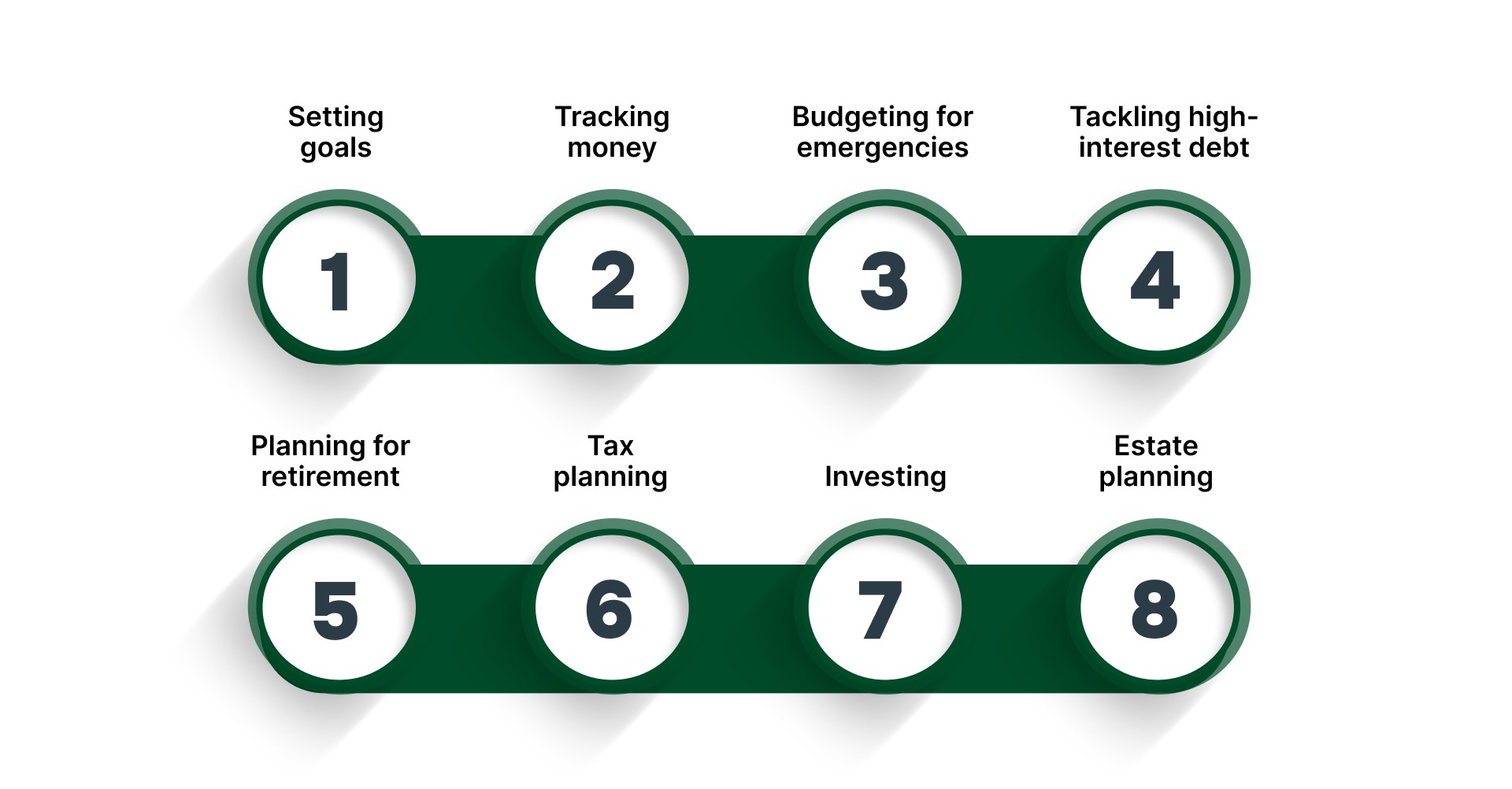
- Setting goals: Define clear, achievable financial objectives to guide your financial journey. Setting specific goals helps you stay focused and motivated to reach your financial milestones.
- Tracking money: Monitor your income and expenses to understand your spending habits better. This will help you identify areas where you can save and allocate funds more efficiently.
- Budgeting for emergencies: Set aside funds in an emergency savings account to ensure a safety net for unexpected expenses. This will protect you from financial strain during unforeseen events.
- Tackling high-interest debt: Managing high-interest debt is crucial for financial health. If not addressed properly, high-interest debt can quickly become unmanageable. Creating a personalized debt management plan can make a significant difference.
Forest Hill Management offers tailored debt management solutions, helping you efficiently manage and reduce high-interest debts, ultimately improving your financial stability. - Planning for retirement: Start saving early to secure a comfortable retirement. Utilize retirement accounts like 401(k)s and IRAs to benefit from compound interest and tax advantages.
- Tax planning: Use tax-efficient strategies to minimize your tax liability. This includes taking advantage of deductions, credits, and tax-advantaged accounts to reduce taxable income.
- Investing: Make informed investment choices to grow your wealth over time. Diversify your portfolio to balance risk and return, and align your investments with your financial goals.
- Estate planning: Prepare for the distribution of your assets after your passing by creating a will and establishing trusts. Regularly review and update your estate plan to reflect changes in your financial situation and wishes.
Importance of personalized financial plans
Everyone's financial situation is unique. Personalized financial plans consider individual goals, risk tolerance, and economic status, ensuring a tailored approach to achieve financial success. Whether you're just starting your career, planning for retirement, or navigating a major life change, a personalized financial plan can help you make the most of your money.
Investing As A Component Of Financial Planning
Investments are crucial in achieving long-term financial objectives. They help you accumulate wealth over time, providing the funds for major life milestones and plans.
Types of investments to consider in a financial plan
Maximizing retirement contributions through investing
Maximize contributions to take full advantage of retirement accounts. This ensures you benefit from employer matches and tax advantages, building a robust retirement fund.
Balancing risk and return in your investment portfolio
Create a diversified portfolio to balance risk and return. Diversification helps manage volatility and enhances the potential for stable returns over time.
Advanced Financial Planning Topics
Diving deeper into financial planning involves exploring advanced strategies to enhance financial health and optimize wealth. These topics go beyond the basics, providing sophisticated tools and methods for a robust monetary plan.
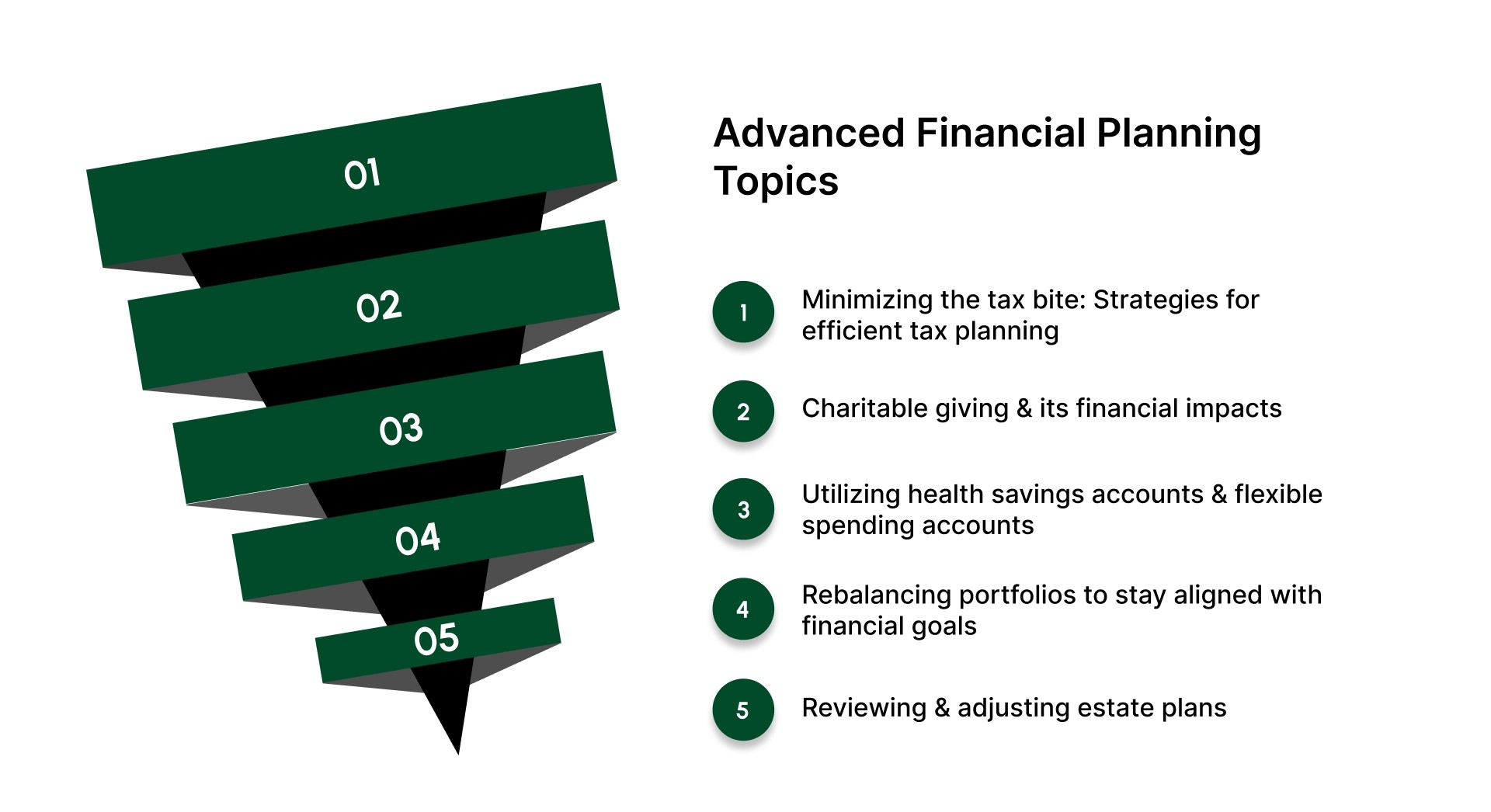
- Minimizing the tax bite: Strategies for efficient tax planning
Effective tax planning is crucial for maximizing income and savings. This involves understanding tax laws, utilizing tax-advantaged accounts like IRAs and 401(k)s, and exploring strategies such as tax-loss harvesting. You can significantly reduce your tax liability and keep more earnings by strategically managing your taxes.
- Charitable giving and its financial impacts
Incorporating charitable donations into your financial plan supports causes you care about and offers potential tax benefits. By planning your charitable contributions, you can maximize these benefits while positively impacting your community.
- Utilizing health savings accounts (HSAs) and flexible spending accounts (FSAs)
HSAs and FSAs are valuable tools for managing healthcare expenses. Contributions to these accounts are tax-deductible, and withdrawals for qualified medical expenses are tax-free. Using these accounts effectively can help you save on healthcare costs and reduce taxable income.
- Rebalancing portfolios to stay aligned with financial goals
Regularly rebalancing your investment portfolio ensures it remains aligned with your financial goals and risk tolerance. This process involves adjusting the proportions of different asset classes to maintain your desired level of risk and return, helping to safeguard your investments against market fluctuations.
- Reviewing and adjusting estate plans
An estate plan outlines how your assets will be distributed after your death. Regularly reviewing and updating your estate plan ensures that it reflects your current wishes and financial situation. This includes updating wills, trusts, and beneficiary designations to ensure your assets are distributed according to your intentions.
Financial Planning Across Different Life Stages
Financial planning is not a one-time task but an ongoing process that evolves as you move through different stages of life. Each life stage comes with its economic needs, challenges, and goals. By understanding and anticipating these needs, you can create a flexible financial plan that adapts to changing circumstances and helps you achieve long-term financial security.
Planning for major milestones in life
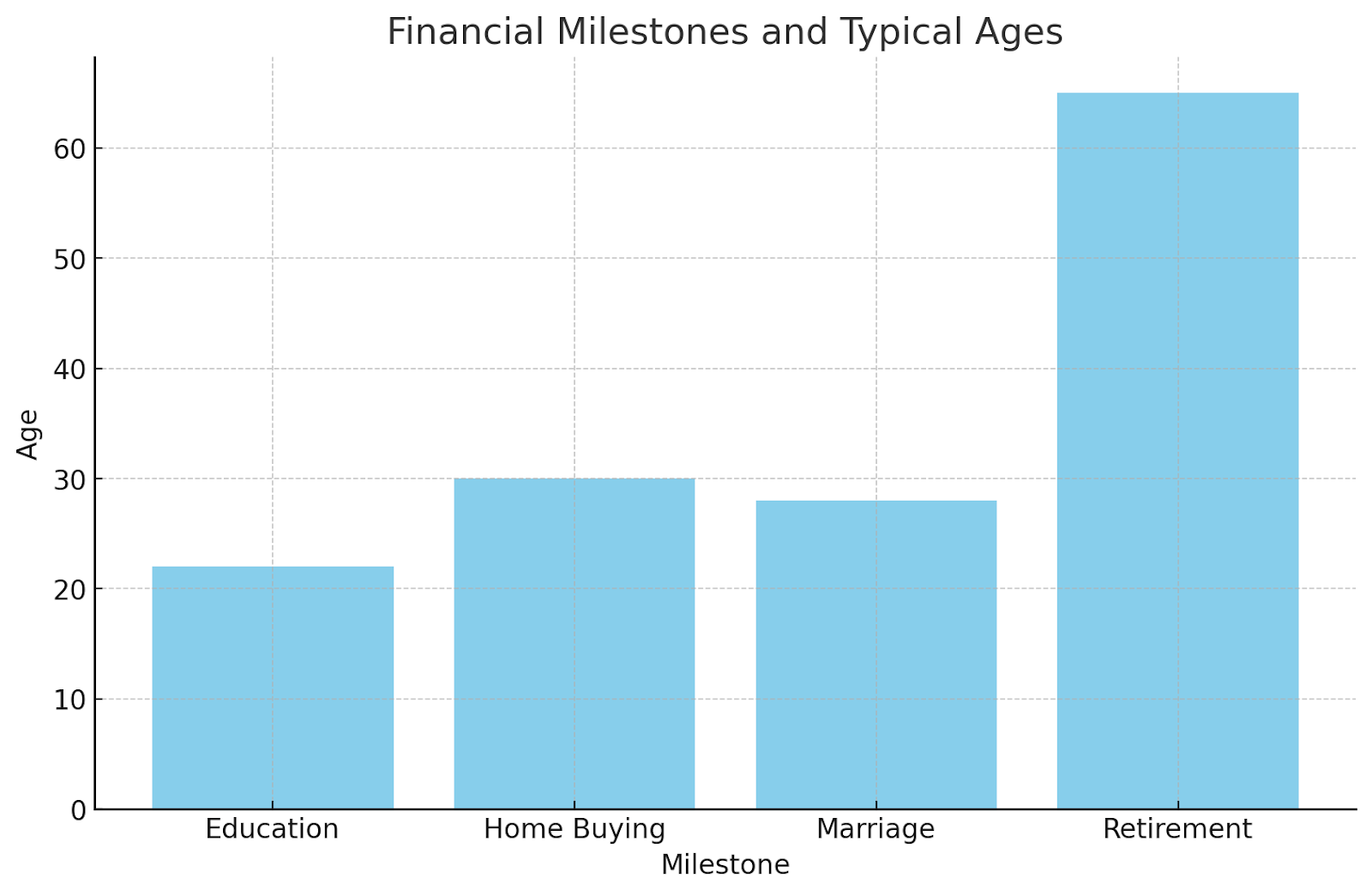
Major life milestones often involve significant financial decisions and expenditures. Proper planning can help you navigate these milestones smoothly. The chart below illustrates typical ages for reaching various financial milestones. This visual representation underscores the importance of early and continuous financial planning.
Adapting financial plans in a post-pandemic world
The COVID-19 pandemic has profoundly changed the way we work and what we value personally. Many people have shifted to remote work, experienced changes in job stability, and reassessed their life priorities. These changes necessitate reevaluating financial plans to ensure they remain relevant and practical. For example, the pandemic has highlighted the importance of emergency funds and the need to diversify investments.
By adapting your financial plans to reflect these changes, you can better navigate the uncertainties of the post-pandemic world and maintain economic stability.
Preparing for generational wealth transfer
As baby boomers age, a significant transfer of wealth to younger generations is expected. Preparing for this transfer involves:
- Estate Planning: Create or update wills and trusts to ensure your assets are distributed according to your wishes.
- Tax Planning: Understand the tax implications of inheriting wealth and plan accordingly to minimize tax liabilities.
- Financial Education: Educate younger family members about managing inherited wealth responsibly, including budgeting, investing, and charitable giving.
Before you get too comfy thinking you've got it all figured out, let's tackle some common missteps that could throw a wrench in your perfectly planned financial future.
Common Financial Planning And Investing Mistakes
Even the most well-intentioned financial plans can go awry if certain pitfalls are not avoided. Here are some common mistakes that can hinder your financial success and how to steer clear of them:
Choosing the wrong financial planner or making poor investment decisions
Selecting a qualified financial planner is crucial. Ensure you choose someone with the proper credentials and experience. Conduct thorough research and ask for recommendations to find a trustworthy advisor. Making uninformed investment decisions can also be detrimental. Always base your investment choices on solid research and professional advice.
Accumulating high-interest debt
High-interest debt can quickly become a barrier to financial success. Pay off debts with the highest interest rates first to reduce your overall debt and free up resources for saving and investing.
Neglecting the importance of an emergency fund
Not having an emergency fund can lead to financial disaster during unexpected events. Aim to save at least three to six months' living expenses to cover unforeseen circumstances like job loss or medical emergencies.
Overlooking tax and estate planning
Tax and estate planning are often underestimated but are crucial components of a comprehensive financial plan. Effective tax planning can save you money and ensure compliance with tax laws. Similarly, estate planning ensures that your assets are distributed according to your wishes and can help minimize the tax burden on your heirs.
Avoiding these common mistakes can significantly improve your financial health and set you on a path to achieving your financial goals.
Innovative Financial Planning And Investing Models
Financial planning and investing are evolving rapidly, with new models and approaches emerging to meet the changing needs of individuals. Here are some innovative models to consider:
- Alternative financial planning models: Beyond traditional advice
Traditional financial planning often involves one-on-one consultations with a financial advisor. However, alternative models are gaining popularity. These include robo-advisors, which use algorithms to provide personalized investment advice and manage portfolios at a lower cost. Additionally, online financial planning services offer virtual consultations and planning tools, making financial advice more accessible.
- The rise of subscription services and financial coaching
Subscription-based financial services are becoming increasingly popular. These services offer continuous financial advice and support for a monthly fee, providing clients with ongoing access to financial planners. Financial coaching services, which focus on helping individuals develop healthy financial habits and achieve their goals, are also rising. These models provide flexibility and tailored support to meet diverse financial needs.
- Incorporating technology and online platforms in financial planning
Technology is transforming financial planning by making it more efficient and user-friendly. Online platforms offer tools for budgeting, investing, and tracking financial goals, allowing individuals to manage their finances from their devices. These platforms often provide real-time updates and insights, helping users make informed decisions and stay on top of their financial plans.
- Addressing stress and behavioral finance in financial decision-making
Behavioral finance, which studies how psychological factors influence financial decisions, is becoming an integral part of financial planning. Understanding the impact of stress and emotions on financial choices can help individuals make better decisions. Financial planners increasingly incorporate behavioral finance principles into their practice, offering strategies to manage stress and avoid common pitfalls driven by emotional reactions.
Alright, we've peeked into the future of finance, and it looks pretty awesome. But how do you start reaping the benefits today? Let's explore practical ways you can showcase the real value of savvy financial planning and investing in your life.
Demonstrating Value In Financial Planning And Investing
Effective financial planning and investing are crucial for achieving your goals and ensuring long-term economic stability. Here are some key ways to demonstrate the value of these practices:
Using year-end financial planning checklists:
- Utilize checklists to review your financial situation at the end of the year.
- Identify areas for improvement and set new financial goals for the upcoming year.
- Ensure all financial documents are up to date and organized.
Proactively planning for retirement contributions and charitable giving:
- Plan to maximize your retirement contributions and take full advantage of tax benefits.
- Incorporate charitable giving into your financial plan to support causes you care about and receive potential tax deductions.
Collaborating with professional advisors:
- Work with financial advisors to enhance your financial outcomes.
- Receive expert guidance tailored to your individual financial goals and circumstances.
- Regularly review and adjust your financial plan with your advisor to stay on track.
Utilizing financial tools and resources:
- Take advantage of online tools and resources provided by Forest Hill to manage your finances effectively.
- Use calculators, budgeting tools, and educational materials to make informed decisions.
Engaging in continuous learning:
- Stay informed about the latest financial trends and strategies.
- Attend workshops, webinars, and other educational programs offered by Forest Hill to improve your financial literacy.
Future Trends In Financial Planning And Investing
As the financial landscape evolves, staying ahead of future trends is crucial for effective financial planning and investing. Understanding these trends can help you make informed decisions and adapt your strategies to maximize returns and minimize risks.
By staying informed about these future trends, you can proactively adjust your financial plans and investment strategies, ensuring you remain well-prepared for the evolving financial landscape.
Tailored Financial Planning Services Offered By Forest Hill
Forest Hill offers specialized services designed to meet your unique financial needs. These services ensure that you receive comprehensive and personalized financial planning.
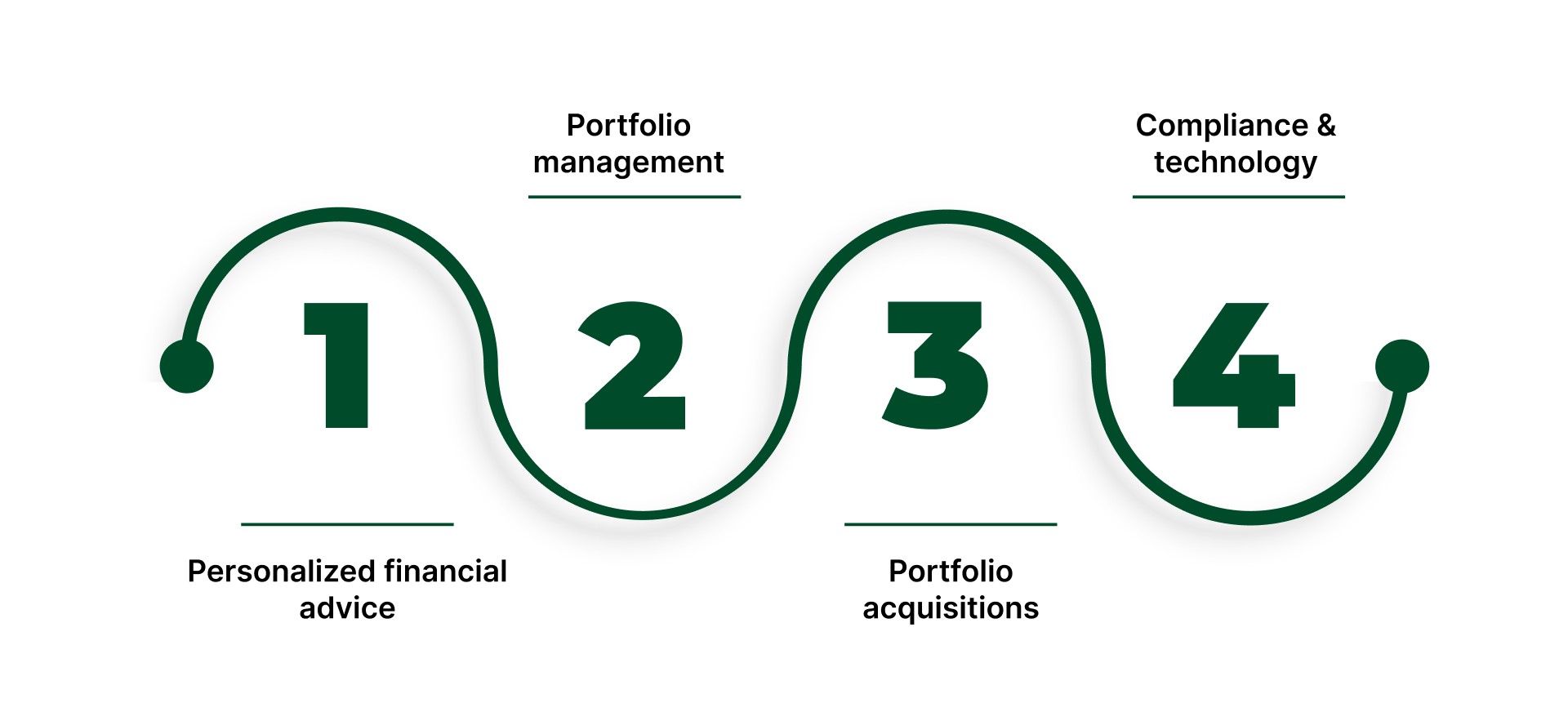
1. Personalized financial advice
Forest Hill provides customized financial plans tailored to individual needs and goals, ensuring personalized advice for each client.
2. Portfolio management
Forest Hill provides expert portfolio management, helping you create and maintain a diversified investment portfolio tailored to your financial goals and risk tolerance. This service includes regular reviews and adjustments to optimize performance and ensure alignment with your objectives.
3. Portfolio acquisitions
Forest Hill assists with portfolio acquisitions, guiding you through the process of acquiring new assets. Their expertise ensures that each acquisition aligns with your financial strategy, maximizing potential returns while managing risks effectively.
4. Compliance & technology
Forest Hill stays ahead of regulatory changes and leverages advanced technology to enhance its financial services. This includes ensuring that all financial plans comply with current regulations and utilizing cutting-edge tools to provide accurate, efficient, and secure financial planning solutions.
By leveraging these services, Forest Hill helps you achieve your financial goals through a tailored and strategic approach. Their commitment to personalized service, compliance, and technological innovation ensures you receive the best financial advice and management.
Educational Resources For Clients
Understanding your finances can be challenging, but having the proper education and resources makes a huge difference. Whether you're new to financial planning or looking to deepen your knowledge, there are plenty of ways to get the information you need.
Financial education programs
Many institutions offer workshops and webinars to help you understand complex financial topics. These programs cover everything from budgeting basics to advanced investment strategies, giving you the tools to make informed decisions.
Regular market updates
Staying informed about market trends is crucial for successful investing. Regular updates and reports can help you understand current market conditions and make better investment choices.
Interactive tools and calculators
Online tools and calculators are valuable resources for planning your finances. They can help you budget, calculate loan payments, plan for retirement, and more. Using these tools, you can better understand your financial situation and plan accordingly.
Conclusion
Engaging in discussions about financial planning and investing is essential for making informed decisions and achieving financial success. Understanding the key topics and trends allows you to create a strategic economic plan that adapts to your changing needs and goals. Leveraging personalized advice, comprehensive wealth management, and ongoing support from experts ensures that you are well-prepared for every stage of your financial journey. Stay informed, plan, and make thoughtful decisions to secure a prosperous financial future.