-p-500%20(1).png)
What Happens If You Ignore Debt Collectors: Legal Consequences
Need Help Reviewing Your Account?
Contact UsIgnoring a debt collector rarely makes the debt disappear. In most cases, it just delays the inevitable and narrows your options. The account stays open, the collector keeps trying to reach you, and your credit report may show the damage long after you stopped answering the phone.
There's a critical distinction here, though. Ignoring a collection call is one thing. Ignoring a court summons is another entirely — and the second can cost you the ability to defend yourself at all.
This article covers U.S. consumer debt collection: how to verify a debt, what deadlines actually matter, and how to respond strategically instead of going silent. Whether you're getting daily calls or just received a court notice, the moves you make in the next 30 days matter more than you might think.
Key Takeaways
- Silence doesn't dispute a debt or resolve an account; it only postpones the conversation.
- Collectors may keep contacting you, report the debt, or file a lawsuit based on the account and their policies.
- Missing a court deadline can trigger a default judgment and limit later challenges to the claim.
- Dispute inaccuracies, request proof, and negotiate terms without agreeing to pay immediately.
What Happens Before a Debt Collection Lawsuit?
Before any lawsuit gets filed, an unpaid account typically moves through a few predictable stages. Understanding this timeline helps you know where you stand.
The Account Changes Hands, Not Its Validity
When a creditor stops receiving payments, they may charge off the account internally, then sell or assign it to a third-party collector.
The Office of the Comptroller of the Currency notes that a charge-off is an accounting entry, not debt forgiveness. Your obligation generally remains intact even after the creditor writes it off its books.
Selling a debt changes who's collecting it, not whether it's owed. A debt buyer purchasing your account for pennies on the dollar doesn't erase your original balance.
Contact Comes Through Multiple Channels
Once an account lands with a collector, expect outreach through:
- Mailed letters
- Phone calls
- Text messages
- Limited, permitted social media contact
Ignoring one channel usually just pushes the collector toward another. A collector who can't reach you by phone may switch to email or send a letter instead.
The Validation Notice Is Your First Checkpoint
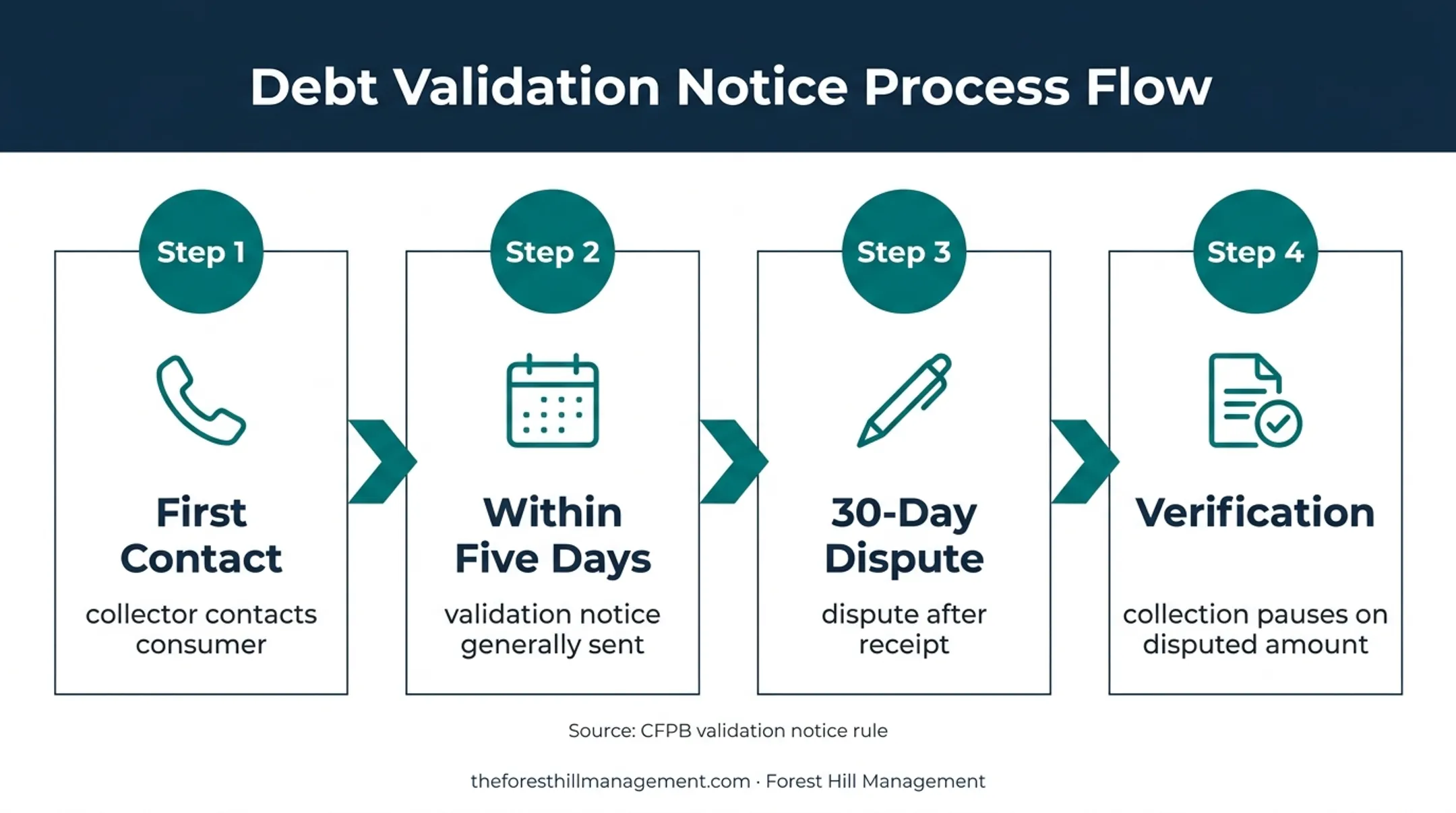
Under the FDCPA, a collector must generally send a written validation notice within five days of first contacting you (unless that information was already included). This notice should include:
- The amount owed
- The name of the current creditor
- A statement that the debt will be assumed valid unless you dispute it within 30 days after receipt
- Notice that a timely dispute triggers verification, sent back to you
- Notice that you can request the original creditor's name and address if it differs
According to the Consumer Financial Protection Bureau's validation notice rule, a written dispute submitted within that 30-day window requires the collector to pause collection on the disputed amount until they provide verification.
Check the creditor name, balance, dates, and account ownership before you respond. If something looks wrong, disputing it in writing starts the clock in your favor.
What Legal Consequences Can Follow If You Ignore Debt Collectors?
Ignoring collectors can trigger several legal and financial consequences, and they do not all run on the same timeline.
Contact Limits: Lawful Collection vs. Harassment
Collectors can legally keep contacting you, but federal rules put real boundaries around it. Under Regulation F, calling more than seven times in seven consecutive days about a specific debt — or calling within seven days after you've already discussed that debt by phone — creates a presumption of harassment.
False threats, misrepresenting the debt, or disclosing your debt to third parties who have no legal right to know about it all cross the line from lawful collection into FDCPA violations.
Credit Reporting Keeps Running on Its Own Clock
Contact is only one track. Your credit report runs on another. Negative account information, including collections, can generally stay on a credit report for up to seven years, starting 180 days after the delinquency that led to the collection or charge-off.
That seven-year reporting window is not the same as your state's statute of limitations for a lawsuit. A debt can be time-barred for suing while still appearing on your credit report, or the reverse. Treat them as two separate clocks.
Interest and Fees Don't Grow Automatically
Under FDCPA section 1692f(1), a collector can only add interest or fees if the original agreement or applicable state law expressly authorizes it. A charge-off or account transfer doesn't automatically permit new charges to pile on. If your balance keeps climbing, ask the collector to point to the specific authorization for it.
Will You Get Sued? It Depends on the Account
No single percentage predicts whether a collector will sue. The FTC's landmark study of the debt-buying industry, covering more than 5,000 portfolios and nearly 90 million accounts, found that pricing and collection strategy vary heavily by:
- Debt type and balance
- Account age
- Whether supporting documentation exists
- State law and limitations periods
- The individual collector's internal policies
A 2023 CFPB enforcement action against a debt collection law firm alleged that fewer than a dozen attorneys filed over 99,000 lawsuits in a three-year span, often without adequate supporting documents for each case. That's a cautionary example about one firm's past conduct, not proof of how often any given collector sues.
After You're Served: Deadlines Actually Matter Here
A phone call and a court summons are not the same event. Treating them the same is where consumers get hurt.
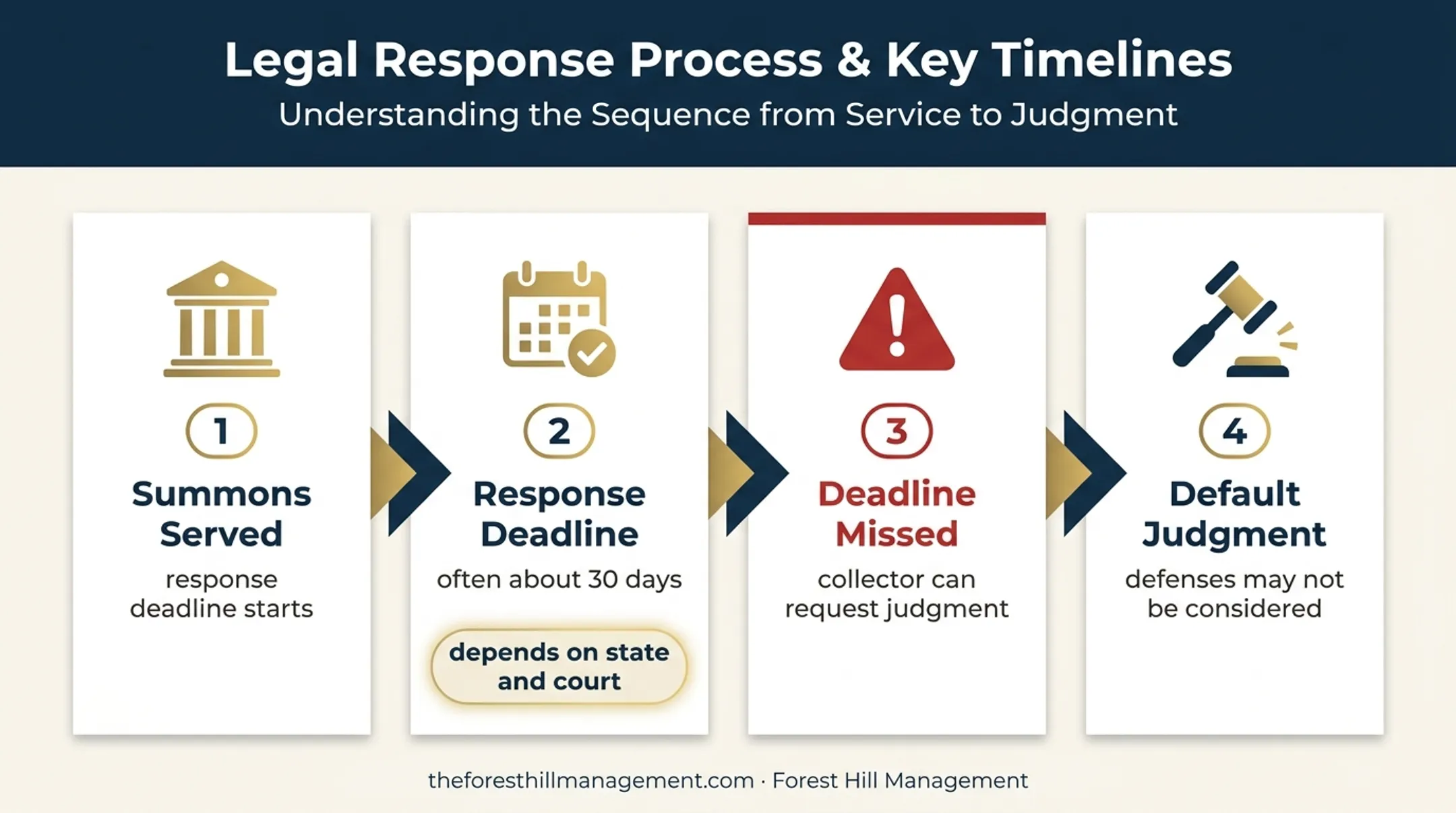
Once you're formally served with a summons and complaint, a strict response deadline starts (often about 30 days, depending on state and court). Miss it, and the collector can typically request a default judgment.
That judgment lets the court rule for the collector without hearing your side. Valid defenses—an expired statute of limitations, proof of payment, or lack of standing—may never get considered. Confirm your deadline with the court clerk or a qualified attorney as soon as you are served.
Post-Judgment Enforcement: What a Collector Can Actually Do
If a collector wins a judgment, enforcement options open up under state law, subject to federal and state limits:
- Wage garnishment. Federal law generally caps withholding at the lesser of 25% of disposable earnings or the amount above 30 times the federal minimum wage; a stricter state cap may apply instead.
- Bank-account levy. Banks must generally shield two months of qualifying federal benefits (such as Social Security) that were directly deposited.
- Property lien. A judgment recorded against real estate can block or complicate a sale or refinance without forcing immediate payment.
Exemptions and procedures vary by state. Check local rules or talk with an attorney before assuming any account is unreachable.
What Should You Do Instead of Ignoring a Debt Collector?
Going silent feels easier in the moment, but it rarely protects you. These steps do.
Build a Paper Trail
Document every interaction:
- Dates and times of calls
- Names and callback numbers
- Copies of letters and emails
- Account numbers and payment requests
- Any court documents received
Verify the collector's identity independently before sharing sensitive information. Scammers impersonate legitimate collectors often enough that a quick callback to a verified number is worth the extra five minutes.
Dispute or Request Validation in Writing
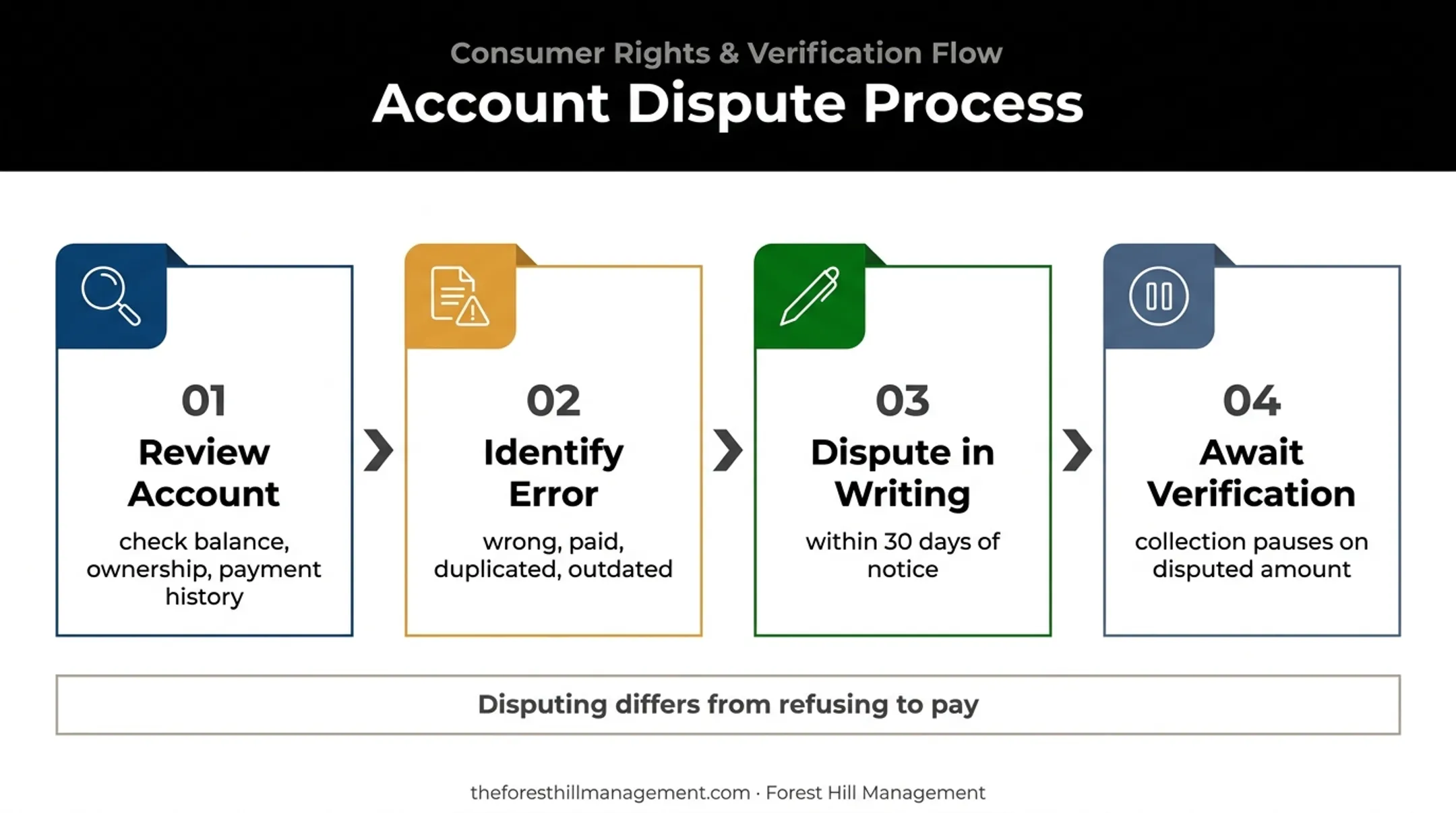
If the balance looks wrong, the account isn't yours, it's already paid, or something about it seems duplicated or outdated, put your dispute in writing within 30 days of the collector's validation notice. Disputing a debt is different from refusing to pay one you know is valid. Collectors and courts treat these situations very differently.
If You're Served: Act Immediately
A summons, complaint, judgment notice, garnishment order, or bank-levy notice all demand urgent action:
- Don't throw it away, even if the claim looks wrong: keep it as evidence.
- Identify the issuing court and confirm your response deadline.
- Preserve any records that support your defense.
- Contact a qualified attorney or legal aid service promptly.
- File your response before the deadline, even a basic one, to avoid default.
Watch the Clock on Old Debt
If a debt feels old, check your state's statute of limitations before doing anything. Making a partial payment or even acknowledging the debt verbally can, in some states, restart that clock. Don't guess. Confirm the rules for your state and debt type first.
Requesting a Stop to Contact Has Limits
You can send a written request asking a collector to stop contacting you. Under federal law, this generally halts calls and letters, aside from specific notices confirming the request or informing you of legally permitted next steps, like a lawsuit. It does not erase what you owe or prevent legal action.
Whether you keep communicating or ask for contact to stop, still request clear documentation: original creditor, balance breakdown, and any proposed terms in writing. Forest Hill Management, for instance, includes an "Original Creditor" section in its consumer communications so account holders can verify who they originally owed before deciding how to proceed.
A reputable servicer won't pressure you into an unverifiable payment. They also can't provide legal advice or guarantee outcomes. That's what an attorney is for.
Ways to Resolve or Manage the Debt
Once you've verified the debt, a few practical paths exist. Which one fits depends on your finances, the debt type, and how far along collection has progressed.
Before signing anything, confirm:
- Who legally owns the account
- The total balance and how payments will be applied
- Written terms rather than verbal promises
- Settlement terms that resolve the full obligation
- How the resolution will be reported to credit bureaus
- Any fees tied to the arrangement
Prioritize essential living expenses first. If the debt involves a pending lawsuit, possible identity theft, an unusually old account, or bankruptcy considerations, pause before you commit. Get professional legal or financial guidance first.
Conclusion: Ignoring Debt Collectors Can Increase Your Risk
Ignoring calls might buy short-term peace of mind. It doesn't fix anything underneath. Errors go unchallenged, deadlines pass unanswered, credit reporting stays unresolved, and a lawsuit, if one comes, proceeds without your side of the story.
Take concrete steps before the risk grows:
- Verify the debt and request validation in writing
- Keep every document and communication record
- Respond to formal notices before deadlines pass
- Check your state's collection and statute rules
- Choose a resolution that fits your budget
This article provides general information, not legal advice. For anything involving a pending lawsuit or judgment, talk to a qualified attorney.
Frequently Asked Questions
What happens if you ignore debt collectors?
Contact usually continues, the account may be reported to credit bureaus, and interest or fees can raise the balance where legally allowed. A lawsuit or judgment can follow. Collection messages and court papers carry very different risks, so treat each accordingly.
How likely is it that a collection agency will sue?
It depends on the balance, account age, available documentation, debt type, your state's laws, and that collector's internal policies. No single percentage applies across agencies or account types.
How long before a debt becomes uncollectible?
The statute of limitations for filing a lawsuit differs from the credit-reporting period, and both vary by state and debt type. Check your specific state's rules rather than assuming a fixed timeline.
Do I have to pay my debt if it was sold to a debt collector?
Selling or transferring an account doesn't erase a valid obligation by itself. You can still request verification of ownership, balance, and account history before paying anyone.
Can you legally refuse to pay a debt collector?
You can dispute or challenge an inaccurate or unverified debt, and you can request that contact stop. Refusing to pay a valid, documented debt or ignoring a lawsuit can still lead to real consequences, including a judgment.
Can you go to jail for avoiding debt collectors?
Ordinary consumer debt is a civil matter, not a criminal one, so nonpayment alone won't land you in jail. Contempt of a court order, or fraud-related conduct, is different and can carry separate penalties.