-p-500%20(1).png)
North Carolina Statute of Limitations on Debt Collection
Need Help Reviewing Your Account?
Contact UsReceiving a collection call or a threat of a lawsuit for an old debt can be unsettling. When the account is from years ago, it’s hard to know your rights. Is the debt still legally enforceable in North Carolina? Can a collector really sue you after all this time?
The answer often lies in North Carolina’s statute of limitations—a set of legal deadlines for filing lawsuits. While this law can provide a powerful defense against a collection lawsuit, it doesn't automatically erase the debt or stop all collection calls. Understanding how these time limits work is crucial before you respond, make a payment, or acknowledge the debt in any way.
This article will break down North Carolina's statute of limitations on debt. We'll cover the specific time limits for different types of debt, how to figure out when the clock starts, what happens after it expires, and the steps you should take if a collector contacts you about an old account.
Key Takeaways
- The time limit for a collection lawsuit in North Carolina depends on the specific type of debt, such as a credit card, promissory note, or other contract.
- An expired statute of limitations is a defense against a lawsuit, but it does not cancel the debt or remove it from your credit report.
- Making a payment or even promising to pay in writing could restart the clock on some debts, so avoid doing so until you confirm your legal standing.
- Never ignore a court summons. You must formally raise the statute of limitations as a defense in court for it to be considered.
- The information here is for educational purposes. For advice on your specific situation, you should consult with a qualified North Carolina attorney.
What Does the North Carolina Statute of Limitations on Debt Mean?
In simple terms, a statute of limitations is a law that sets a deadline for how long someone has to file a lawsuit to resolve a legal dispute. For consumer debt, it dictates the maximum amount of time a creditor or debt collector has to use the court system to force you to pay.
Here is what that deadline does—and what it does not do:
- Lawsuits, not every collection contact. After the deadline to sue passes (a "time-barred" debt), a collector may still call or send letters asking for payment. Federal and state rules still limit what they can say.
- A defense you must raise. If someone sues you on a time-barred debt, the court will not dismiss the case on its own. You must appear and formally assert the statute of limitations in your response.
- Separate from credit reporting. How long a negative account can stay on your credit report is set by the Fair Credit Reporting Act (FCRA), not North Carolina’s statute of limitations.
Who is Collecting the Debt?
The identity of the collector matters. You might be dealing with:
- Original Creditor: The bank, credit card company, or lender you first opened the account with.
- Third-Party Collection Agency: A company hired by the original creditor to collect the debt on their behalf.
- Debt Buyer: A company that purchases old debts from original creditors and then attempts to collect them. Forest Hill Management services consumer accounts transferred from original creditors and handles payment plans, documentation, and disputes on those portfolios.
- Judgment Creditor: A creditor who has already sued you and won a court judgment. They have different, longer timelines for enforcement.
Federal and North Carolina laws place different restrictions on these entities. For example, federal rules strictly prohibit covered collectors from suing or even threatening to sue on a time-barred debt.
How Long Is the Statute of Limitations on Different Debts in North Carolina?
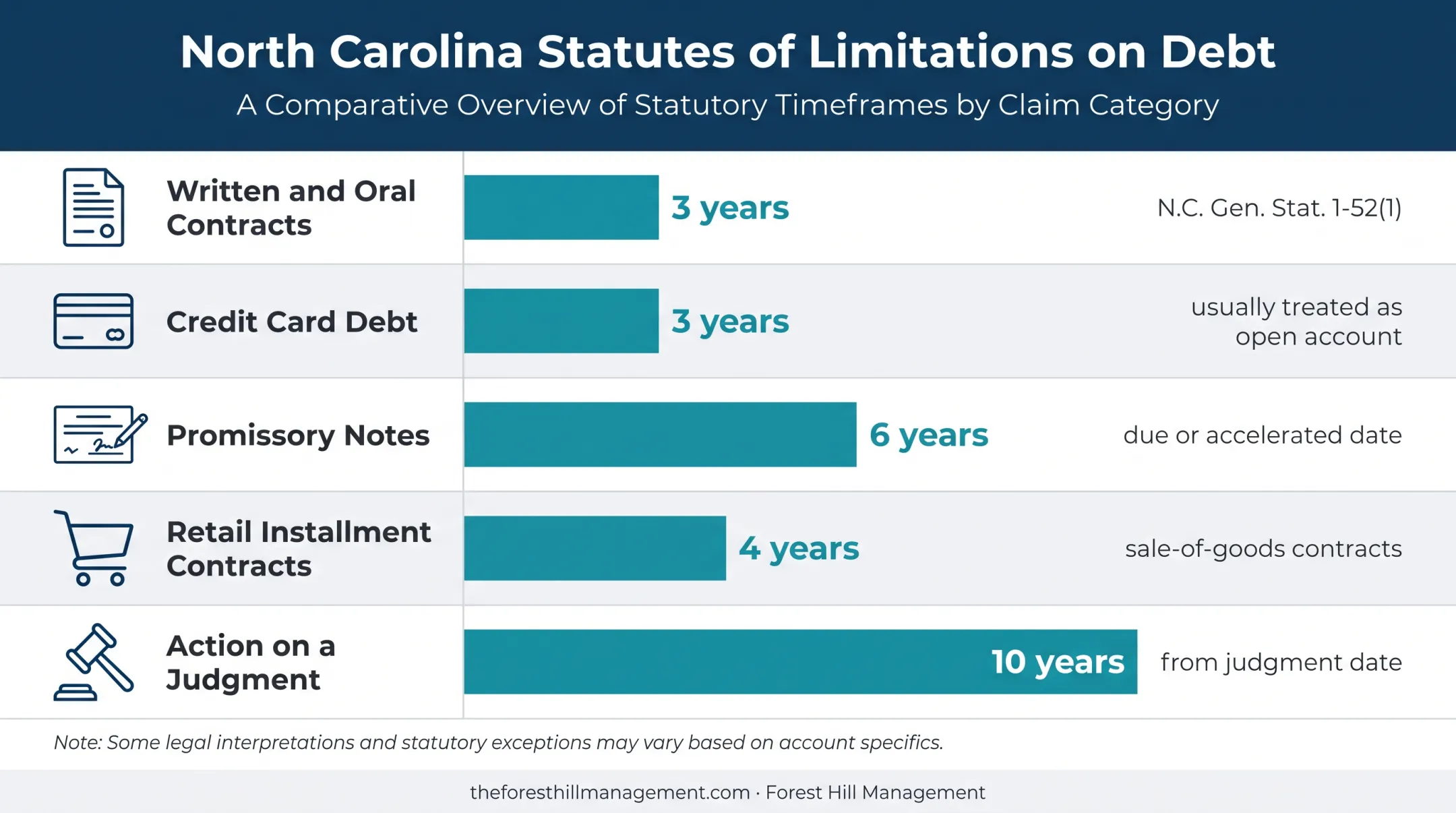
Finding a clear answer online for North Carolina's statute of limitations can be frustrating, as many sources conflict or oversimplify the rules. The correct time limit depends entirely on the type of debt. The primary North Carolina law for many consumer debts is found in N.C. General Statutes § 1-52, which sets a three-year period for actions on contracts.
Note: Deadlines below follow current statutes; interpretation can change, so have a qualified attorney review your case.
Exceptions That Can Change the Deadline
Several factors can still change these deadlines:
- Contracts under seal: A contract marked "seal" beside the signature may carry a 10-year limit—rare on modern consumer contracts.
- Choice of law: Your agreement may apply another state's law and a different limitations period.
- Government debt: State or federal debts (taxes, many student loans) often have separate, much longer collection windows.
- Tolling: The clock can pause if the debtor is a minor or leaves the state to avoid service of a lawsuit.
How Does the Statute-of-Limitations Clock Work?
Determining the exact start date for the statute of limitations is often the hardest and most disputed step in a debt claim. A claim "accrues" when the right to sue first arises. That is not always the date of your last payment.
Pinpointing the Start Date
For an installment debt, the clock might start on the date you missed the first payment that led to the default. For a credit card, it could be tied to the date the account was charged off by the original creditor. Key dates to look for in your records include:
- The due date of the first missed payment.
- The date the creditor "accelerated" the balance, demanding the full amount be paid at once.
- The charge-off date listed on your credit report.
- The date of your last payment on the account.
A common misconception is that any payment automatically restarts the clock. North Carolina law is more nuanced. Under N.C. Gen. Stat. § 1-26, a new written and signed promise can restart the limitations period. A partial payment can also restart the clock on certain types of accounts.
Because of this risk, it is extremely unwise to make a "token payment" on an old debt just to appease a collector. You could inadvertently revive a debt that was otherwise legally unenforceable in court.
Preserve Your Records
If a collector contacts you about an old debt, gather your documentation. That paper trail builds the timeline. Keep:
- Account statements showing your payment history and charge-off date.
- Original creditor agreements.
- Collection letters, emails, and text messages.
- Your own records of payments made.
- Copies of your credit reports.
Do not admit you owe the debt, make a payment, or agree to a settlement until you have a clear picture of the account's history and legal status.
What Happens After the North Carolina Statute of Limitations Expires?
When the statute of limitations expires, the debt becomes time-barred. This gives you a powerful legal defense, but it doesn't make the debt disappear.
It Creates a Defense to a Lawsuit
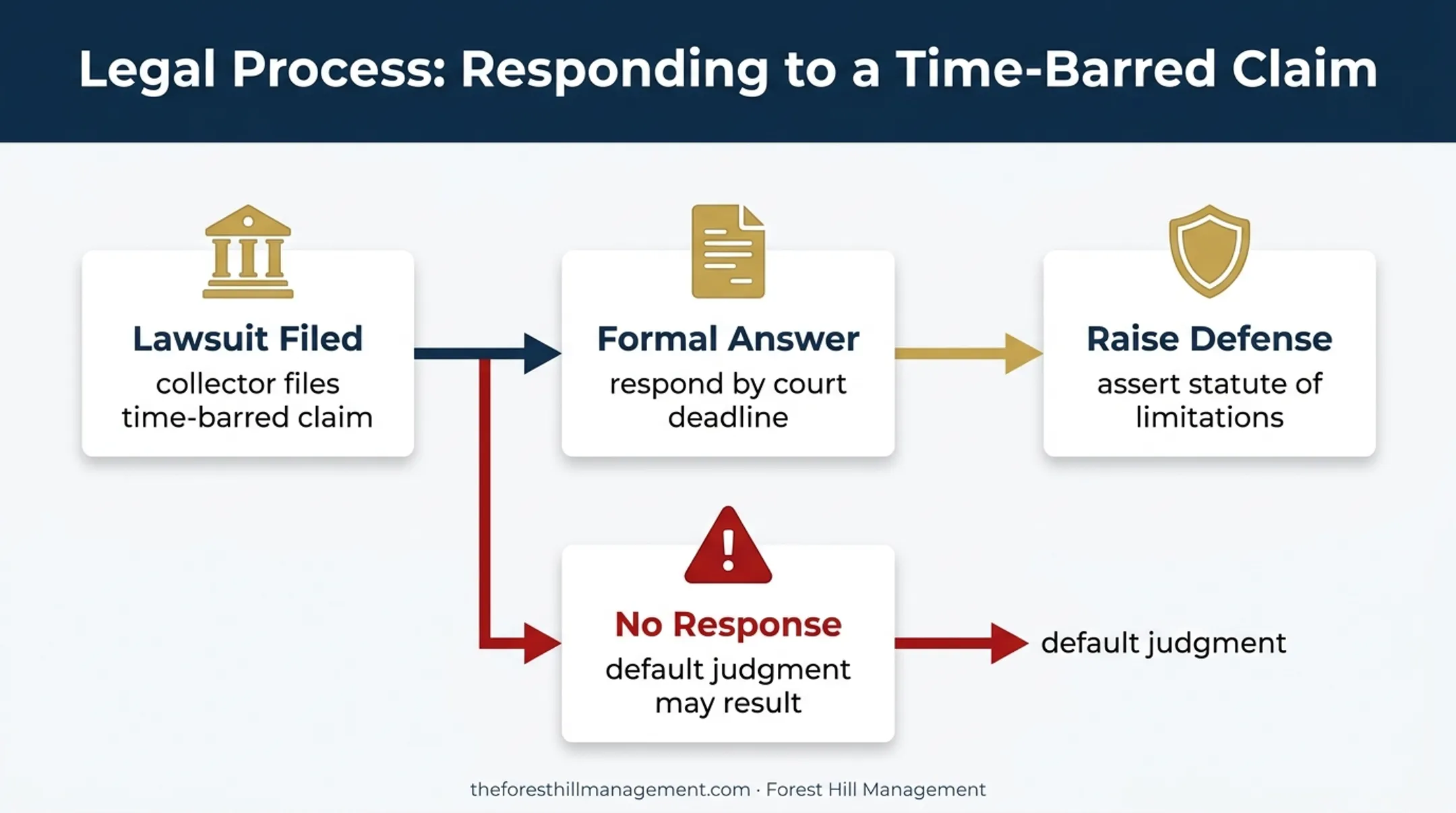
The most important consequence is that you can block a creditor from getting a court judgment against you. However, you must act. If a collector files a lawsuit, you (or your attorney) must file a formal answer with the court by the deadline. That answer must explicitly state that the claim is barred by the statute of limitations.
If you do nothing, the collector can win a default judgment, and you will have lost your chance to use this defense. As the Consumer Financial Protection Bureau (CFPB) warns, a court will likely not raise the defense for you.
Collection Activity May Continue
Federal and state laws regulate what collectors can do with time-barred debt.
- Suing or threatening to sue on time-barred debt is illegal under federal Regulation F
- Collectors may still request payment, but cannot mislead you about the debt's legal status
- North Carolina law prohibits debt buyers from collecting debts they know or should know are time-barred
Credit Reporting Is Separate
The Fair Credit Reporting Act (FCRA) dictates that most negative information, including collection accounts, can only be reported for seven years. This seven-year clock generally starts 180 days after the delinquency that led to the account being charged-off or sent to collections. This timeline is independent of North Carolina's statute of limitations for lawsuits.
How Should You Respond to an Old Debt or Collection Lawsuit?
Your response strategy should be methodical and cautious. Do not act on impulse.
If You Receive a Collection Letter or Call
Follow these steps before you do anything else:
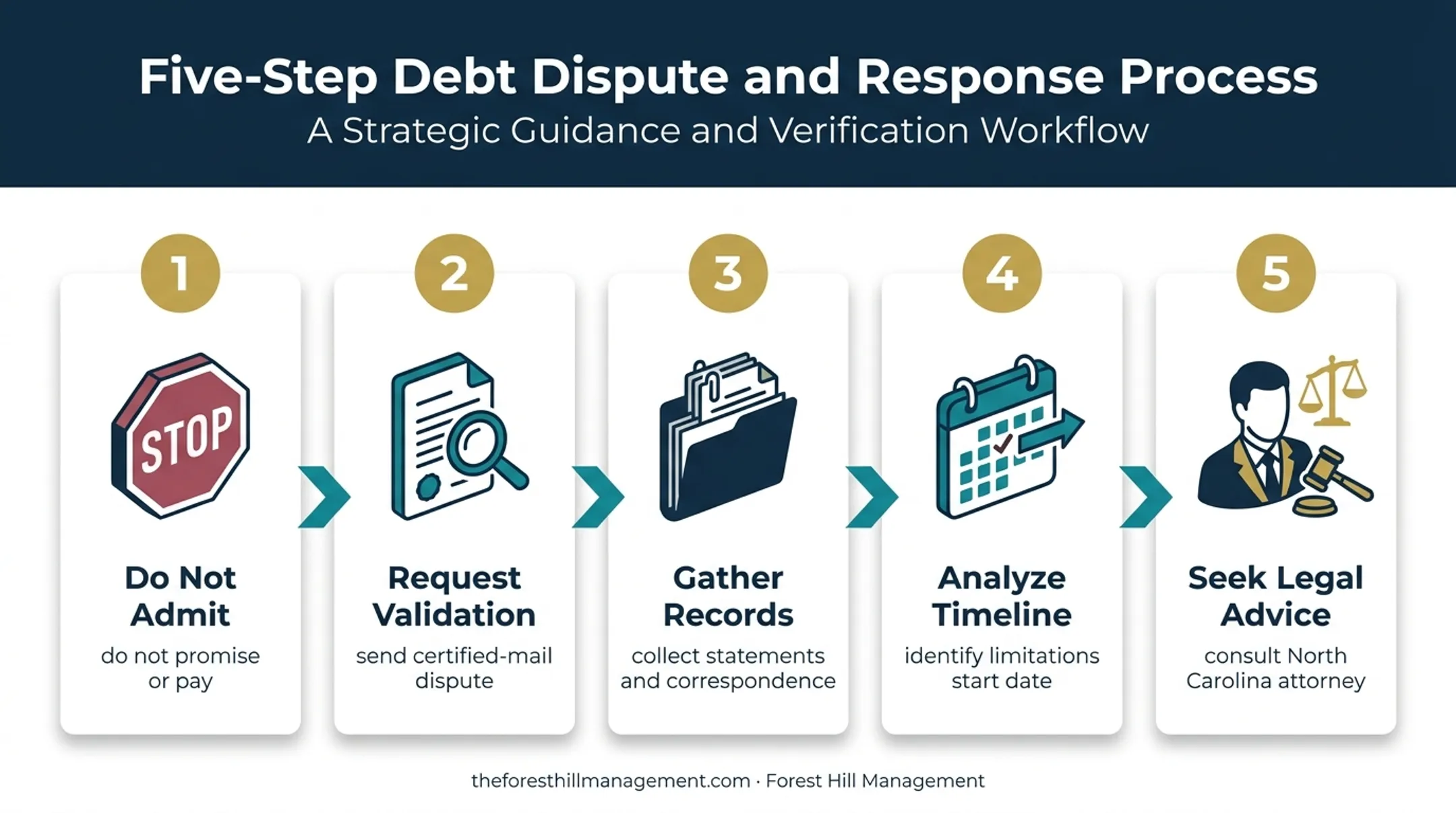
- Don't admit, promise, or pay. Skip any verbal acknowledgment, payment promise, or partial payment until you have verified the account in writing.
- Request written validation. Under the Fair Debt Collection Practices Act (FDCPA), send a certified-mail dispute within 30 days asking for verification, the original creditor, and the amount claimed.
- Gather your records. While you wait, collect statements, payment history, and correspondence, then compare them to whatever the collector returns.
- Analyze the timeline. Pin down the limitations start date from your records. If the debt looks time-barred, say so in writing and demand that collection stop.
- Seek legal advice. If the balance is large or the timeline is unclear, consult a North Carolina consumer law attorney.
If You Receive Court Papers
Being served with a summons and complaint is serious. You must act quickly.
- Do not ignore the summons. A missed deadline usually means a default judgment, which can lead to wage garnishment or liens.
- Calendar the deadline. In North Carolina, you generally have 30 days to file a formal answer with the court.
- File an answer. Respond to each allegation and raise affirmative defenses, including the statute of limitations.
- Hire an attorney. Lawsuit procedure is technical—get a qualified attorney involved immediately.
If you are not in active litigation and want help resolving an old account, contact Forest Hill Management to discuss potential repayment plans. Forest Hill Management is a portfolio management company, not a law firm, and cannot give legal advice on lawsuits or statute of limitations defenses.
Frequently Asked Questions
How long before a debt is uncollectible in NC?
In North Carolina, most contract and credit card debts become unenforceable in court after 3 years. The debt may still appear on your credit report for up to 7 years, and collectors can still contact you for payment.
Can a debt collector sue you in North Carolina?
Yes, if the debt is valid and the suit is filed within the statute of limitations. If they sue after the deadline, you can raise the expired statute as a defense.
Should I pay a debt that is past the statute of limitations?
A payment on a time-barred debt can restart the statute of limitations and open you to a new lawsuit. Seek legal guidance before paying or acknowledging the debt.
What happens if you never pay back collections?
Collectors may keep contacting you, and the account can hurt your credit for up to 7 years. If the debt is not time-barred, they could sue, obtain a judgment, and pursue wage garnishment or property liens.