-p-500%20(1).png)
How to Negotiate a Settlement with a Debt Collection Agency
Need Help Reviewing Your Account?
Contact UsIntroduction
A collection call rarely comes at a good time. Your name shows up on a notice, your stomach drops, and the pressure to "just make it go away" can push you toward agreeing to something you can't actually afford.
Negotiating a settlement with a debt collector can resolve a past-due account through a reduced lump-sum payment or a manageable payment plan. But the outcome depends on the specific account, the collector, your finances, and the law in your state. There's no universal formula.
Agreeing too fast, before verifying anything, can create bigger problems than the debt itself.
This guide walks through the full process: verifying the debt, figuring out what you can afford, negotiating carefully, getting terms in writing, paying safely, and knowing when settlement isn't the right move at all.
Key Takeaways
- Verify the debt, collector authority, balance, and deadlines before any payment talk.
- Cap your offer at what you can pay without cutting essentials or priority bills.
- Get the settlement amount, deadline, and credit reporting terms in writing.
- Compare credit, tax, and legal outcomes before choosing settlement over paying in full.
- Confirm current federal and state rules, or get professional help on complex cases.
How to Negotiate a Settlement with a Debt Collection Agency
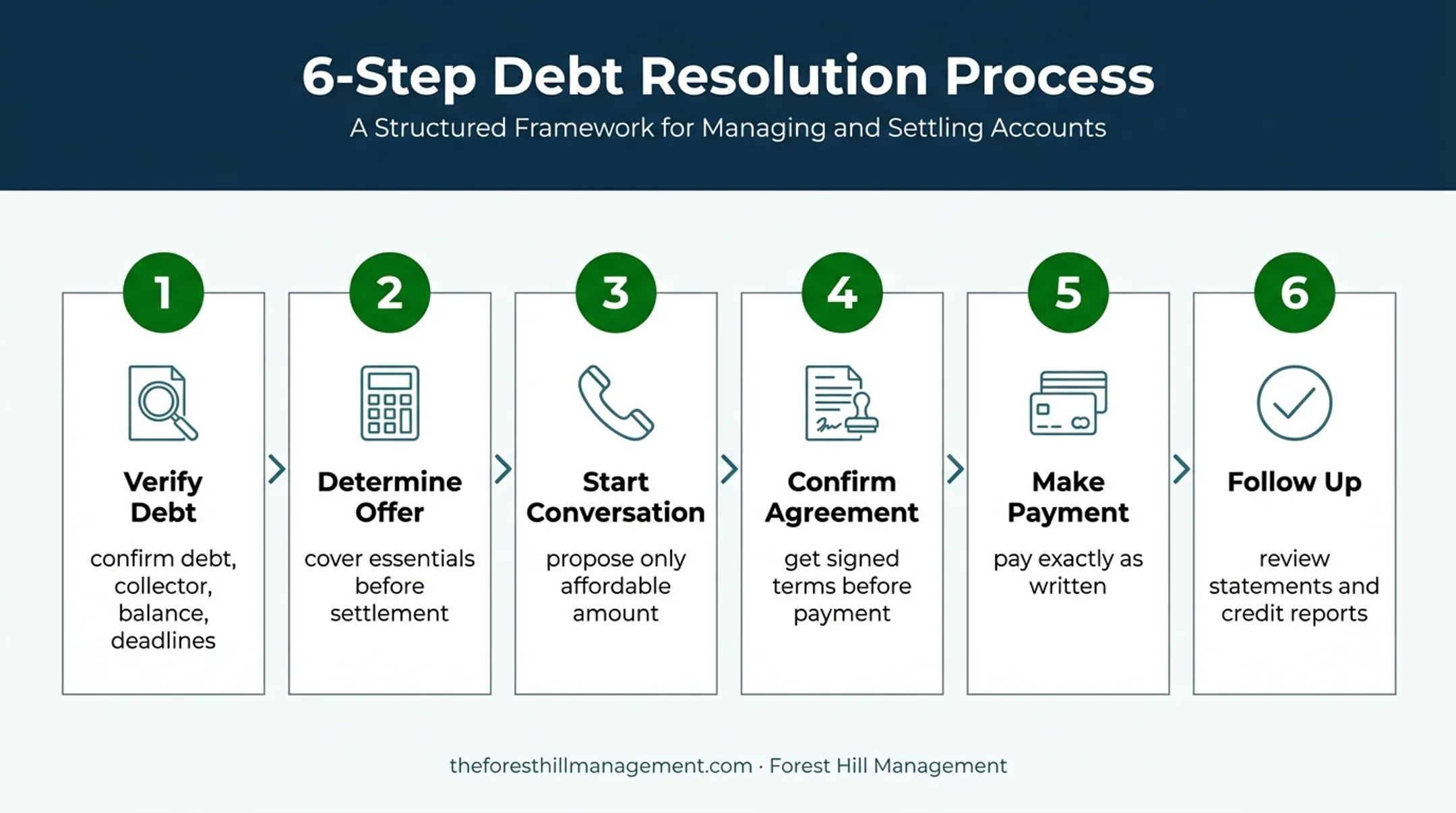
Step 1: Verify the Debt and the Collector
Before you say a word about payment, confirm what you actually owe and to whom.
Pull together everything you have: collection letters, account statements, payment history, and your credit reports. Compare the collector's claimed balance against your own records line by line.
If the account was sold or transferred, collectors like Forest Hill Management typically identify the original creditor directly in their written communications, often in a labeled "Original Creditor" section.
Do this before discussing payment:
- Request debt validation in writing if you haven't received it already
- Confirm the agency has legal authority to collect on this specific account
- Check your state's statute of limitations for this debt type
- Verify the caller's legitimacy through official contact channels before sharing any details
Warning: making a payment or even acknowledging an old debt can, in some states, restart the limitations clock. Research your state's rules first, since this varies significantly by jurisdiction and debt type.
Step 2: Determine What You Can Realistically Offer
Never negotiate a number you haven't tested against your actual budget.
Build a complete picture first: housing, utilities, food, transportation, insurance, taxes, and any other priority debts. Only after essentials are covered should you calculate what's left for a settlement.
The CFPB recommends reviewing your existing financial obligations and setting a realistic monthly figure before making any offer, and explicitly advises against paying more than you can afford.
Compare your two main options:
- A one-time lump-sum payment, usually at a steeper discount
- A monthly payment plan spread across several installments
Set three numbers before you call: your opening offer, your maximum offer, and your walk-away point. There's no standard settlement percentage that applies universally. Results vary by creditor, account age, and collector policy.
Factor in possible interest, fees, tax treatment of forgiven debt, and how a new agreement could affect your credit report.
Step 3: Start the Conversation Strategically
Keep the call calm, short, and focused.
Confirm the account details, state that you want to resolve the debt, and propose only the amount you can genuinely afford. Don't let silence or pressure push you into a bigger number.
Ask these questions during the call:
- Does the agency own this debt, or is it collecting on behalf of someone else?
- Are interest or fees still accruing?
- Has this account already been reported to the credit bureaus?
- Does the representative have authority to approve the terms you're proposing?
Avoid volunteering extra information. Employer details, bank account numbers, or unrelated assets aren't required to discuss a settlement, so keep the conversation narrow.
You're also allowed to ask for time to review any offer instead of accepting on the spot. Write down the representative's name, the date, the time, and exactly what was said. That log matters if a dispute comes up later.
Step 4: Confirm the Agreement Before Paying
Never send a dollar based on a verbal promise.
The FTC advises consumers to get a signed letter before making any settlement payment, one that clearly states the agreed amount resolves the entire debt and nothing more is owed.
Your written agreement should specify:
- The account number and total settlement amount
- Payment due dates and accepted payment methods
- What happens if a payment is missed
- Whether the payment resolves the debt in full
Be cautious about credit-reporting promises. A "settled" account typically shows on your report as paid for less than the full balance. That does not automatically mean "paid in full," and no collector can guarantee removal from your report.
If you're working with Forest Hill Management or any other agency, verify you're dealing with the actual company through official contact details before sending payment or sharing sensitive information.
A verbal assurance, text message, or vague email isn't enough. Never authorize automatic withdrawals until you've reviewed the exact terms and payment amount in writing.
Step 5: Make the Payment and Preserve Proof
Once terms are confirmed, pay exactly as written, nothing more, nothing less.
Use a traceable payment method that doesn't expose more banking information than necessary. Some collectors, including Forest Hill Management, offer online portals or flexible payment plans.
Keep these records indefinitely:
- The signed settlement letter
- Payment receipts and confirmation numbers
- Canceled checks or bank statements showing the transaction
- Notes from every phone conversation
If a payment fails, the agency changes terms unexpectedly, or a different collector contacts you about the same account afterward, your documentation is your protection.
Forest Hill Management, for example, asks consumers who've settled or paid off an account to request written confirmation by submitting their name and account number through its email form.
Step 6: Follow Up After Resolution
Settlement does not end the process. Your next job is checking the paperwork.
Review your account statements and credit reports after a reasonable processing window. There's no universal timeframe for when a settlement will post, so confirm expected timing in writing rather than assuming a fixed number of days.
If the account is reported inaccurately or collection activity continues despite your agreement, dispute the error directly with the reporting company and the party that furnished the information. Retain every document you collected in Step 5.
One more thing: never ignore a lawsuit, wage-garnishment notice, or other court paperwork related to this debt. Legal deadlines don't pause because you thought the matter was settled. Seek qualified legal assistance immediately if you receive anything from a court.
When and How to Prepare for Negotiation
When Settlement May Make Sense
Negotiation tends to be worth pursuing when three conditions line up: the debt is valid, you have a realistic source of funds, and settling won't cause you to miss other payments.
- Lump-sum settlement fits if you have accessible savings or a windfall you're comfortable using
- Payment plan fits if you need to spread payments but can commit to them reliably
If neither option feels workable yet, keep budgeting and wait until you can make a reliable offer.
When Settlement May Be Risky or Unsuitable
Some situations call for extra caution before you offer a dime.
- The identity or balance on the account is disputed
- The statute of limitations may have already expired
- You're facing active litigation over this debt
- Your income is legally protected from garnishment
- You have multiple unaffordable debts competing for the same funds
- Settling this account would leave you short on rent, utilities, or other essentials
Paying one collector while falling behind on rent, secured debt, or taxes is rarely a win. Priority obligations protect your housing and your assets. Address those first.
What to Prepare Before Contacting the Agency
Walk in organized, not reactive.
Preparation checklist:
- Account documents and any validation correspondence received
- A completed budget showing your maximum affordable offer
- Recent credit reports that list this account
- Your proposed settlement terms, written down in advance
- A written log template ready for call notes
Draft a short script beforehand. Having your key points and questions ready keeps the conversation focused and stops you from making an impulsive promise mid-call.
Legal and Financial Readiness
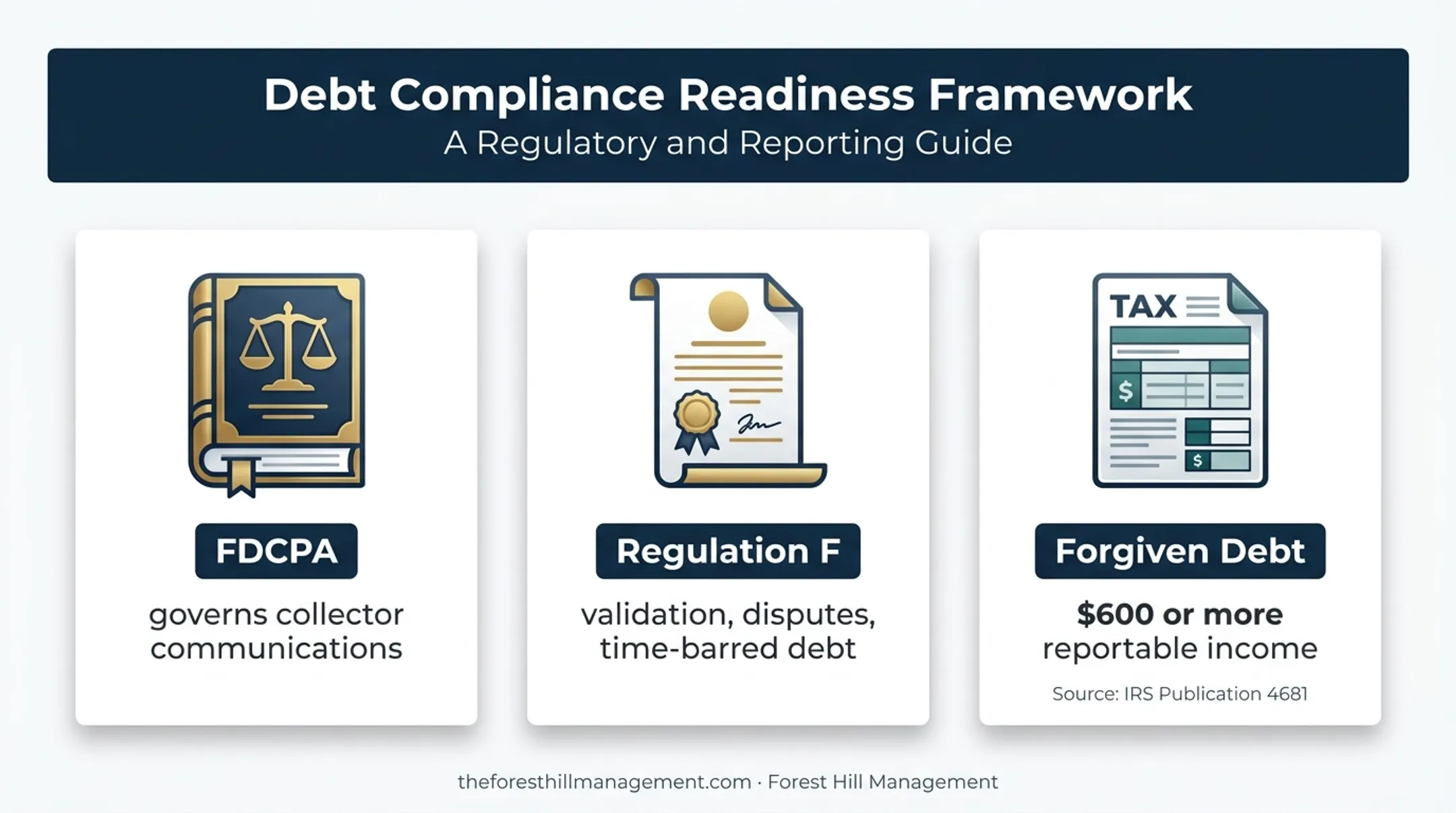
Federal law under the FDCPA governs how collectors can communicate with you, and Regulation F adds further detail on validation, disputes, and time-barred debt. State rules add another layer, and they vary considerably.
Canceled debt also carries tax implications many people overlook. The IRS treats forgiven debt of $600 or more as reportable income in most cases, unless an exception like insolvency applies.
This article is educational. It can't assess whether a specific debt is enforceable, whether your settlement is taxable, or whether bankruptcy fits your situation. For anything complex, talk to a qualified financial or legal professional.
Risks, Mistakes, Troubleshooting, and Alternatives
Common Negotiation Mistakes
Avoid these missteps:
- Paying before validating the debt or acknowledging an account you don't recognize
- Restarting a limitations period without understanding your state's law
- Agreeing to a payment plan you can't sustain
- Giving unrestricted bank access to a collector
- Relying on an undocumented verbal promise
- Assuming "settled" automatically means "paid in full" on your credit report
Stay firm, factual, and respectful on calls. Threats and oversharing rarely strengthen your position.
Troubleshooting Common Problems
If the collector won't validate the debt: Pause payment talks, save every letter and notice, and use the dispute process available to you.
If the collector rejects your offer: Ask about a counteroffer, a different payment structure, or whether the representative can escalate your proposal to someone with more authority.
If you suspect harassment or fraud: Document every incident with dates and details. Forest Hill Management, for example, provides a complaint form with "Dispute Debt" and "Cease Communication" options.
If you're sued or receive court papers: Don't ignore the deadline listed. Seek qualified legal assistance right away.

Alternatives to Direct Negotiation
If direct settlement stalls, other paths may fit better:
- Nonprofit credit counseling: One payment to the agency, which distributes funds to creditors under a debt management plan
- Debt-relief providers: Compare fees, accreditation, complaints, and timelines first; the FTC says they can't collect fees before settling a debt
- Bankruptcy consultation: Consider it for severe or widespread hardship; it isn't right for everyone
- Other routes: Pay in full, dispute the debt, request hardship help, or talk with a consumer attorney
Conclusion
Successful negotiation starts with verification and an honest budget, not with accepting the first number a collector throws out or sending payment before you've thought it through.
The protections that matter most:
- Written settlement terms before any payment
- Traceable payment records you can keep
- Awareness of your state's specific collection rules
- A plan that never puts rent, utilities, or other essentials at risk
If you can't afford a safe agreement, face possible litigation, or juggle several delinquent accounts at once, compare professional options before you commit to any settlement.
Frequently Asked Questions
How much should I offer a debt collection agency for a full and final settlement?
There's no universal number. Base your offer on the verified debt details, your actual available funds, the collector's authority, and terms you can get confirmed in writing.
Can you negotiate a payment plan with a debt collection agency?
Yes, payment plans are often possible. Terms vary by agency, so only agree to an amount you can sustain, and get it documented before making your first payment.
How long does it take to complete a settlement with a debt collection agency?
Many settlements finish within a few weeks after both sides agree on terms, but timing still depends on verification, approval, payment method, and credit-report updates. Confirm deadlines in writing instead of assuming a standard timeframe.
What should I not say to a debt collection agency?
Don't promise more than you can afford, share extra financial details, or confirm account facts you haven't verified. Avoid threats, and never rely on a verbal assurance—get every term in writing.
Should I accept a settlement offer from a debt collection agency or pay in full?
Weigh what you can afford, how each option may appear on your credit reports, possible tax issues if debt is forgiven, and your longer-term goals. Read the written terms carefully before you decide.
Will negotiating with a debt collection agency hurt my credit?
Missed payments on the account may already be hurting your score. A settlement is often reported as “settled” rather than “paid in full,” which can still beat leaving the debt unpaid—monitor your credit reports after any agreement.