-p-500%20(1).png)
How to Pay Off Debt in Collections Safely
Need Help Reviewing Your Account?
Contact UsGetting a call or notice about a debt in collections can feel unsettling. It often comes with questions. Is this accurate? What happens next? How do you handle it without making a mistake?
You are not alone in this situation. In the United States, household debt reached $18.8 trillion in 2025, with about 4.8% of that debt already in some stage of delinquency. That means millions of people are dealing with past-due accounts and collection activity.
The important thing is not just paying the debt, but paying it the right way, with clarity, proper documentation, and a plan that works for you.
In this blog, you will learn how to pay off debt in collections safely, what steps to take before making a payment, the options available to you, and how to move toward resolution with confidence.
Key Takeaways
- Paying off a collection debt safely requires a structured approach that includes verifying details, understanding your rights, and documenting every step.
- Collection accounts are manageable and do not mean immediate legal action, giving you time to review and decide how to proceed.
- Choosing the right repayment method depends on your financial situation, whether that is a full payment, plan, or settlement.
- Clear documentation and secure payment methods help ensure your payment properly resolves the account.
- Staying informed, asking questions, and taking steady action can help you move through the process with confidence and control.
What It Means When Your Debt Goes to Collections?
When a debt goes to collections, it means the account has remained unpaid for a period of time and is now being managed by a company responsible for following up and helping resolve the balance. This can happen after several missed payments, depending on the type of account and the original agreement.
For many people, this stage can feel uncertain, especially if the name of the company contacting you is unfamiliar. However, a collection notice does not mean immediate legal action or that you have lost control of the situation. It simply means your account has moved into a different stage of management.
Here is what typically changes when your debt enters collections:
- A different company may contact you about the account: The original lender may transfer or assign the account to a receivables management company. This company will now communicate with you regarding the balance and available options.
- You will receive details about the account: You should be provided with information such as the current balance, the original creditor, and your rights related to the account. This helps you review and confirm the accuracy of the debt.
- Your rights remain fully protected: Federal laws, such as the Fair Debt Collection Practices Act (FDCPA), set clear rules on how you can be contacted and what information must be provided. You have the right to request verification and dispute the account if needed.
- You have time to review and respond: Collection does not require immediate payment on the spot. You are allowed time to understand your account, review documentation, and decide how to proceed.
- Opportunities to resolve the account are available: Many accounts in collections can be addressed through structured repayment plans or other arrangements that reflect your financial situation.
Understanding this stage is important because it shifts the situation from uncertainty to clarity.
Check Whether the Debt Is Still Legally Collectible
Before making any payment, it is important to understand whether the debt is still legally enforceable. Not all debts remain eligible for legal action indefinitely, even though they may still be active in collections.
In many cases, collectors can still contact you about old debt. However, their ability to take legal action may depend on the statute of limitations, which varies by state and by the type of debt.
Here is what you should keep in mind:
- Old debt can still be collected informally: Even if a debt is several years old, collection agencies may still contact you and request payment. This does not always mean legal action is still an option.
- Lawsuit rights may expire over time: Once the statute of limitations has passed, a collector may no longer be able to sue you to recover the debt. However, this does not automatically remove the balance or stop collection attempts.
- Avoid making assumptions about old debt: The timeline depends on your state laws and the type of account. Acting without checking these details can lead to confusion or unintended consequences.
- Be cautious before making a payment: In some cases, making a payment on an old debt can restart the statute of limitations. It is important to understand your position before taking action.
- Review your state rules or seek guidance: If the debt is several years old, consider reviewing your state’s statute of limitations or speaking with a qualified professional to understand your options clearly.
Understanding whether a debt is still legally collectible helps you make informed decisions. It ensures that any action you take aligns with your rights and your financial situation.
Once you know what collections actually mean, you can begin to take informed and steady steps toward resolving the account safely.
How to Pay Off Debt in Collections Safely
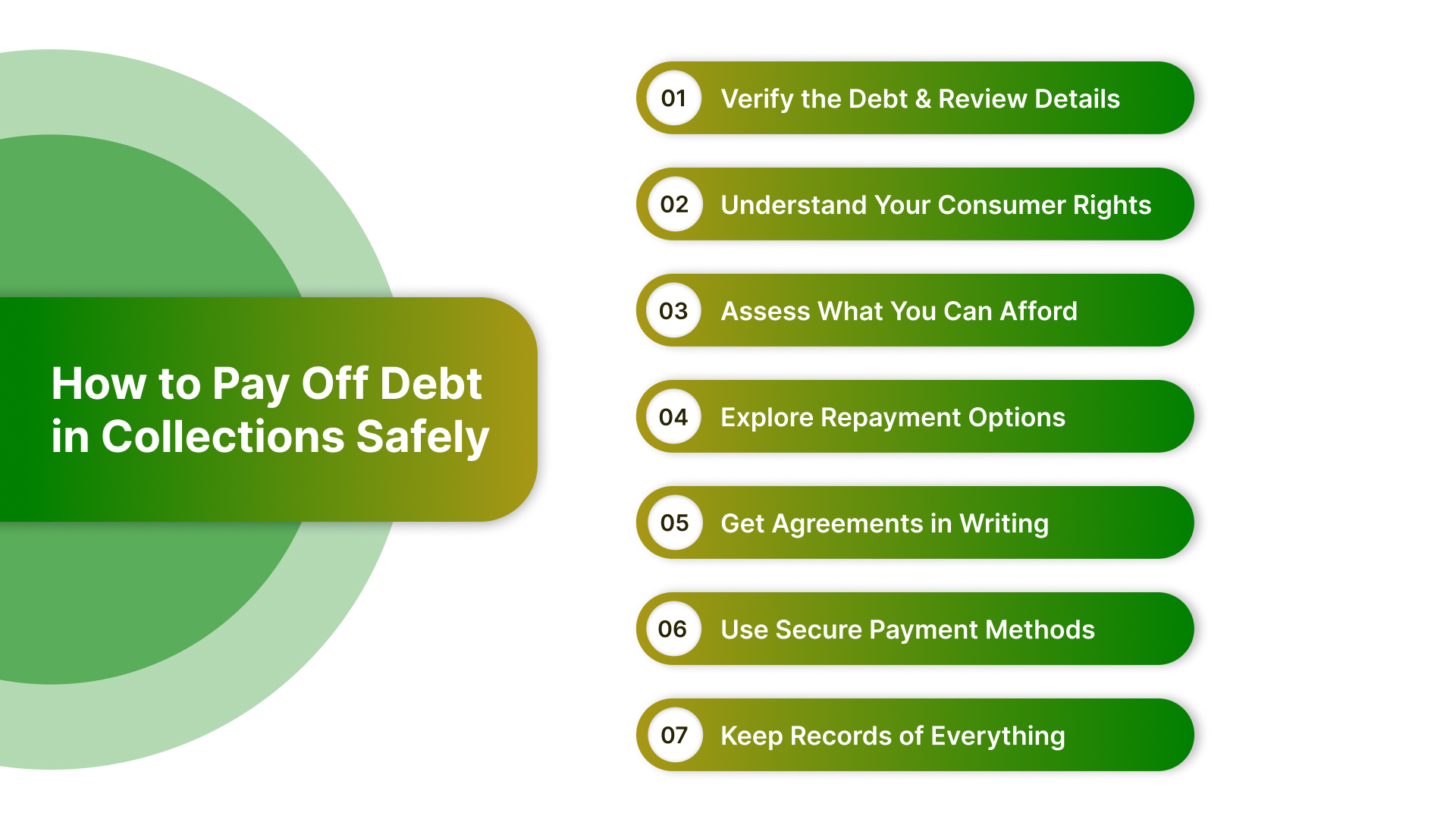
When your debt is in collections, the goal is not just to pay it off, but to do so in a way that is clear, secure, and aligned with your financial situation. Taking a step-by-step approach helps you avoid confusion, protect your rights, and ensure that every action you take moves you closer to resolving the account properly.
Below is a structured guide to help you understand how to pay off debt in collections safely:
Step 1: Verify the Debt and Review the Details
Before making any payment, take time to confirm that the account is accurate and belongs to you. This step helps prevent errors and ensures you are responding to the correct obligation.
You should:
- Review the account balance, original creditor, and account number
- Check whether the amount matches your previous records
- Request written verification if anything seems unclear
If you receive debt validation information, act quickly. In many cases, you have 30 days to dispute the debt in writing, and if you do, collection activity must pause until the debt collector sends verification.
Step 2: Understand Your Rights as a Consumer
When a debt is in collections, you are protected by laws that regulate how the process is handled. These protections are designed to ensure communication remains fair, accurate, and respectful.
You have the right to:
- Receive clear information about the account and who currently manages it
- Request verification of the debt
- Dispute the account if you believe it is incorrect
Knowing your rights allows you to approach the situation with more confidence and prevents unnecessary pressure during the process.
Step 3: Assess What You Can Realistically Afford
Before agreeing to any payment, review your financial situation carefully. This helps you choose a repayment approach that is manageable and sustainable.
Consider:
- Your monthly income after taxes
- Essential expenses such as housing, utilities, and groceries
- Any existing financial obligations
Understanding your financial capacity ensures that any repayment plan you agree to supports long-term stability rather than creating additional strain.
Step 4: Explore Available Repayment Options
Many accounts in collections can be resolved through structured repayment discussions. The goal is to find an approach that works for both you and the account manager.
Options may include:
- A payment plan spread over time
- A one-time payment to resolve the account
- Adjusted payment arrangements based on your situation
Taking the time to discuss options allows you to move forward in a way that feels practical and achievable.
Step 5: Get All Agreements in Writing
Before making any payment, ensure that the terms are clearly documented. Written confirmation helps protect you and ensures there is no confusion about what has been agreed.
Make sure you have:
- The total amount to be paid
- The payment schedule (if applicable)
- Confirmation of how the account will be updated once resolved
This step provides clarity and helps prevent misunderstandings later.
Step 6: Use Secure Payment Methods
When you are ready to make a payment, always use verified and secure channels. This helps protect your financial information and ensures your payment is properly recorded.
You should:
- Use official payment portals or approved payment methods
- Avoid sharing sensitive details through unverified sources
- Keep confirmation of each transaction
Secure payment practices help ensure your efforts toward resolution are properly documented.
Step 7: Keep Records of Everything
Throughout the process, maintaining organized records is essential. This includes communication, payment confirmations, and any agreements you receive.
Keep track of:
- Emails, letters, and written confirmations
- Payment receipts and transaction records
- Notes from any conversations
Having a clear record of your progress gives you confidence and helps you stay informed at every stage.
Also read: Setting Up a Payment Plan With The Forest Hill Management
Paying off debt in collections becomes much more manageable when you approach it step by step. By verifying your account, understanding your rights, and choosing repayment options that fit your situation, you can move forward with clarity and greater control over the process.
What Is the Best Way to Pay Off a Collection Debt?
There is no single approach that works for everyone when it comes to paying off a collection debt. The best method depends on your financial situation, the size of the balance, and how quickly you want to resolve the account. What matters most is choosing an option that is clear, manageable, and properly documented.

Below are the most common and practical ways to pay off a collection debt, along with when each option may make sense.
Paying the Full Balance
Paying the full amount is the most direct way to resolve a collection account. This option closes the account without the need for ongoing payments and ensures that the full balance is cleared.
- When this may work best: If you have the financial ability to pay the balance in one payment without affecting your essential expenses.
- What to keep in mind: Always confirm the exact amount and request written confirmation that the account will be considered resolved once payment is made.
Setting Up a Payment Plan
A payment plan allows you to repay the balance over time in smaller, structured installments. This is one of the most commonly used options for individuals managing ongoing financial commitments.
- When this may work best: If paying the full balance at once is not realistic but you can commit to regular monthly payments.
- What to keep in mind: Make sure the payment schedule fits your budget and that all terms are clearly documented before starting.
Negotiating a Settlement
In some cases, it may be possible to resolve the account by paying a reduced amount as a lump sum. This is often referred to as a settlement.
- When this may work best: If you can make a one-time payment but cannot afford the full balance.
- What to keep in mind: Always get written confirmation of the agreed amount and ensure it states that the payment will resolve the account.
Before accepting a settlement, ask how the account will be reported afterward and get the exact resolution terms in writing. Paying or settling a collection account can help, but the credit-score impact is not always immediate and may depend on the scoring model used.
Making Partial Payments Toward Resolution
If you are unable to commit to a formal plan immediately, making smaller payments over time may still help reduce the balance and show progress.
- When this may work best: If your financial situation is uncertain and you need flexibility before committing to a structured plan.
- What to keep in mind: It is important to understand how these payments will be applied and whether they contribute toward a formal resolution agreement.
Using a Structured Repayment Agreement
A structured repayment agreement is a more formal version of a payment plan, often based on your financial circumstances and designed to provide a clear path toward resolution.
- When this may work best: If you prefer a defined plan with clear timelines, documentation, and consistent payment expectations.
- What to keep in mind: Ensure all terms are outlined clearly so you know what is expected and how the account will be updated once completed.
Choosing the right method depends on what you can realistically manage.
Also read: The Forest Hill Management Payoff Amount: What It Includes
Common Mistakes to Avoid When Paying Collections
Paying off a collection debt can help you move forward financially, but certain mistakes can make the process more complicated than it needs to be. Many of these mistakes happen when people act quickly without fully understanding their account or their rights.
Being aware of these common pitfalls can help you approach the situation more carefully and ensure that your payments actually lead to a proper resolution:
- Focusing only on quick resolution instead of correct resolution: It can be tempting to resolve the account as quickly as possible, especially if you are feeling pressure. However, rushing into payment without fully understanding the terms can lead to incomplete resolution or confusion later. Taking a few extra steps to review details ensures your payment actually closes the account properly.
- Not understanding how the account will be updated after payment: Many people make payments without confirming how the account status will be reported or documented afterward. It is important to understand whether the account will be marked as resolved, settled, or paid, so you have clarity on what the outcome will be.
- Assuming all collection accounts are handled the same way: Not all debts follow the same process. Different types of accounts, timelines, and agreements can affect how repayment works. Assuming a one-size-fits-all approach can lead to confusion or incorrect expectations about what happens after payment.
- Overlooking communication details and missing important updates: Ignoring emails, letters, or account notifications can result in missed information about your balance, payment options, or next steps. Staying engaged with communication ensures you remain informed throughout the process.
- Not asking questions when something is unclear: Many people hesitate to ask for clarification, especially if they feel unsure or overwhelmed. However, asking questions about your balance, payment terms, or account status is an important part of making informed decisions.
- Treating the process as a one-time action instead of a structured process: Paying off a collection account is not always a single step. It often involves reviewing details, confirming terms, making payments, and tracking progress. Viewing it as a structured process helps you stay organized and avoid confusion.
- Letting uncertainty delay action for too long: On the other hand, waiting too long due to uncertainty can make the situation feel more complicated over time. Taking steady, informed steps early helps you maintain control and move toward resolution more smoothly.
Avoiding these mistakes is less about doing everything perfectly and more about staying informed and organized.
Conclusion
Paying off a collection account does not have to feel uncertain or overwhelming. What makes the difference is clarity. Knowing what you owe, how payments are handled, and what happens after you pay helps you move forward with confidence instead of hesitation.
If your account is being managed by The Forest Hill Management, you are not expected to figure everything out on your own. With clear account information, secure payment options, and flexible repayment discussions, the process is designed to help you resolve your balance in a steady and informed way.
Take your first step towards financial freedom!
FAQs
1. Will paying a collection account immediately improve my credit score?
Not always immediately. While paying a collection account can be a positive step, how it impacts your credit score depends on factors like the account type and how it is reported afterward.
2. Can I ask for proof that the company contacting me is authorized to manage my account?
Yes. You can request documentation that shows the company has the right to manage or collect the account, including details about the original creditor.
3. Is it possible to pause communication while I review my options?
You can ask a debt collector to stop contacting you, and in many cases they must stop. But that does not erase the debt or prevent other lawful collection steps. If you think the debt is wrong, dispute it in writing as soon as possible.
4. What happens if I make a payment but cannot continue later?
If your situation changes, it is important to communicate as early as possible. Repayment arrangements can sometimes be adjusted based on updated financial circumstances.
5. Can I resolve a collection account even if I am dealing with multiple debts?
Yes. Many people manage multiple accounts at the same time. Taking a structured approach and addressing one account at a time can help make the process more manageable.