-p-500%20(1).png)
Portfolio Collection Strategies: Why You Keep Getting Called

Need Help Reviewing Your Account?
Contact UsThe bill on your kitchen table is part of a much bigger picture. With U.S. household debt reaching $18.6 trillion, unpaid accounts rarely move on their own. They move in groups, and that reality shapes every call, letter, and payment option you see.
That grouping is called portfolio collection strategies. Agencies manage accounts together because it keeps costs down and responses consistent, which directly affects how and when you hear from them. When you understand this, the process feels less personal and more procedural, and that shift gives you control instead of anxiety.
This matters because collections generate thousands of consumer complaints every year, often driven by confusion, silence, or rushed decisions. When you see how portfolios work, you ask better questions, confirm details faster, and choose actions based on facts rather than pressure.
In this article, you'll explore how portfolio collection strategies affect your situation and what drives outreach. You'll also learn what protections you have and how to respond to move toward financial stability.
Key Takeaways
- Debt collection is procedural, not personal; understanding this reduces stress and improves response.
- Accounts are prioritized by delinquency, balance, and responsiveness, explaining outreach frequency.
- Multi-channel contact, payment plans, and settlements are templates, leaving room to negotiate.
- FDCPA protects against harassment, improper calls, and third-party disclosures; know your rights.
- Verifying debt, getting terms in writing, and clear communication help maintain control and prevent escalation.
What Portfolio Collection Actually Means
When a collection agency contacts you, your account isn't sitting alone on someone's desk. It's grouped with hundreds or thousands of similar accounts in what's called a portfolio: a batch of debts managed together using shared strategies, timelines, and outreach methods.
For you, this means the outreach isn't about your character or financial history as an individual. It's about where your account fits within a larger operational framework. Recognizing this removes the emotional weight. You're not being singled out or judged.
You're part of a process designed to move accounts toward resolution efficiently, which shifts the dynamic from personal confrontation to procedural engagement. Once you see your account as part of a managed group, the next question becomes: what determines which accounts get attention first?
How Collection Agencies Decide Who to Contact and When
Not all accounts in a portfolio receive the same level of attention. Agencies prioritize based on factors that signal the likelihood of payment or the urgency of recovery. Understanding these factors explains why some people hear from collectors weekly while others go months without contact.
Here's what influences whether your account moves to the top of the contact list:
How Long You've Been Past Due
Fresh delinquencies get immediate attention because the likelihood of recovery drops sharply as time passes. Accounts 30 to 90 days past due are contacted more frequently than those that have been delinquent for years.
The reasoning is straightforward: people who recently fell behind are more likely to still have income, assets, or motivation to resolve the debt quickly.
The Size of Your Balance
Higher balances justify more aggressive outreach. An account with a $5,000 balance receives more calls, emails, and follow-ups than one with $200 because the potential recovery makes the effort worthwhile. Agencies calculate cost per contact, and larger debts support repeated attempts where smaller ones don't.
Whether You've Responded Before
If you've answered calls, opened letters, or engaged in any way, even without making a payment, you're flagged as responsive. That responsiveness signals potential, so your account gets cycled back into contact rotations more frequently. Accounts that never respond eventually drop lower in priority, though they don't disappear entirely.
Also Read: Can a Debt Collector Take My Car? Understanding Your Rights
Knowing what drives prioritization helps you anticipate what comes next, which brings us to the specific methods agencies use to reach you.
Common Tactics You'll Encounter During Collection
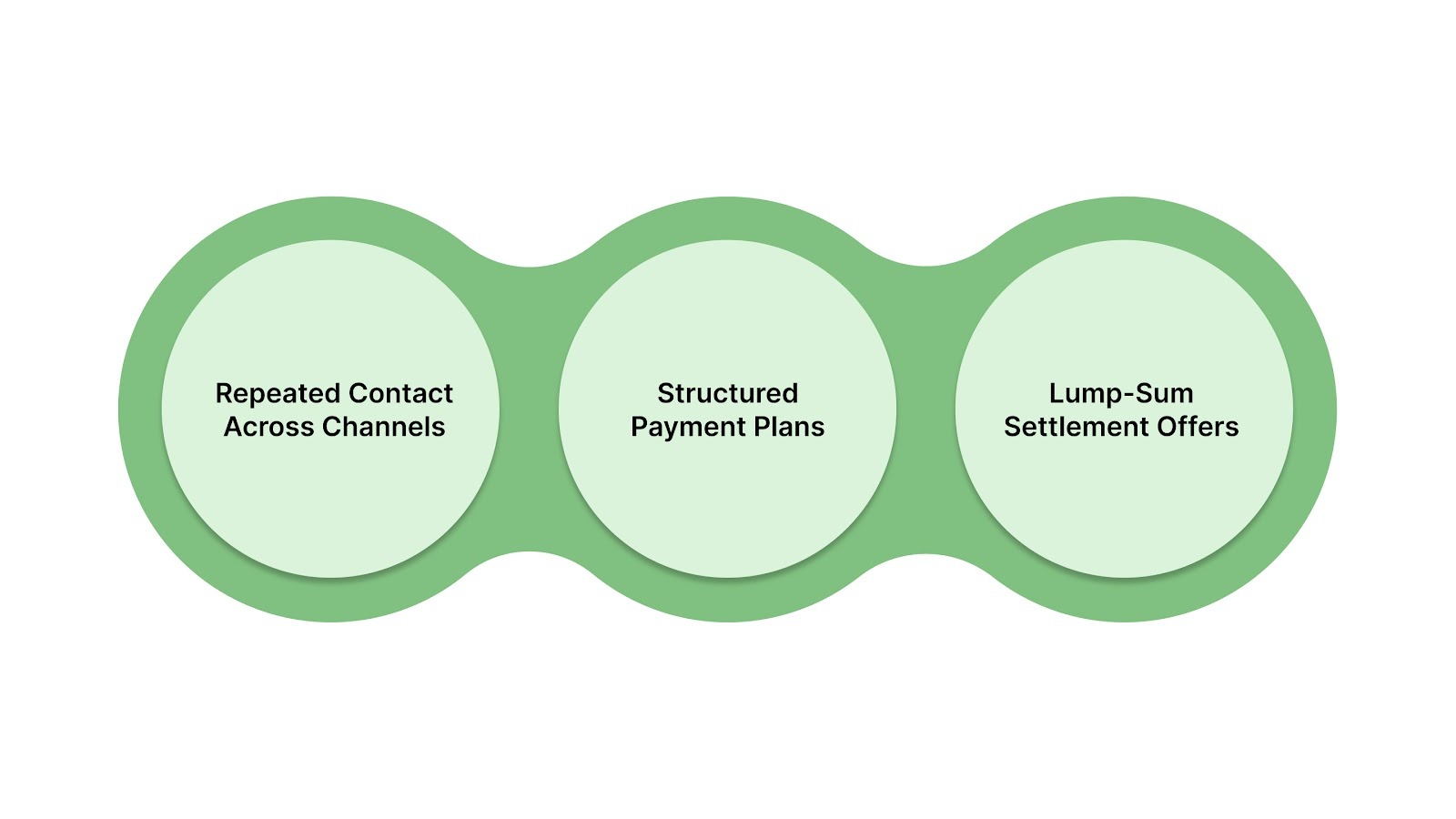
Collection agencies don't rely on a single approach. They use layered, multi-channel strategies that increase the chances you'll engage, and these tactics follow patterns that become predictable once you know what to look for.
1. Repeated Contact Across Channels
You'll receive calls, letters, emails, and sometimes text messages, often within the same week. This is standard operating procedure. Agencies assume people consume information differently, so they spread outreach across channels to maximize visibility.
The timing and frequency are usually automated, triggered by portfolio-level rules rather than individual judgment. If you ignore a call on Monday, a letter might arrive on Wednesday, followed by an email on Friday. The goal is persistence without crossing legal boundaries, keeping your account in view until you respond.
2. Structured Payment Plans
When you do engage, agencies typically offer installment plans that break your balance into monthly payments. These plans aren't customized to your budget; they're built from templates designed to recover the debt within a specific timeframe, usually 12 to 24 months.
The monthly amount proposed often feels high because it's calculated to clear the debt quickly, not to fit your actual cash flow. You're allowed to negotiate, but the initial offer reflects the agency's preferred timeline, not your financial reality.
3. Lump-Sum Settlement Offers
If your account has been delinquent for several months or longer, you may receive offers to settle for less than the full balance. These offers appear when agencies determine that partial recovery now is better than prolonged pursuit of the full amount.
Seeing these tactics for what they are: procedural tools, not personal attacks, changes how you can approach the situation.
What These Strategies Mean for Your Situation
When you strip away the noise, portfolio collection strategies reveal something useful: the system operates on predictable logic, and that predictability gives you leverage. Here's what that looks like in practice:
- You stop taking outreach personally: The frequency, tone, and timing of contact aren't about you; they're about where your account fits in the portfolio and what automated rules are triggering follow-up.
- You recognize when you have room to negotiate: Agencies present initial offers as fixed, but they're working from templates. If you understand the business logic behind settlements and payment plans, you can counter with realistic alternatives.
- You anticipate escalation before it happens: Knowing what triggers legal action or increased pressure lets you intervene early, either by negotiating terms or asserting your rights before the situation worsens.
- You ask better questions during contact: Instead of agreeing to the first payment plan offered, you can request validation, confirm your legal protections, and set terms that align with your actual financial capacity.
Also Read: Strategies for Paying Off Personal Loans Faster
Those protections are legal requirements that apply to every collection interaction you have.
Your Legal Protections Throughout the Process
The Fair Debt Collection Practices Act (FDCPA) exists specifically to limit how far agencies can go when pursuing unpaid accounts. You're not obligated to tolerate behavior that crosses the lines, and knowing the boundaries lets you shut down violations immediately.
Here's what the law prohibits:
- Calling you before 8 a.m. or after 9 p.m. in your time zone unless you've given explicit permission for different hours.
- Contacting you at work once you've informed them that your employer doesn't allow it or that it's inconvenient.
- Discussing your debt with third parties like family members, neighbors, or coworkers, except to locate you, and even then, they can't mention the debt itself.
- Using abusive, threatening, or profane language in any form of communication, including implying legal action they have no intention of taking.
- Misrepresenting the amount owed, the status of the debt, or the consequences of non-payment, such as claiming you'll be arrested or that they can seize assets without a court order.
- Continuing to contact you after you've sent a written request to stop, though this doesn't erase the debt, it only ends direct communication.
If any of these violations occur, you can file a complaint with the Consumer Financial Protection Bureau (CFPB). Report the agency to your state's attorney general, or pursue legal action for damages. The FDCPA allows you to recover up to $1,000 per violation, plus attorney fees, which makes it a powerful tool when enforced.
Knowing your rights is essential, but so is knowing how to engage when contact is legitimate and you're ready to address the debt.
How to Respond When You're Contacted
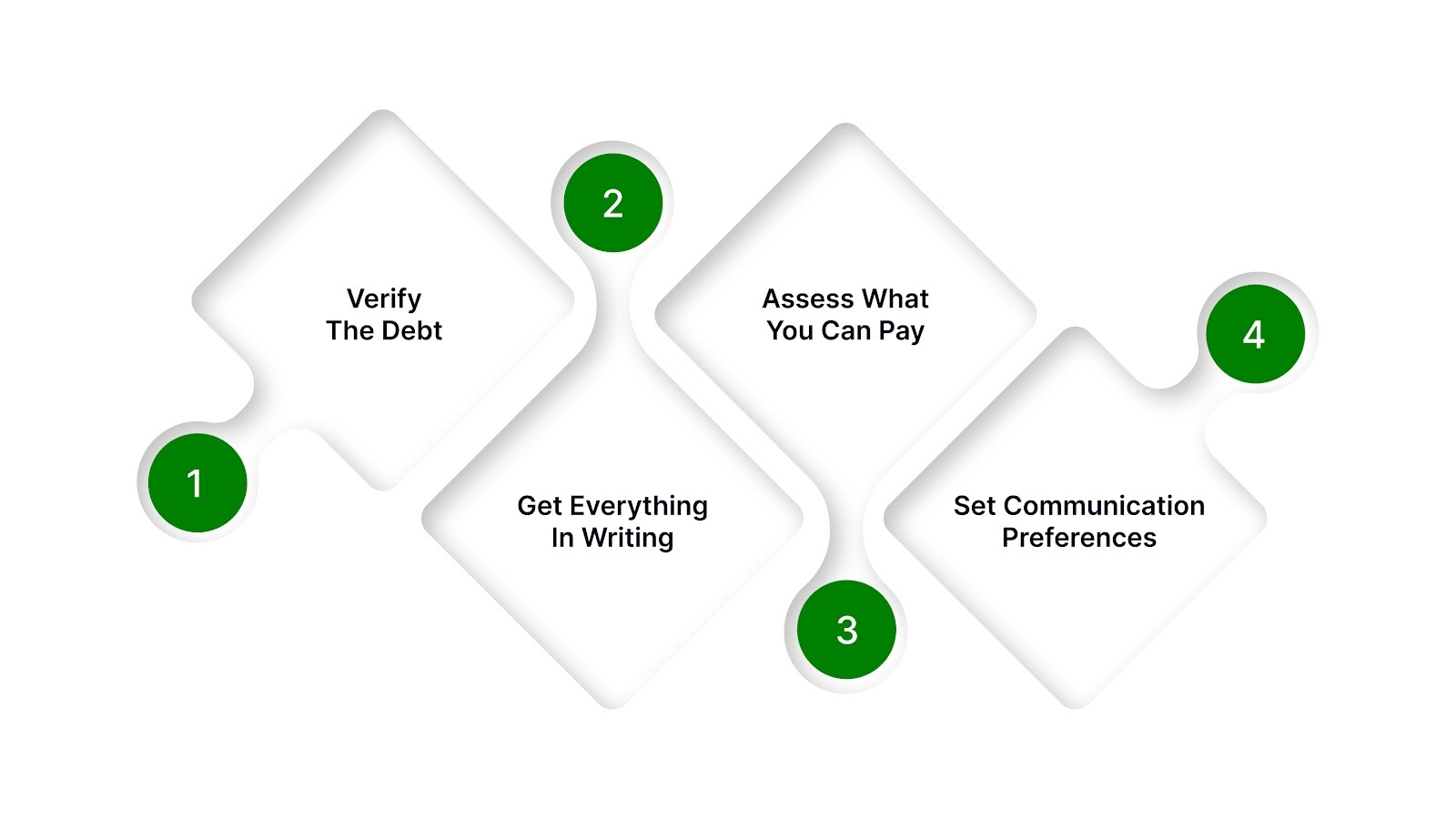
Your first conversation with a collector sets the tone. Without a plan, you risk bad terms, missed debt verification, and lost protections.
1. Verify the Debt
You're entitled to proof that the debt is yours, that the amount is accurate, and that the agency has the legal right to collect it. Don't assume the caller has correct information: errors happen, accounts get mixed up, and outdated debts reappear years later.
Request a validation notice. This should include:
- The creditor's name
- The original account number
- The amount owed, and
- A statement of your right to dispute the debt within 30 days
Until you receive and review this documentation, you're under no obligation to make payments or commit to plans.
2. Request Written Documentation
Phone conversations leave no record, and verbal agreements are difficult to enforce if disputes arise later. Insist that any payment plan, settlement offer, or resolution terms be provided in writing before you send money.
3. Understand What You Can Afford
Collectors may propose higher payments or faster settlement timelines, but your priority should be maintaining financial stability and choosing options you can sustain. Before agreeing to any plan, calculate what you can realistically pay without sacrificing rent, utilities, or other essential expenses.
If the proposed payment is too high, say so and counter with what works for your budget. Agencies prefer some payment over none, and many will adjust terms rather than risk you defaulting on an unaffordable plan.
4. Know You Can Set Communication Preferences
You have the right to control how and when collectors contact you. If calls at work are causing problems, inform them in writing and specify alternate contact methods. If you prefer email over phone calls, request that in writing as well.
Taking these steps early can prevent the situation from moving beyond your control, which is especially important when escalation becomes a real possibility.
When Collection Efforts May Escalate
Agencies don't file lawsuits or pursue wage garnishment immediately. Legal action is expensive and time-consuming, so it's reserved for accounts that meet specific criteria: larger balances, extended delinquency, and failed attempts at voluntary resolution.
Here's what typically pushes an account toward formal action:
- No response after repeated contact over 90 to 180 days: If you've ignored calls, letters, and emails for months, the agency assumes voluntary payment isn't happening and begins evaluating legal recovery.
- Account balance exceeds the cost of litigation: Lawsuits aren't filed on $300 debts; they're reserved for amounts large enough to justify court fees, attorney costs, and the time required to pursue judgment.
- You've made promises you didn't keep: If you agreed to a payment plan and defaulted, or committed to a settlement and didn't pay, the agency views you as unreliable and moves toward enforcement.
- The debt is approaching the statute of limitations: If the deadline for legal action is closing, agencies rush to file before losing the right to sue, even if they previously showed little interest in escalation.
Failing to respond to a lawsuit can result in a default judgment, allowing garnishment, levies, or liens under state law. At that point, negotiation becomes far more difficult because they've already secured a legal judgment.
Also Read: What Happens If You Miss a Payment on Consumer Easy Credit?
This is where working with an agency that prioritizes clarity and compliance from the start makes a measurable difference.
How Forest Hill Management Approaches Collection
Forest Hill Management uses structured portfolio strategies to stay organized and compliant, but we don't treat you like a number in a spreadsheet. When we contact you, it's because we're managing an account that needs attention, and our approach focuses on clarity, respect, and realistic options, not added pressure.
Here's what working with us actually looks like:
- Clear Account Information: You receive straightforward details about the balance and the original creditor, without confusion or guesswork.
- Flexible Repayment Paths: Available payment options are clearly explained so you can understand what may apply to your account.
- Secure, Convenient Payments: Online payment tools allow you to make and track payments securely.
- Compliance-First Approach: All account management follows applicable federal and state consumer protection laws.
- Open, Ongoing Communication: You're kept informed about your account status and possible next steps as things progress.
Our goal is to help you see the situation clearly, without adding stress, so you can take steps forward with confidence and clarity.
Conclusion
Portfolio collection strategies explain the calls, the timing, and the offers, but they don't define your response. Once you understand the system, you're engaging with a process that has rules, limits, and room for negotiation.
That knowledge doesn't erase the debt, but it does restore control. You can verify what you owe, set terms that fit your budget, assert your legal protections, and recognize when escalation is approaching in time to prevent it. The difference between feeling trapped and taking action often comes down to clarity, and now you have it.
If you’re ready to move forward, an agency like Forest Hill Management that respects this clarity can make the process easier.
Contact our team for account information or assistance in understanding your options.
FAQs
1. Why do collection agencies contact me so frequently?
Collectors often use automated outreach schedules based on factors like how past-due an account is and prior response history. While frequent contact is common, it cannot be harassing or abusive under federal law.
2. Can I negotiate the amount I owe in collections?
Yes. Collectors often accept settlements or adjusted payment plans, especially for older debts. You can counter their offer, but always get the terms in writing before paying.
3. What happens if I ignore collection calls and letters?
Ignoring contact won’t eliminate the debt. Collectors may pursue legal action at any point before the statute of limitations expires, and a judgment can lead to garnishment or levies where allowed by law.
4. How do I know if a debt collector is legitimate?
Request a written validation notice showing the creditor, the amount owed, and your right to dispute within 30 days. Legitimate collectors provide this; refusal or pressure to pay immediately is a red flag.
5. Can debt collectors contact me at work or call my family?
Collectors may contact you at work unless told it’s prohibited. They cannot discuss your debt with others, but may contact third parties only to locate you, and without mentioning the debt.