-p-500%20(1).png)
What is Receivables Performance Management? Complete Guide
Need Help Reviewing Your Account?
Contact UsLate payments don't just sit quietly on a balance sheet. They restrict cash flow, muddy your forecasting, and pile up administrative work for teams already stretched thin. The longer an account goes unresolved, the harder it becomes to collect.
A 2026 QuickBooks survey found that 59% of small businesses had at least one invoice overdue by 30 days or more, with an average of $17,700 awaiting payment per business. More than half of businesses with overdue invoices reported cash-flow problems, compared to just 36% of those without.
Receivables performance management (RPM) is how organizations get ahead of this. It's the structured use of data, workflows, communication, and technology to understand how well receivables are actually being collected, then improve those results. This guide covers the core definitions, the KPIs that matter, how to build a working program, common pitfalls, and when outside help makes sense.
Key Takeaways
- RPM adds performance measurement and continuous improvement to day-to-day AR and collections work.
- Strong programs track financial metrics, account activity, consumer behavior, workflow quality, and compliance.
- Every KPI should drive a decision: invoice timing, account priority, dispute resolution, or payment access.
- Choose a receivables partner with transparent processes, secure data handling, and clear account-owner communication.
What Is Receivables Performance Management?
Receivables performance management is the ongoing process of measuring, analyzing, and improving how effectively an organization turns outstanding receivables into completed payments. It builds a continuous feedback loop between performance data and day-to-day decisions—not a one-time scorecard.
RPM is often conflated with two related functions:
- Accounts receivable management handles the daily mechanics: invoices, balances, payments, disputes, and follow-ups.
- Debt collection focuses narrowly on recovering overdue obligations.
RPM sits above both. It asks whether the full receivables strategy is producing timely, compliant, and sustainable results.
The Receivables Lifecycle
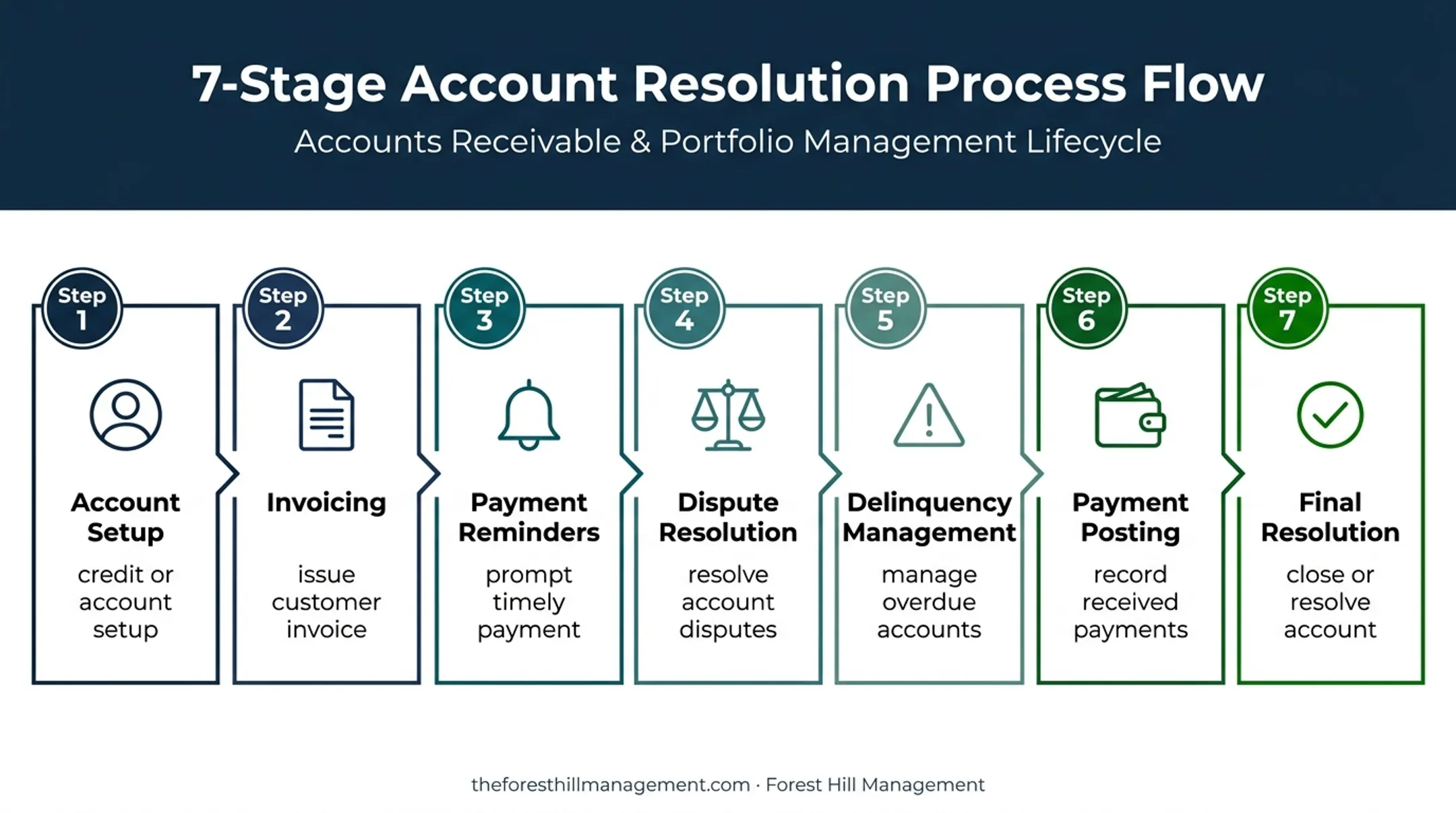
Every account moves through a similar path: credit or account setup, invoicing, payment reminders, dispute resolution (when needed), delinquency management, payment posting, and final account resolution. RPM tracks performance at each stage rather than waiting until the end to see what went wrong.
Those stage-level signals matter differently depending on who is looking:
- Businesses need predictable cash flow
- Portfolio holders need clear visibility into how an asset is performing
- Consumers need plain information and practical ways to resolve valid obligations
Objectives and Indicator Types
A working RPM program typically aims to:
- Reduce avoidable payment delays
- Improve collection effectiveness
- Spot risk earlier in the lifecycle
- Minimize bad debt and write-offs
- Resolve disputes efficiently
- Preserve respectful customer relationships
Not all indicators tell you the same thing:
- Leading indicators — response rates, invoice error rates, promise-to-pay activity — signal problems before they become losses.
- Lagging indicators — write-offs, bad debt — confirm outcomes after the fact, when that account’s course can no longer change.
Which Metrics Measure Receivables Performance?
Before setting any target, establish a baseline. Define your reporting period, which accounts count, how aging buckets are defined, applicable payment terms, and how disputed or partially paid accounts get treated. Skip this step and your metrics will compare apples to oranges month over month.
Core Financial Metrics
Days Sales Outstanding (DSO) measures the average number of days it takes to collect payment after a sale. NACM's standard formula calculates it as ending total receivables multiplied by days in the period, divided by sales for that period.
A rising DSO can signal slower collections, looser credit terms, or a sales mix shift. Interpret it alongside volume and terms, not in isolation.
Collection Effectiveness Index (CEI) and AR turnover both assess collection efficiency from different angles. NACM notes that a CEI closer to 100% is a directional signal, not a universal target: the right benchmark depends on your receivables model.
Aging and Delinquency Movement
Organize balances into clearly defined aging buckets (30, 60, 90+ days) and track how accounts move between them over time. Growing balances in older buckets often point to:
- Contact or reachability problems
- Unresolved disputes
- Credit terms that no longer fit the customer's situation
- Limited payment access or options
Catching this movement early lets you intervene before an account slides into write-off territory.
Supporting KPIs
Round out your dashboard with:
- On-time payment rate
- Average payment time
- Promise-to-pay kept rate
- Dispute resolution time
- Recovery rate
- Bad debt or write-off rate
- Cash application accuracy
None of these numbers mean much sitting alone in a spreadsheet. Pair every KPI with an owner, a review cadence, a threshold to watch, a likely cause, and a corrective action.
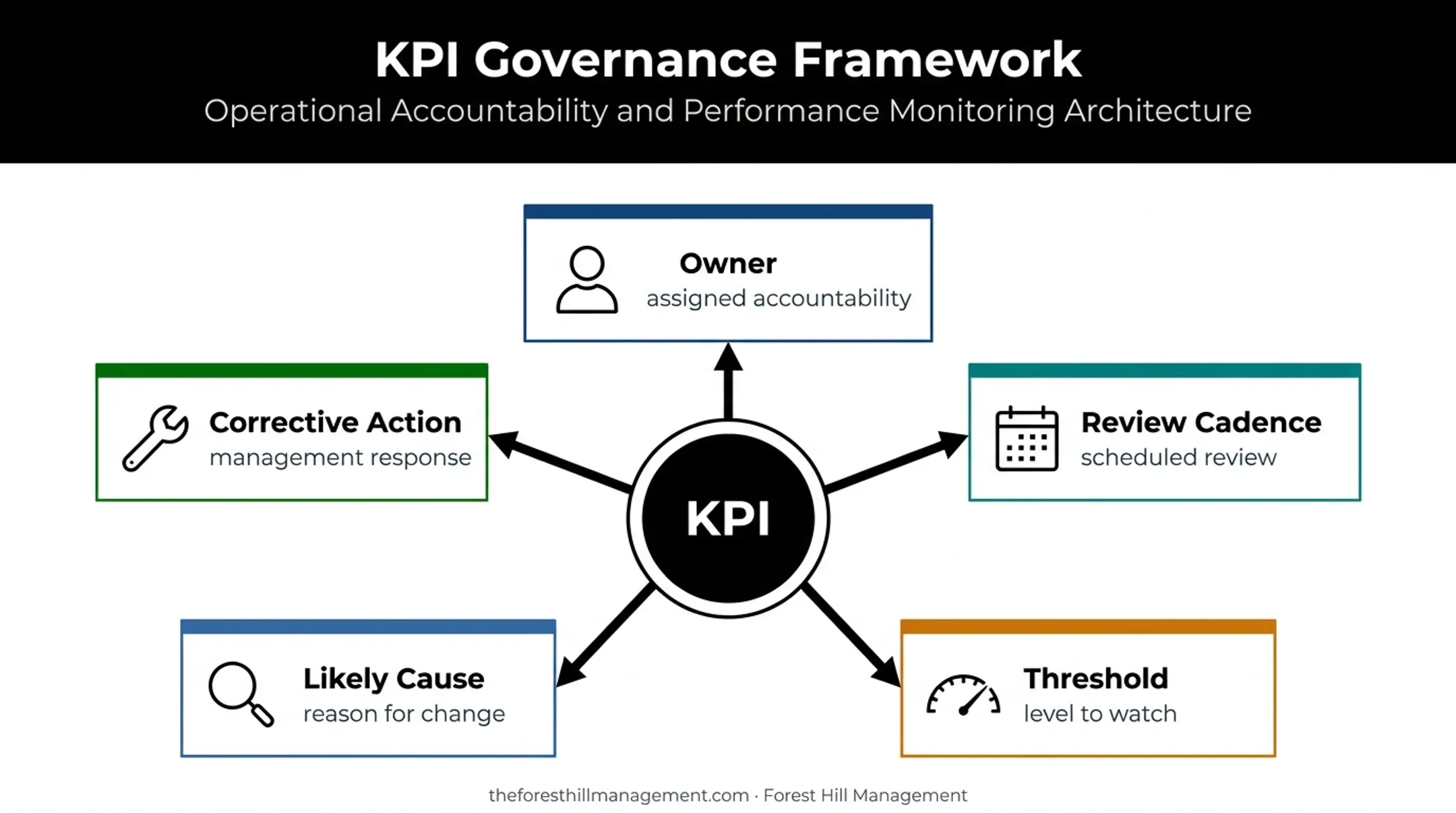
A rising DSO with no assigned owner is just a data point. A rising DSO tied to a billing team reviewing invoice errors monthly is a management system.
How to Build an Effective RPM Program
Start With Objectives and Definitions
Decide what matters most right now. Common RPM priorities include:
- Faster payment and lower delinquency
- Better dispute resolution
- Improved cash forecasting
- Less manual effort
- Stronger compliance
Assign ownership across finance, billing, sales, collections, and technology. Then standardize account statuses, aging rules, and dispute categories so every team reports the same way.
Fix Upstream Processes First
A surprising share of delinquency starts before an account is even overdue. Tighten these upstream basics so friction never becomes a collections problem:
- Accurate customer contact and billing data
- Clear payment terms on every account
- Complete, readable invoices
- Accessible payment instructions
- A documented path to correct billing errors
Segment, Don't Treat Everyone the Same
Group accounts by balance, age, risk, payment history, dispute status, and likelihood of resolution. A 15-day-past-due account with a strong payment history needs a different touch than a 90-day account with a history of disputes.
Build Behavior-Responsive Workflows
Match timing, channel, language, and message to what the account's status and history suggest. Record every contact attempt, response, promise, and resolution in one central account history, not scattered across email threads and spreadsheets.
This should include:
- Respectful, plain-language outreach that states the amount, basis, and next step
- Consent and opt-out controls where call, text, or email rules apply
- Escalation paths for disputes, hardships, or vulnerable consumers
Reduce Payment Friction
Offer secure, convenient payment options with clear balances and understandable instructions. Self-service helps: Forest Hill Management provides a secure online payment portal where account holders can review balances and manage obligations without waiting on hold.
Combine Technology With Governance
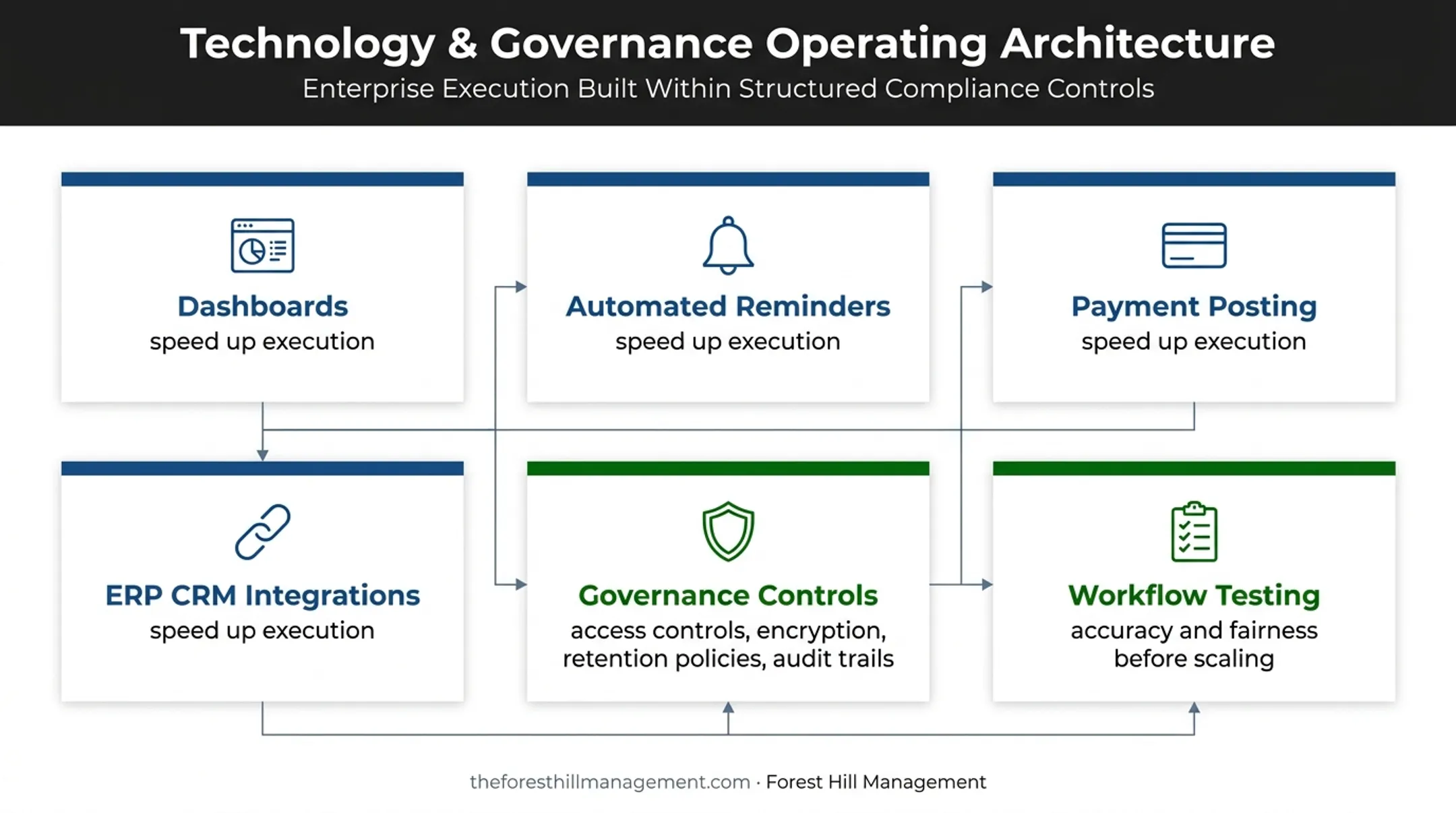
Dashboards, automated reminders, payment posting, and ERP/CRM integrations all speed up execution. But automation without governance creates new risk. Require access controls, encryption, retention policies, and audit trails for any system touching sensitive financial data. Test automated workflows for accuracy and fairness before you scale them.
When follow-up slips, the delinquent book grows, or you need more structured account handling, an outside receivables partner can extend capacity. Forest Hill Management services past-due consumer portfolios with personalized account management and does not promise any specific recovery outcome.
Common Challenges and How to Address Them
Strong RPM programs still hit operational friction. These three issues show up often—and each has a practical fix.
Fragmented data and stale reporting. When billing, payments, and collections notes live in three different systems, nobody trusts the numbers.
Fix this with:
- A single source of truth for account data
- Regularly refreshed dashboards
- Reconciled payment data
- Clear ownership over data quality
Manual workflows and inconsistent prioritization. Without shared rules, teams chase different accounts for different reasons, and high-value work gets buried. Document standard operating procedures and automate repeatable tasks. Keep humans reviewing exceptions rather than letting automation replace judgment entirely.
Disputes, compliance, and security risk. The CFPB received roughly 387,400 debt-collection complaints in 2025, with "attempts to collect debt not owed" the most common issue. Identity and balance accuracy matter as much as collection speed.
Address this by:
- Creating documented escalation paths for disputes
- Preserving communication records
- Limiting data access to those who need it
- Reviewing applicable requirements and seeking legal or compliance advice for situation-specific questions
Conclusion
Receivables performance management is a continuous discipline that links account data, customer communication, payment access, and financial outcomes. Treating it like a monthly collections report leaves cash uncollected and process problems unfixed.
Start small: assess your current receivables data, pick a handful of KPIs you'll actually act on, and identify your biggest process bottleneck. From there, decide whether internal fixes are enough — or whether a qualified receivables management partner can close the gap faster.
Frequently Asked Questions
What are receivables management services?
Receivables management services usually cover monitoring balances, contacting account holders, arranging or processing payments, resolving account issues, reporting performance, and supporting compliance. Exact scope depends on the agreement between the servicer and the account owner.
What is the accounts receivable (AR) process?
The AR process covers account or credit setup, invoicing, payment collection, cash application, reconciliation, dispute handling, overdue follow-up, and resolution or write-off according to documented policy.
How can I verify if a receivables management company is legitimate?
Verify the company independently and request written debt validation with proof it is authorized to collect. Skip unverified channels for sensitive data, and contact the CFPB or your state attorney general if anything feels off.
Who does receivables management collect for?
A receivables management company may work on behalf of original creditors, businesses, healthcare or financial organizations, debt buyers, or other authorized portfolio holders. A legitimate company should clearly explain its relationship to your account when asked.
What are the best KPIs for accounts receivable?
Common choices include DSO, CEI, AR turnover, aging distribution, on-time payment rate, dispute resolution time, cash application accuracy, and bad debt rate. The right mix depends on your organization's goals and receivables model.
What are the key components of a performance management system?
Core pieces include defined objectives, reliable data, relevant KPIs, account segmentation, and documented workflows. Clear ownership, regular reviews, corrective actions, technology integration, and security and compliance controls complete the system.