-p-500%20(1).png)
What Is a Debt Repayment Plan and Is It Right for You?

Need Help Reviewing Your Account?
Contact UsIntroduction
Juggling five credit cards, a personal loan, and a medical bill that just went to collections? You're not alone. Multiple due dates, climbing interest charges, and minimum payments that barely dent the balance can make debt feel unmanageable fast.
A debt repayment plan is simply an organized strategy for paying what you owe over time. That might mean a self-managed budget, a hardship arrangement with a single creditor, or a formal debt management plan run through a credit counseling agency.
Which option fits depends on your debt types, income stability, interest rates, and what creditors are actually willing to agree to. This guide breaks down how each approach works, what it really costs, and how to decide if a structured plan makes sense for you.
Key Takeaways
- A repayment plan organizes scheduled payments; it doesn't automatically forgive or reduce what you owe.
- Compare total repayment cost, timeline, and fees, not just the monthly payment amount.
- Formal plans often carry eligibility rules, creditor participation requirements, or cancellation terms.
- Read every agreement in writing and consult a financial or legal professional for serious debt trouble.
What Is a Debt Repayment Plan?
Three Common Forms
A debt repayment plan can take several shapes:
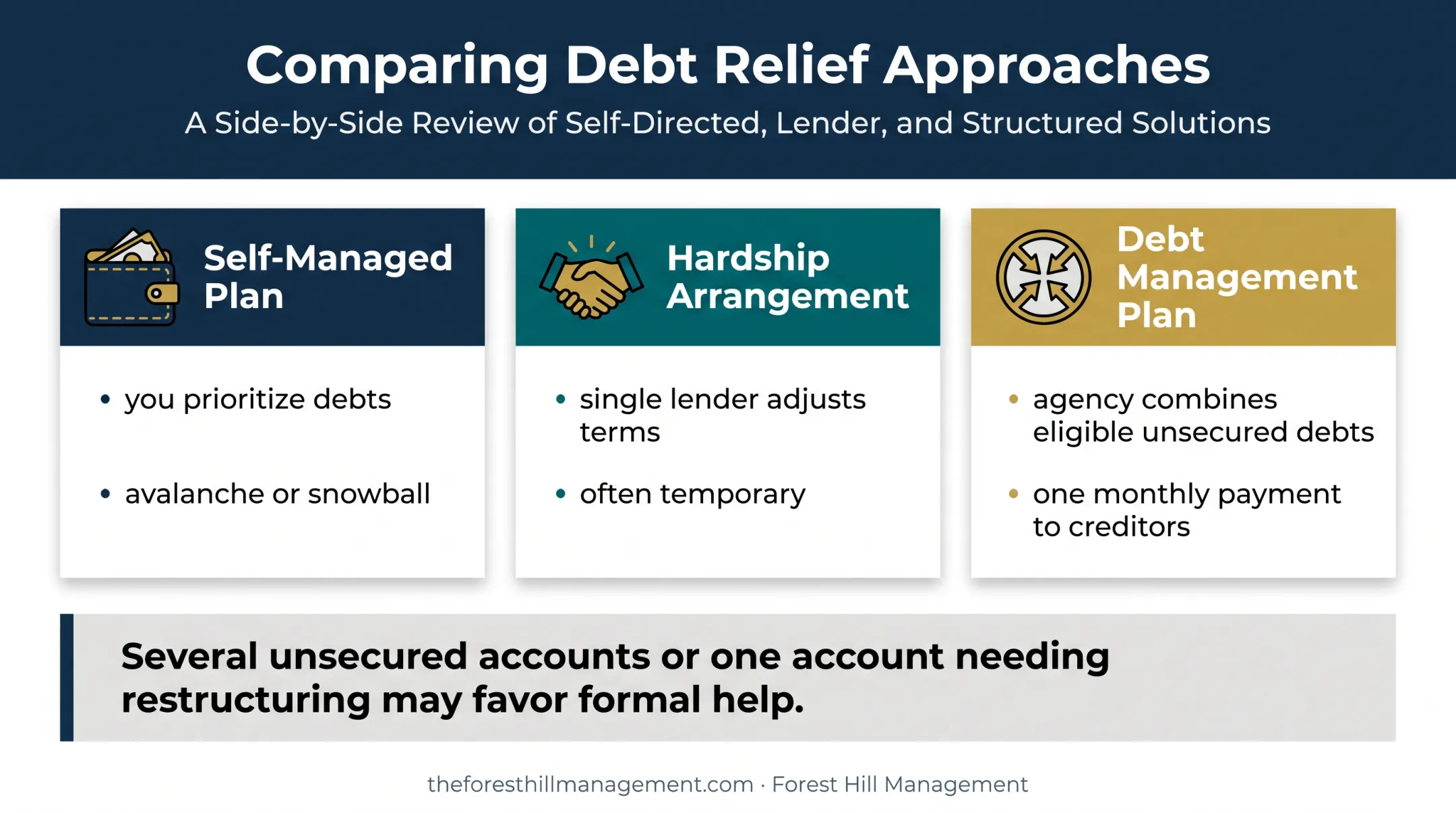
- Self-managed plan: you prioritize your own debts and apply extra cash using a method like avalanche or snowball.
- Creditor-specific arrangement: a single lender adjusts terms on one account, often temporarily, due to financial hardship.
- Debt management plan (DMP): a credit counseling organization combines eligible unsecured debts into one monthly payment it distributes to your creditors.
Payment vs. Repayment: Which Debts Qualify
A payment is one amount sent toward a debt. Repayment is the ongoing process, covering principal, interest, and fees until the balance reaches zero.
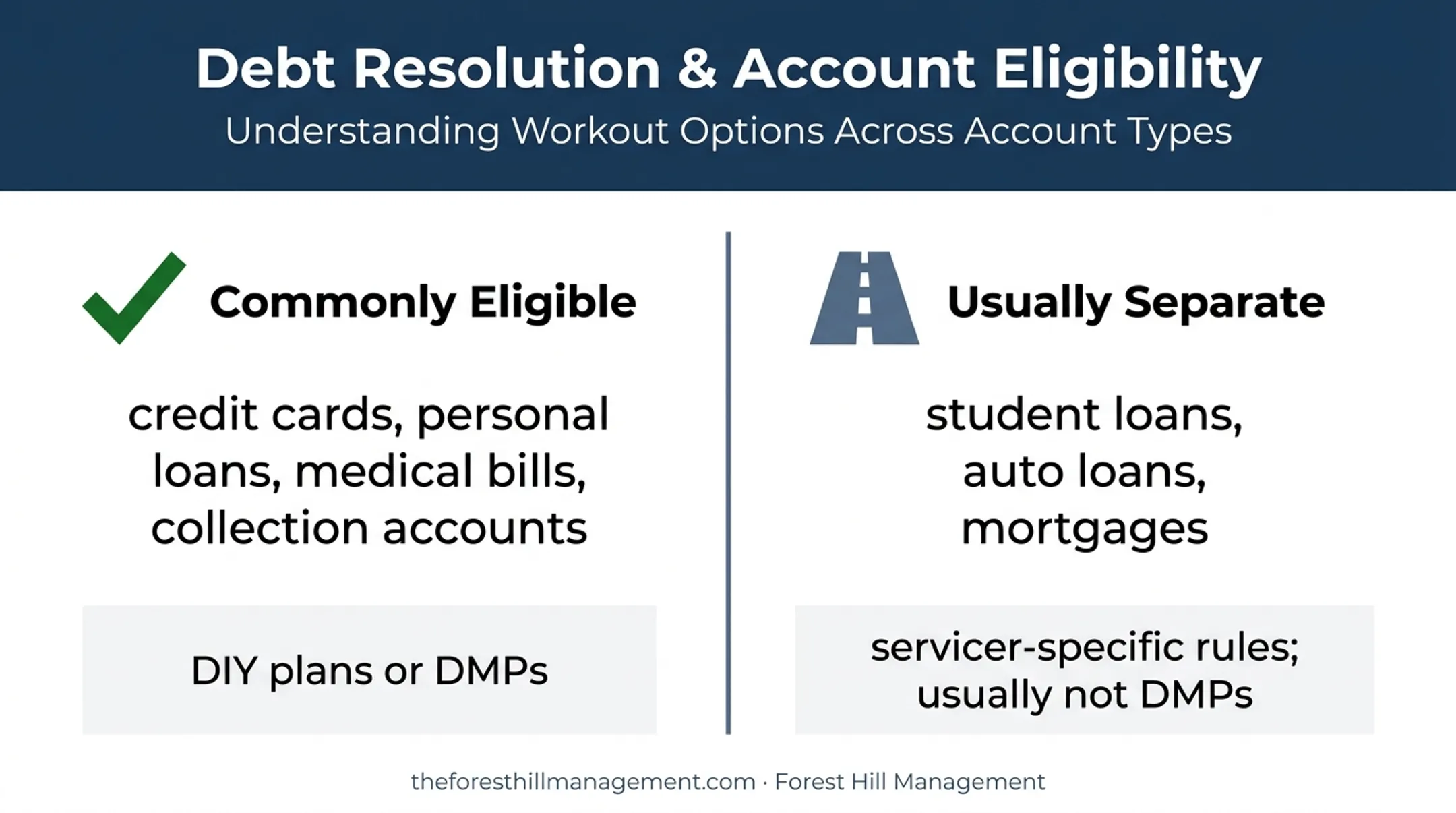
Not every debt fits into this process the same way. Credit cards, personal loans, medical bills, and collection accounts are commonly eligible for DIY plans or DMPs, while student loans, auto loans, and mortgages typically follow separate servicer-specific rules and usually aren't part of a DMP.
What It Does, Doesn't Do, and How It Compares
A repayment plan can organize your payments and set a defined timeline. Some arrangements reduce interest or waive fees. What it generally won't do:
- Erase the principal you owe
- Stop collection activity automatically
- Guarantee a credit score improvement
Here's how a DMP stacks up against other debt relief options:
Only the DMP row describes a formal debt repayment plan. The rest are worth understanding before you rule anything in or out.
How Does a Debt Repayment Plan Work?
Start With the Numbers
Before picking a strategy, gather:
- Account statements, balances, interest rates, minimum payments, and due dates
- Any collection notices or legal correspondence
- Monthly income and essential expenses (housing, utilities, food, transportation)
Sort each debt into a category: current, past due, in collections, secured, unsecured, or disputed. This tells you which options are even available. A secured car loan behaves very differently than an unsecured credit card balance.
Next, build a realistic budget that protects essential living costs first. A repayment plan only works if you can actually keep making the payments.
Choosing a Repayment Priority
Most consumer agencies recommend one of two DIY methods:
- Debt avalanche — pay minimums on everything, then throw extra cash at the highest-interest balance first. Once that's gone, move to the next-highest rate. This usually saves the most in total interest.
- Debt snowball — pay minimums on everything, then target the smallest balance first. Paying off an account quickly builds momentum, even if it costs a bit more over time.
The CFPB recommends listing every debt by balance and rate before choosing a method, since neither approach changes what you legally owe to any single creditor. It only changes the order you attack them in.
A creditor-specific hardship arrangement or a professional Debt Management Plan (DMP) may make more sense than a DIY approach when you're juggling several unsecured accounts, or when one account needs restructuring you can't negotiate alone.
How Formal Arrangements Operate
With a creditor hardship plan or DMP, an administrator typically:
- Reviews your budget and proposed payment
- Sets a recurring payment amount and schedule
- Distributes funds to creditors (DMPs) or applies them directly (single-creditor arrangements)
- Requires ongoing compliance with agreed conditions
Lower rates, waived fees, or reduced payments aren't automatic. They depend on the specific creditor, program terms, and your account status, so get the agreement in writing before you rely on it.
Staying on Track
Once enrolled, your ongoing responsibilities include:
- Making payments on time, every time
- Keeping your contact information current
- Monitoring statements to confirm payments are applied correctly
- Avoiding new debt that could derail the plan
- Contacting the creditor or administrator before a payment is missed, not after
Before You Agree, Check
- Total amount you'll repay, including interest and fees
- APR or interest treatment under the new terms
- Setup or maintenance fees
- Plan duration and rules on extra payments
- Whether accounts will close or credit access will be restricted
- Which creditors are actually participating
- Consequences of a missed payment and cancellation terms
- Whether the arrangement gets reported to credit bureaus
Benefits and Potential Drawbacks
What You Might Gain
A structured repayment plan turns scattered due dates into one clear schedule. Common benefits include:
- Fewer due dates to track each month
- A clearer budget built around one target payment
- A defined payoff timeline instead of open-ended debt
- Reduced interest or fees, where negotiated
- Lower risk of new late payments
Replacing reactive, minimum-payment decisions with a documented monthly target tends to reduce financial stress. You know what's coming and when it ends.
What You Might Give Up
Structure comes with tradeoffs:
- Longer terms can mean more total interest paid over time
- Fees apply on some DMPs and consolidation options
- Credit restrictions often limit new borrowing while a plan is active
- Creditors may close accounts included in a DMP
- Creditor participation is never guaranteed
- Missed payments can trigger cancellation
Credit Report Considerations
Credit effects vary by arrangement type. Some creditors add a notation for DMP participation, though the notation itself usually has little direct score impact. What tends to matter more:
- Missed payments before or during enrollment
- Accounts closed as part of the plan
- Changes in credit utilization
- New credit applications
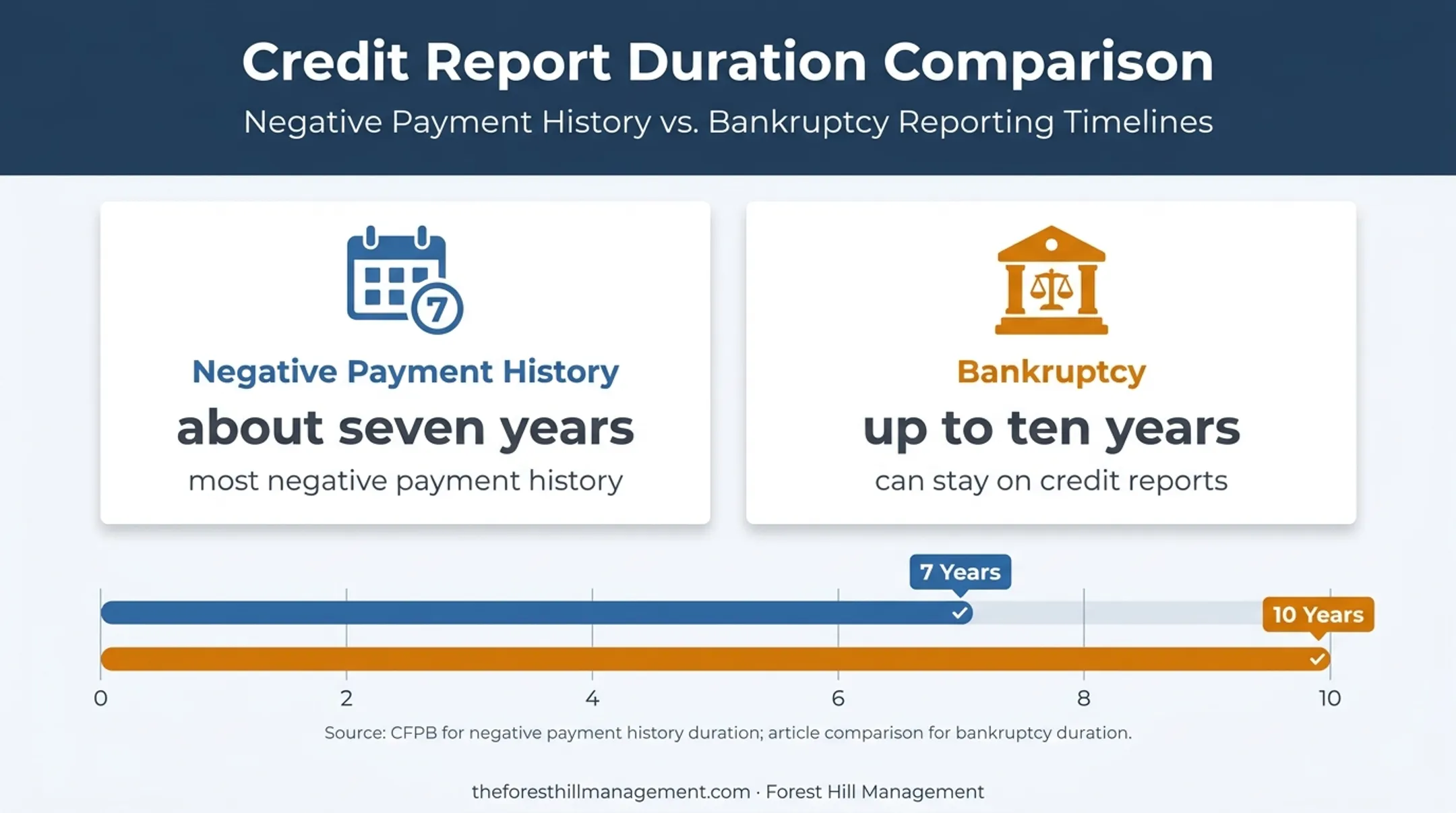
Old late payments don't disappear just because you start a new plan. The CFPB notes that most negative payment history generally stays on a credit report for about seven years, regardless of any repayment arrangement entered afterward. No article can promise a specific score outcome, so treat any guaranteed-improvement claim with suspicion.
Is a Debt Repayment Plan Right for You?
When a Plan May Be Worth Exploring
Consider a structured plan if:
- Multiple payments are hard to coordinate each month
- High interest is preventing real progress on balances
- You have reliable, consistent income
- The proposed payment fits comfortably after essential expenses
When It May Not Be the Right Fit
A plan may be unsuitable if:
- Income is too unstable to commit to a fixed payment
- You cannot cover essential bills even before a plan payment
- Your biggest debts are secured, like a mortgage, and outside the plan's scope
- Creditors won't agree to participate
- You need legal protection from active collection or lawsuit activity
Comparing Your Alternatives
Compare total cost and fit before you enroll in any option. The FTC recommends reviewing a credit counseling organization's fees and services carefully before signing up, since setup costs and monthly charges vary by agency.
Estimating a Payoff Timeline
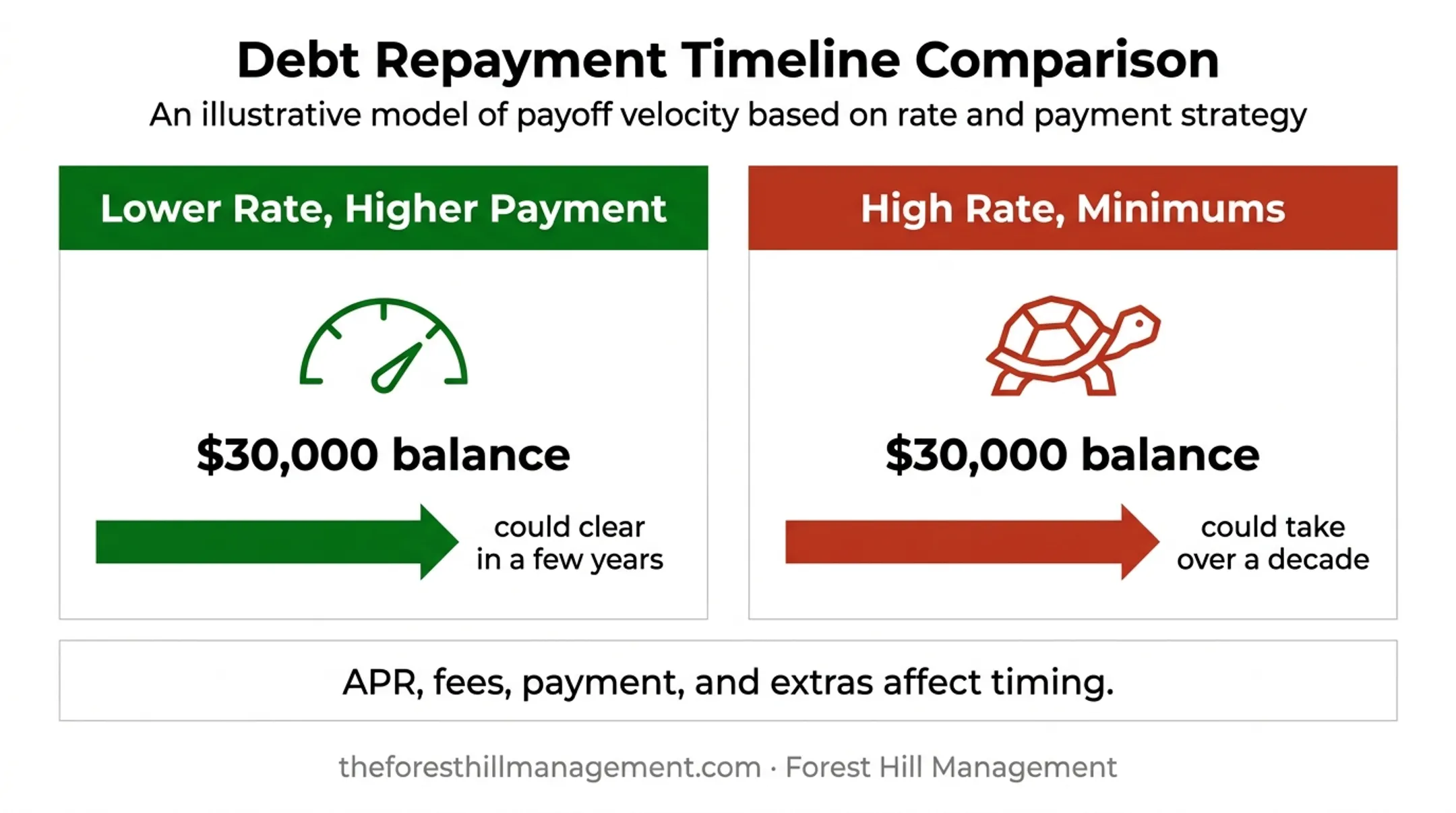
Say you owe $30,000. Payoff time still depends on APR, fees, your monthly payment, and any extras you add.
That balance at a lower rate with a higher payment could clear in a few years. The same balance at a high rate with only minimums could take over a decade. Use a payoff calculator with your real numbers—this is an illustration, not a promise.
Consumer Safety Checklist
Before signing anything:
- Verify the organization's identity and legal authority
- Get every term in writing
- Ask exactly how your payments will be applied
- Protect your personal and financial information
- Be skeptical of guaranteed-results claims
- Avoid anyone demanding payment before explaining the arrangement
If you have a Forest Hill Management account or another past-due obligation, contact the company through official channels to confirm account details and discuss resolution options. Call (888) 471-0109 or email info@foresthillmanagement.com. Available options and outcomes depend on your specific account and any terms you agree to.
In Summary
A debt repayment plan can bring real structure to an overwhelming situation. But "right for you" isn't a one-size-fits-all answer. It hinges on a few practical factors:
- Affordability of the monthly payment
- Type of debt involved
- Whether creditors will participate
- Total cost over the life of the plan
- How the plan may affect your credit
Before committing to anything:
- List every obligation you owe, with balances, rates, and due dates.
- Build a realistic budget that protects essential expenses.
- Compare alternatives side by side, not just the first offer you see.
- Get every term in writing before you agree to anything.
Work through these steps first. You’ll be in a stronger position whether you choose a DIY method, a creditor arrangement, or a formal plan.
Frequently Asked Questions
How do debt repayment plans work?
Self-managed strategies rely on your own budget and a chosen payoff order, while formal arrangements involve a creditor or counseling agency setting the terms. Either way, you need a realistic budget and consistent, on-time payments to make progress.
Can I make extra payments on a debt repayment plan?
Yes, in many plans—confirm the rules before you pay more. Ask whether extras reduce principal, shorten your timeline, change fees, or need advance notice to the creditor or administrator.
How long can you be on a debt repayment plan?
There's no universal timeframe. Duration depends on your balance, interest rate, payment amount, creditor terms, and whether any payments are missed along the way.
How long will it take to pay off $30,000 in debt?
APR, fees, your monthly payment, and any extra amounts you put toward principal all change the timeline. Use a current payoff calculator with your real numbers instead of a generic estimate.
How long does debt relief stay on your credit report?
Most late payments, collections, and charge-offs can remain for up to seven years; bankruptcy can stay up to 10. A repayment plan is usually reported differently from a settlement or bankruptcy and may not add a separate negative mark on its own.
What is the difference between payment and repayment?
A payment is a single amount sent toward a debt. Repayment describes the broader, ongoing process of paying off principal, interest, and fees until the balance reaches zero.