-p-500%20(1).png)
How to Deal with National Recovery Solutions Debt
Need Help Reviewing Your Account?
Contact UsThe message doesn’t explain itself. A call, a letter, or an email appears with a name you don’t recognize, and your brain fills the gaps before facts ever show up.
That pause is rational. With nearly 7,000 collection agencies operating across the United States, unfamiliar money-related outreach deserves scrutiny, not instant compliance.
National Recovery Solutions enters your life at that exact point of uncertainty. They contact people about unresolved accounts, but contact alone never answers what matters most: what’s owed, why, and what happens next.
This article breaks down how to deal with National Recovery Solutions calmly and intelligently, so you respond with verification, control, and intention instead of reaction.
Key Takeaways
- Verify the debt before paying. Mistakes, inflated amounts, or misattributed accounts are common, and requesting validation protects you from paying what isn’t owed.
- You can pay in full, explore repayment arrangements, or dispute inaccurate debts, but always get clear documentation.
- Ignoring debt escalates risk: credit damage, long-term reporting, and potential lawsuits or wage garnishment.
- Collection agencies follow FDCPA rules, but structured management, like Forest Hill Management, gives clarity, control, and legal compliance.
- Taking intentional steps, such as verification, documentation, and structured repayment, shifts control back to you and reduces stress.
Who Is National Recovery Solutions?
National Recovery Solutions is a third-party debt collection agency that operates across the United States. Their business model centers on acquiring past-due accounts from original creditors and attempting to collect those balances on behalf of those creditors or as the new owner of the debt.
The company functions like most collection agencies: They may collect on accounts owned by original creditors or on accounts that have been transferred or sold.
Their goal is recovery, and the methods they use must comply with federal consumer protection laws, including the Fair Debt Collection Practices Act (FDCPA). Understanding who they are matters because it shifts the conversation from "Who is this?" to "What do they actually have on me?"
Is the Debt Legitimate? How to Verify Before You Pay
Before you send a single dollar, you need proof that what they're claiming is real. Collection agencies aren't always wrong, but they're also not always right. Accounts get mixed up, amounts get inflated, and sometimes the debt they're pursuing isn't even yours.
You have 30 days from the first contact to request debt validation in writing. It's your legal right under the FDCPA. Send a written request asking them to verify the debt, and they must stop collection activity until they provide documentation proving the obligation exists. Here's what proper validation should include:
- The name of the original creditor you supposedly owe
- The exact amount they claim you owe, including any added fees or interest
- Dates showing when the debt originated and when it became delinquent
- Documentation linking you specifically to this account
If they can’t provide this, they must pause collection activity until proper verification is supplied. If they send incomplete information or ignore your request entirely, that may be a violation you can report to the Consumer Financial Protection Bureau (CFPB) or your state attorney general.
Watch for red flags that suggest fraud or unlawful practices. Legitimate agencies send written notices and provide clear documentation. If something feels off, trust that instinct and don't engage until you have hard evidence in front of you.
Also Read: Why One-Size-Fits-All Debt Solutions Don't Work for Real Relief
Knowing whether the debt is real protects you from paying what you don't owe and gives you the foundation to decide what comes next.
Your Options When Dealing With National Recovery Solutions
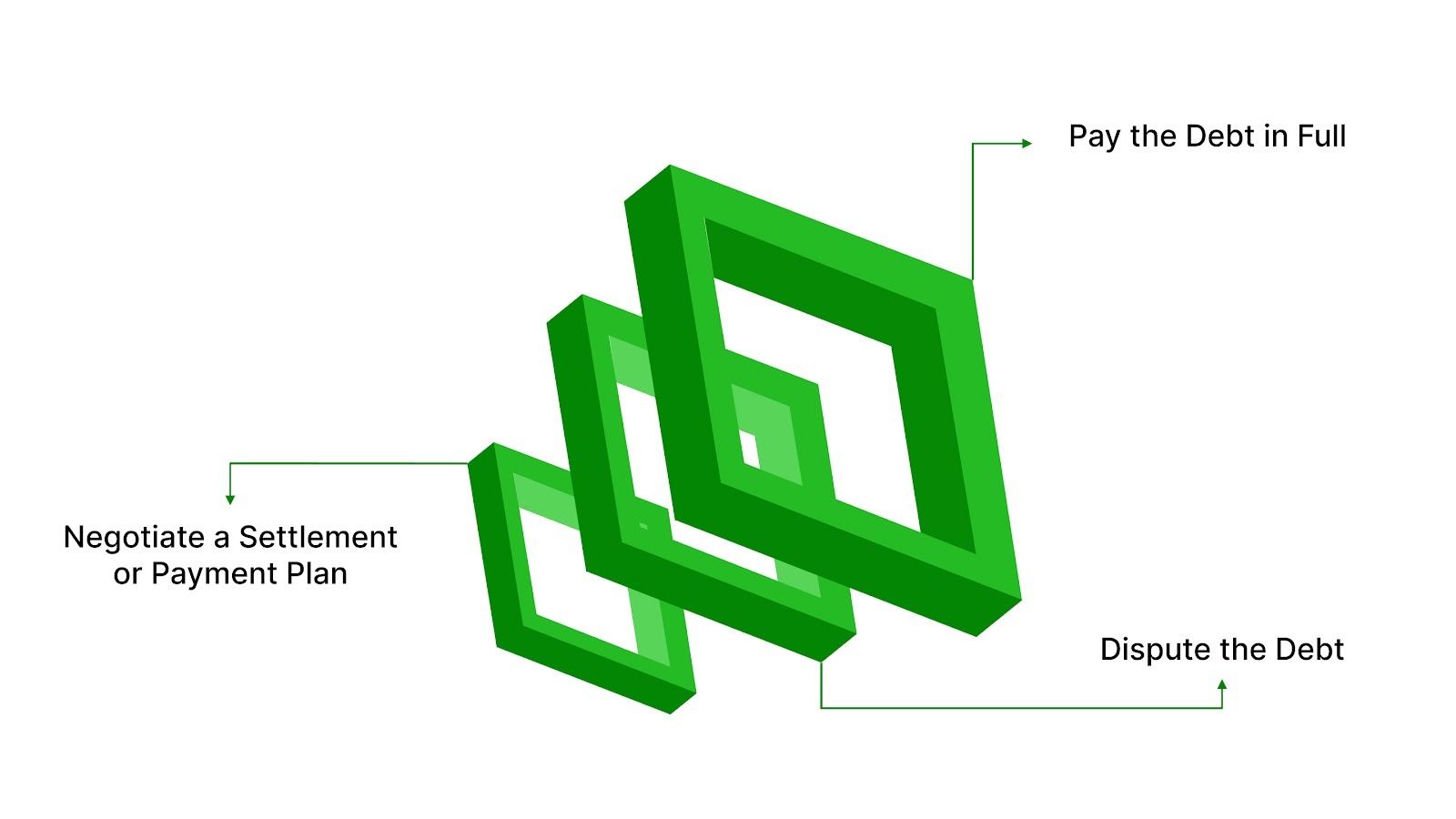
Once you've confirmed the debt is legitimate, you're not stuck with only one path forward. How you respond depends on your financial situation, the accuracy of what they're claiming, and what outcome makes sense for your life right now.
1. Pay the Debt in Full
Paying a debt in full is often the cleanest way to resolve it, especially when the debt is accurate and you have the funds available. It removes the weight from your credit and mental space, leaving no lingering balances or follow-up. Before taking this step, it’s important to have clear documentation.
Here’s what that involves:
- Get written confirmation of the exact amount required to settle the account in full.
- After payment, request a receipt and a letter stating the debt is satisfied and the account is closed.
- Keep this documentation to ensure the matter is fully resolved and the account cannot resurface later.
This approach works best when the numbers fit your budget and you want the issue permanently cleared.
2. Negotiate a Settlement or Payment Plan
If paying the full debt isn’t realistic, negotiating a settlement or payment plan is a practical alternative. Some collection agencies may consider alternative repayment arrangements depending on the account and circumstances.
Because they usually purchased your debt for a fraction of what you owe, settling for 40% to 60% of the balance can still be profitable for them. Here’s how to approach it:
- Propose terms you can actually afford: either a lump-sum settlement or monthly payments over time.
- Be specific about amounts and dates, and get everything in writing before agreeing.
- Document every conversation, email, and letter, noting names, dates, and details discussed.
- Ensure any settlement agreement clearly states that your payment satisfies the debt in full and that no further collection will occur.
Negotiation works when terms are clear, realistic, and fully documented to protect you from future claims.
3. Dispute the Debt
Disputing a debt is appropriate when it isn’t yours, the amount is incorrect, or the statute of limitations has expired. This involves sending a written notice that explains exactly why you’re challenging the claim and requests that collection stop until the issue is resolved. Here’s what to do:
- Clearly state why you dispute the debt and provide any supporting evidence.
- Require the collection agency to investigate and respond with proof that the debt is valid.
- If they can’t verify the debt, they must stop collection efforts and correct any inaccurate credit reporting.
- Avoid disputing frivolously; only challenge debts that are genuinely inaccurate to ensure your efforts protect you.
Disputing is a legal tool to enforce accuracy and accountability. The best approach depends on what’s true, what you can manage, and what protects your financial standing moving forward.
Also Read: Best Finance Advisory Service Providers for Debt Management
Now that you know your choices and how to take control, the next step is understanding the potential consequences of inaction.
What Happens If You Ignore National Recovery Solutions?
Ignoring them doesn't make the debt disappear. It escalates the situation in predictable ways, and every stage adds friction that makes resolution harder.
First, the contact intensifies. Calls continue, letters pile up, and emails follow. Collection attempts may continue through permitted communication methods.
Then the credit damage begins:
- The account gets reported to the credit bureaus as a collection, which drops your credit score significantly
- The negative mark stays on your report for up to seven years, affecting loan approvals, interest rates, and even rental applications
- Future creditors see the unresolved collection and view you as a higher risk, which limits your options when you need credit
If the debt remains unresolved long enough, they may escalate to legal action. That means a lawsuit, a court judgment, and potentially wage garnishment or bank levies. Once a judgment is in place, they have legal authority to collect directly from your paycheck or freeze your bank account until the debt is satisfied.
Also Read: How to Analyze a Debt Portfolio Effectively
Seeing how quickly things can escalate highlights why a structured approach matters, and that’s exactly where Forest Hill Management takes a different path.
How Forest Hill Management Handles Account Resolution Differently
If you've dealt with traditional collection agencies, you know how chaotic the process can feel: confusing letters, inconsistent information, pressure to pay immediately. Forest Hill Management doesn't work that way.
We focus on structured account management that removes confusion and gives you control. Instead of juggling multiple creditors or guessing whether information is accurate, you work with one company that follows federal regulations at every step.
What makes our approach clearer:
- Transparent account details from the start: You know exactly what you owe, to whom, and why.
- Structured repayment plans: Arrangements based on the information you choose to share.
- Secure online platform: Manage payments, view balances, and track progress anytime without phone calls.
- Compliance you can count on: Every process follows federal consumer protection laws, so your rights stay protected.
If you're ready to move forward with clarity, make a payment online or call (888) 471-0109 to explore your options.
Conclusion
Contact from a collection agency doesn’t automatically mean you have to pay, and it doesn’t mean you’re out of options.
Start by verifying the details. Request documentation, confirm the debt, and make sure the information you receive matches your records. Once you understand the facts, you can decide the best way to move forward.
Taking intentional steps keeps the process under your control and helps you manage your financial obligations with clarity. Forest Hill Management can help by offering structured, compliant repayment options designed around transparency and your unique situation.
Contact our advisors for personalized support or take the first step by making a payment online today.
FAQs
1. Can National Recovery Solutions sell my debt to another agency after initial contact?
Yes. Even after they begin collection, debts can be resold to other agencies. Each new owner may restart contact, but your rights to validation, dispute, and documentation carry over with the account.
2. How does my state’s statute of limitations affect debt collection?
Debt age limits depend on state law, affecting how long a creditor or collector can sue. Even if the debt is legally unenforceable, collectors may still attempt contact; knowledge of your state’s statute of limitations protects your legal position.
3. Are there circumstances where a partial payment resets the statute of limitations?
Yes. Making a partial payment or acknowledging the debt can legally restart the clock in many states. Strategic communication, without admitting liability, is important if you want to preserve your rights.
4. Can communication methods (phone, email, mail) influence the agency’s collection tactics?
Collectors often adjust methods based on response patterns. For instance, ignoring calls but responding in writing may shift the process to formal letters or legal notices, which can affect both timelines and negotiation leverage.