-p-500%20(1).png)
How to Manage Debt Stress: Practical Steps to Regain Control and Peace of Mind

Need Help Reviewing Your Account?
Contact UsDebt stress can feel heavy, especially when bills keep piling up, and you are not sure what to do next. For many people, it is not just about one unpaid balance. It is the pressure, confusion, and constant worry that make everyday life feel harder than it should.
When debt starts affecting your sleep, focus, mood, and sense of control, it becomes more than a financial issue. It can influence how you think, how you feel, and how you respond to the rest of your responsibilities. That is why it is important to address the full cycle of stress, not just the numbers on a statement.
In this blog, we will look at what debt stress really means, how to recognize the warning signs, and how to face your financial reality with a practical plan. You will also learn simple ways to manage stress, protect your health, and build a more stable path forward.
Key Takeaways
- Debt stress is both financial and emotional, and recognizing early signs helps you take control sooner.
- Clarity on your finances, including debts, income, and expenses, reduces uncertainty and improves decision-making.
- Prioritizing essential payments and creating a short-term plan helps stabilize your situation quickly.
- Managing stress alongside debt is critical for staying consistent and making better financial decisions.
- Building long-term habits and seeking structured support when needed can prevent future financial stress.
How to Manage Debt Stress?
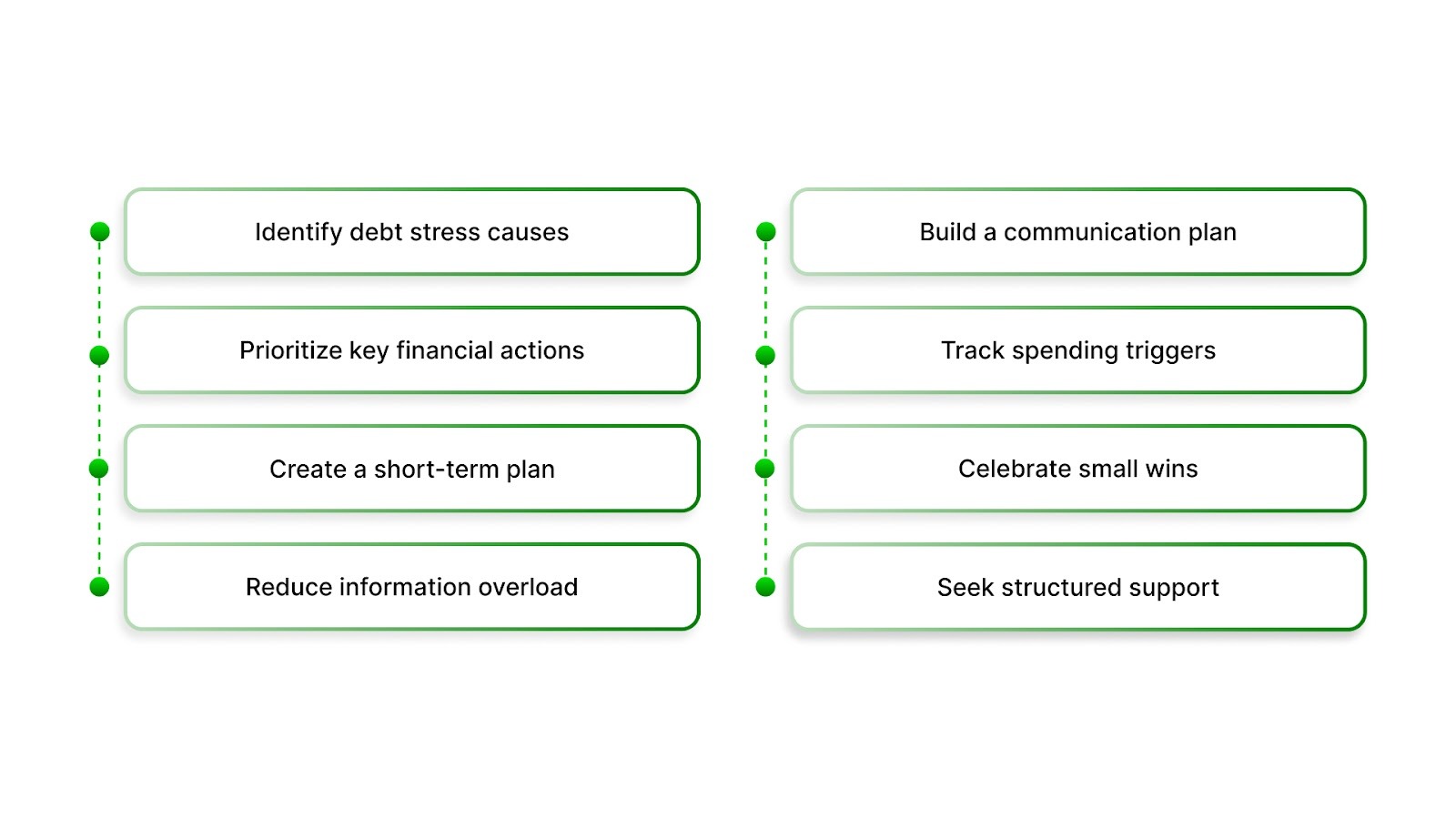
Debt stress is not only about the amount you owe, but also the uncertainty around how to manage it. Addressing it involves gaining clarity on your situation, setting realistic expectations, and following practical steps that reduce both financial pressure and mental strain.
Let's look at the steps in detail.
Step 1: Identify the Root Cause of Your Debt Stress
Before taking action, understand what led to your current situation. Debt usually accumulates through patterns, not just a single event.
Here are the key areas to review:
- Compare your income with essential expenses to identify gaps that may have led to borrowing
- Look for triggering events such as medical emergencies, job loss, or irregular income
- Identify repeated behaviors like delayed payments or frequent credit usage
- Review whether the debt was built gradually or from a single financial event
This clarity helps you solve the actual problem instead of just managing symptoms.
Step 2: Prioritize High-Impact Financial Actions
Not every payment carries the same urgency, and trying to handle everything at once can increase stress. The goal here is to stabilize your situation by focusing on what has the highest immediate impact.
Start by covering essential expenses like housing, food, and utilities, since these directly affect daily stability. Then, ensure minimum payments are made on active debts to avoid penalties and escalation.
Once the basics are covered, shift attention to high-interest balances that grow quickly over time. Prioritizing in this order helps you stay protected while gradually reducing financial pressure.
Step 3: Create a Short-Term Stabilization Plan
Long-term plans are important, but immediate actions reduce stress faster. A short-term plan helps you regain control within days.
Here are the first steps to take:
- List payments due in the next 7 to 14 days
- Set aside a realistic amount for urgent balances
- Temporarily reduce or pause non-essential spending
- Focus on completing one or two key actions first
Quick, visible progress can reduce anxiety and help you move forward with more confidence.
Step 4: Reduce Financial Noise and Misinformation
Too much information can make financial decisions harder, especially when advice is inconsistent. Many people get stuck not because they lack options, but because they keep switching between them.
Instead of trying multiple strategies at once, choose one approach that fits your situation and stay consistent with it. Avoid quick-fix solutions or guarantees that sound unrealistic.
Limiting inputs and focusing on a clear plan helps reduce confusion, improve consistency, and allows you to take steady, meaningful action.
Step 5: Build a Simple Communication Plan
Clear communication with lenders or servicers can significantly reduce uncertainty and prevent debt issues from escalating. It’s essential to be well-prepared before reaching out to them. This will make your interactions more effective and productive.
How to approach your conversation with lenders or servicers:
- Gather all relevant details: Before contacting lenders, gather all your account details, balances, and payment history to ensure you have a complete picture of your debt.
- Prepare your questions: Ask about repayment options, flexible due dates, and temporary hardship accommodations. Make sure to inquire about all available options to manage your payments effectively.
- Keep a record: Document all your conversations, agreements, and any written confirmations for reference. This ensures clarity and reduces the chance of misunderstandings.
- Follow up when necessary: If agreements or actions are unclear, follow up to confirm details and maintain progress.
A structured communication plan helps you stay informed and more in control of your debt situation.
Talk to Lenders or Servicers Early
- Reach out early: Contact your lenders or servicers before missing any payments.
- Ask about options: Inquire about payment-plan adjustments, flexible due dates, or temporary hardship accommodations.
- Prevent escalation: Early communication can prevent missed payments from escalating and offer you more manageable solutions.
Free Up Cash or Increase Income Temporarily
- Sell unused items: Look around your home for items you no longer need and sell them for extra cash.
- Take on a side hustle: Consider freelancing, tutoring, or picking up a short-term job to boost your income.
- Redirect windfalls: Use tax refunds or bonuses to pay off essentials or high-priority debts.
- Increase financial flexibility: These actions provide extra cash flow and reduce financial stress.
Step 6: Track Emotional Triggers Around Spending
Debt stress is often connected to behavior, not just numbers. Understanding what drives your financial decisions can help prevent patterns from repeating.
Many people spend in response to stress, avoid reviewing finances due to anxiety, or rely on credit for short-term relief. These actions may feel helpful in the moment, but can increase long-term pressure.
By identifying these triggers, you can pause before reacting, make more intentional decisions, and gradually shift toward habits that support stability instead of stress.
Step 7: Celebrate Small Financial Wins
Progress in managing debt is often gradual, and without visible milestones, it can feel like nothing is changing. Recognizing small wins helps maintain motivation.
Here are simple ways to track progress:
- Acknowledge each payment made, even if it is small
- Track reductions in total balance over time
- Set short-term milestones and recognize when you reach them
- Focus on consistency rather than perfection
Small wins build confidence and make it easier to stay committed.
Step 8: Know When to Seek Structured Help
Managing debt alone can become overwhelming, especially when multiple accounts, unclear balances, or collection activity are involved. Recognizing when to seek help can make the situation more manageable.
If payments feel unstructured, communication is unclear, or you are unsure about your options, it may be time to get structured support. Structured guidance can help you understand your position and explore realistic next steps. Here's what to consider when seeking help:
- Credit Counseling: Reputable credit counseling agencies can provide personalized guidance and help you create a budget, set up debt repayment plans, and improve your financial habits.
- Debt Management Plans (DMPs): A Debt Management Plan is a formal agreement set up by credit counseling agencies that consolidates your debts into a single monthly payment. It may also help reduce interest rates or late fees.
- Scam Warnings: Be cautious of companies that promise "debt relief" with unrealistic promises, such as settling debts for a fraction of the amount owed or guaranteeing results. Legitimate services will not guarantee specific outcomes.
- What Legitimate Help Promises: Legitimate help provides options and support tailored to your situation. It doesn’t promise immediate results but works with you to create a realistic plan and offers transparent pricing without hidden fees.
Taking that step early can reduce uncertainty, improve decision-making, and help you move forward with greater clarity and confidence.
Additional Help: Talk to Someone You Trust
Debt stress can feel isolating, but reaching out to someone you trust can help lighten the load. Having a supportive person by your side allows you to stay grounded, make clearer decisions, and follow through on your plan.
- Reduce emotional weight: Sharing your feelings with someone close can alleviate the stress of managing debt alone.
- Stay focused and grounded: A trusted individual can offer a valuable perspective, helping you make informed decisions.
- Accountability for your plan: They can encourage you to stick to your financial strategy and stay on track with repayment goals.
How Debt Stress Affects Your Health?
Debt stress can affect both your mental and physical health over time. It may lead to anxiety, sleep issues, and physical strain while also impacting relationships. Recognizing these effects early helps you take steps to protect your well-being and break the stress cycle.
Over time, it may contribute to:
- Increased anxiety or low mood
- Sleep problems and fatigue
- Higher blood pressure or other physical strain
It can also affect your relationships, making communication more difficult and increasing tension.
This creates a cycle:
Stress affects your health → health challenges make finances harder → stress increases further
Breaking this cycle starts with small, manageable steps, both financially and emotionally.
If debt stress is seriously affecting your sleep, mood, or ability to function, it may help to speak with a mental health professional or reach out for immediate emotional support. In the U.S., 988 provides 24/7 support for people in emotional distress.
Build Financial Stability for the Future
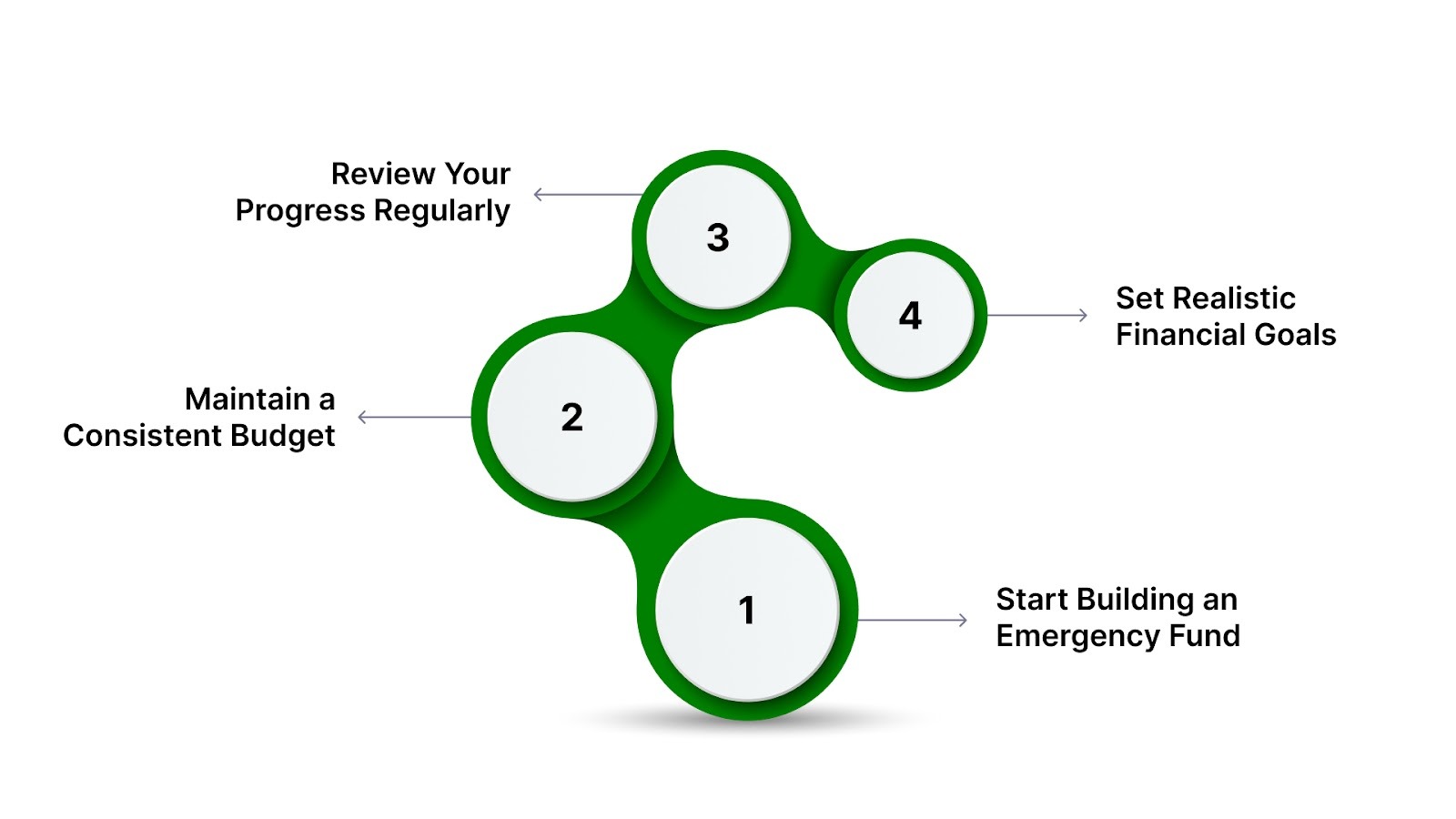
Building financial stability helps you stay in control after managing immediate debt stress. By developing consistent habits and preparing for unexpected expenses, you can reduce future financial pressure and create a more secure, confident path forward.
This helps reduce the chances of experiencing the same level of stress again.
Consider these steps:
1. Start Building an Emergency Fund
Set aside small amounts regularly to handle unexpected expenses without relying on credit, reducing future financial stress and uncertainty.
2. Maintain a Consistent Budget
Track your income and expenses to stay aware of your spending habits and ensure you remain aligned with your financial goals.
3. Review Your Progress Regularly
Check your financial situation periodically to understand what is working, make adjustments, and stay on track with your repayment and savings plans.
4. Set Realistic Financial Goals
Define clear, achievable goals that keep you motivated and focused, helping you build long-term stability and avoid falling back into financial stress.
These habits create a stronger foundation and help you stay in control over time.
Also read: How to Get Ahead Financially: Tips for U.S. Borrowers
When Professional Help May Make Sense?
If you're struggling to manage your debts, it may be time to seek professional help. Reputable credit counseling services can provide the guidance you need to regain control over your finances. A certified credit counselor will review your budget, assess your debt situation, and offer strategies to help you manage payments.
- Credit Counseling: A trusted credit counselor will help you understand your current financial position, create a realistic budget, and explore ways to improve your spending habits. They may also offer educational resources to help you make informed decisions going forward.
- Debt Management Plans (DMPs): If you have unsecured debts, a counselor may recommend a Debt Management Plan (DMP). This structured repayment plan consolidates your debts into one monthly payment and may lower interest rates or waive fees, making your debt easier to manage.
- What to Avoid: Be wary of any service that charges upfront fees or guarantees results such as “debt forgiveness” or “settling debts for less.” Legitimate counseling services focus on working with you to create a feasible plan and charge reasonable fees only when you enter a DMP.
Seeking professional help can reduce stress, give you clearer financial insights, and improve your long-term financial health.
Conclusion
Managing debt stress takes time, patience, and consistent effort. By understanding your situation, creating a realistic plan, and taking care of your emotional well-being, you can gradually reduce both financial pressure and anxiety. Small, steady steps can lead to meaningful progress and a greater sense of control.
If your account is being managed by The Forest Hill Management, you can review your balance, understand your current status, and explore structured repayment options. Taking a clear, informed approach can help reduce uncertainty and make managing both your debt and stress easier.
Take the next step toward financial clarity and less stress by reviewing your account or contacting our team for support today.
FAQs
1. Is debt stress normal?
Yes, experiencing stress related to debt is very common. Many individuals face financial uncertainty, which can lead to feelings of anxiety and pressure. It’s essential to recognize these signs early on so you can take proactive steps to manage both the emotional and financial impacts of your situation.
2. What should I do if I feel overwhelmed by my debt?
The first step is to assess your situation clearly. Start by listing all your debts and reviewing your monthly income and expenses. Focus on tackling one issue at a time, rather than trying to fix everything all at once. Gaining clarity will help you regain control over your finances and reduce feelings of overwhelm.
3. Can avoiding debt make the situation worse?
Yes, avoiding debt can actually worsen the situation. Ignoring unpaid bills or delaying financial decisions can increase stress and uncertainty. Facing your debt, even if it’s in small steps, helps reduce anxiety and opens up realistic solutions to address your financial challenges.
4. Can managing debt improve my mental well-being?
Yes, managing your debt effectively can significantly improve your mental health. As you gain clarity and take actionable steps to reduce your debt, you’ll feel more in control, which often lowers stress levels. Each small achievement boosts your confidence and enhances overall peace of mind.
5. What if I can’t afford my current payments?
If your payments are unmanageable, it’s important to explore structured options that fit your current financial capacity. Many people find that developing a clear, realistic payment plan helps them regain control over their finances. Seeking professional advice or exploring debt relief options can make the situation feel more manageable and reduce stress.