-p-500%20(1).png)
Portfolio Management Explained: Meaning, Process & Use

Need Help Reviewing Your Account?
Contact UsPortfolio management is a broad term that simply means managing a group of related items as one organised set. You’ll most often hear it in investing, but it can also show up in consumer account servicing and collections, which is why it may appear in letters or notices. This guide explains the concept of portfolio management first, then clarifies what it can mean in account communication, so you’re not stuck reading advice that doesn’t match your situation.
It can feel like there's a system working behind the scenes, while you're left trying to understand where you stand and what happens next.
Most online explanations of portfolio management focus on investing, but this term also appears in consumer account situations, which is what this guide explains.
Key Takeaways
- Portfolio management refers to the structured oversight of a group of related items handled as one organized set.
- The concept of portfolio management focuses on consistency, coordination, and keeping information aligned over time.
- Across different fields, structured portfolio processes help prevent gaps, improve clarity, and support organized decision-making.
- In account communication, the term may indicate that records, updates, and interactions follow defined systems rather than informal handling.
- Understanding the concept of portfolio management helps explain why the term appears and what it signals about how information is managed.
Portfolio Management in Investing vs Account Management
Portfolio management is most commonly associated with investing, where it refers to selecting and managing assets such as stocks, bonds, or funds to achieve financial objectives. In that environment, the focus is on balancing risk, return, and diversification across investment holdings.
However, the same term is also used in account servicing and consumer account management contexts. Here, portfolio management does not refer to investments. Instead, it describes how groups of accounts are organised, tracked, and maintained within structured systems.
The phrase itself does not change; only the setting does. Its meaning depends entirely on the context in which it appears.
In simple terms:
- In Investing: Portfolio management relates to managing financial assets and investment performance
- In Account Management: Portfolio management refers to how accounts and records are grouped and overseen
- In Consumer Notices: The term usually signals structured administrative handling rather than financial strategy
Understanding this distinction helps prevent confusion when the term appears in account communication.
The Concept of Portfolio Management
Portfolio management refers to the organized oversight of a group of related items. Instead of managing each item independently, systems are used to track, update, and make decisions consistently across the set.
This structure reduces gaps in information, improves coordination, and keeps records aligned over time.
At its core, the concept of portfolio management is about structure. When items are grouped and handled together, information stays consistent, updates happen in an organized way, and decisions are made with a clearer overall view. This approach prevents scattered handling and supports better coordination across the entire set.
The Portfolio Management Process
Portfolio management follows a structured process that keeps information consistent and decisions organized across a group of related items. While the setting may differ, the way portfolios are handled usually follows the same logical flow.
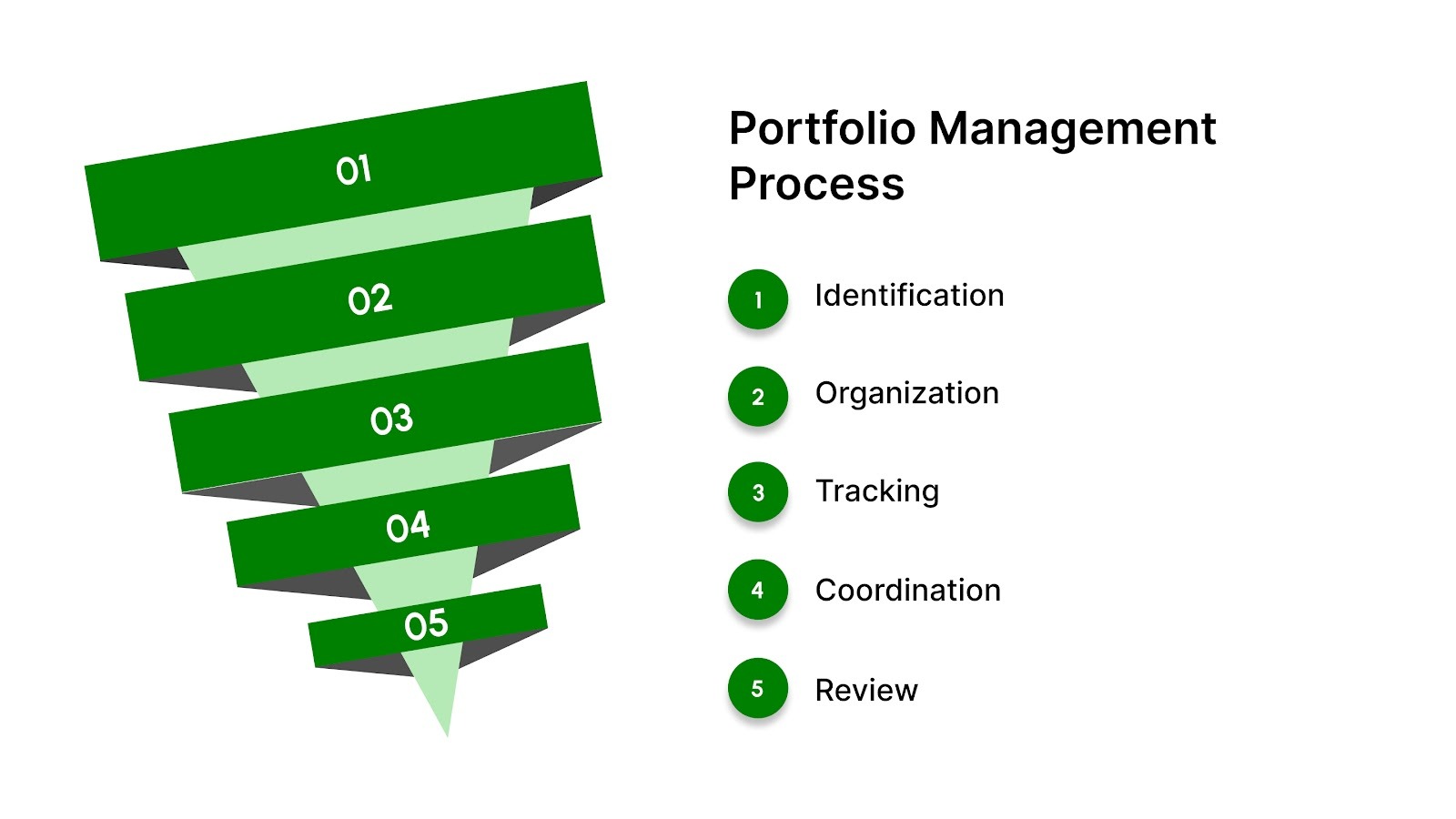
A typical portfolio management process includes:
- Identification: Recognizing which items belong together within the same portfolio
- Organization: Arranging those items under a defined system for consistent oversight
- Tracking: Monitoring updates, changes, and current status over time
- Coordination: Making sure actions taken on one item stay aligned with the rest of the set
- Review: Periodically reassessing information to maintain accuracy and clarity
These steps create structure. Instead of scattered handling, information moves through a clear process, which helps prevent gaps, supports consistency, and keeps records aligned over time.
What Does Portfolio Management Mean in Account Notices?
When a formal term shows up while you're already dealing with money stress, it can feel like there's a system working around you that you don't fully understand.
In this context, portfolio management refers to how related accounts are organized, tracked, and managed within a structured system.
That structure helps keep details accurate, communication steady, and steps more manageable to follow. Understanding this concept of portfolio management helps you see that there is a defined process behind what's happening, not random actions.
In simple terms
- A portfolio refers to a group of related items handled as one set.
- Management means those items are tracked, updated, and kept consistent.
- The phrase is used in different areas, so context shapes its meaning.
- In financial account situations, it refers to organized oversight rather than informal handling.
Why Does the Same Term Mean Different Things in Different Places?
Seeing one phrase used in completely different ways can feel confusing, especially when you're already focused on your finances. Words often carry one meaning inside an industry and another meaning somewhere else.
That doesn’t mean the information is wrong; it means the term is broad and adapted to different systems.
The key is understanding which setting applies to your situation so you don't end up reading advice that doesn't match what you're dealing with.
Here’s why that happens
- Industries reuse familiar words to describe how groups of items are handled.
- Online articles are usually written for a specific audience, not for every situation.
- Search results mix these meanings together because the phrase itself is general.
- Focusing on the context connected to your account helps filter out what isn't relevant.
Why Portfolio Management Appears in Debt Letters?
In a consumer account, agencies often manage thousands of accounts. Grouping them into portfolios helps maintain:
- Consistent record-keeping
- Standard communication processes
- Organized payment tracking
- Clear documentation history
This is why the term may appear in account notices; it describes the system used to oversee accounts.
Why Your Account May Be Included in a Portfolio?
Your account may be included in a portfolio as part of a broader, organized system to streamline management. Grouping accounts into portfolios allows for easier tracking, efficient record-keeping, and clearer communication with lenders or collection agencies.
Understanding why your account is placed in a portfolio can help reduce confusion and ensure that the process remains predictable.
Reasons why your account might be part of a portfolio:
- Organization: Grouping accounts together helps manage them under a unified structure, making oversight easier and more efficient.
- Efficiency: By consolidating accounts, lenders and agencies can handle payments, updates, and communications more effectively, improving operational efficiency.
- Consistency: The portfolio system ensures that your account follows a clear and predictable process for updates and communication, reducing the likelihood of confusion or missed details.
What Structured Account Management Means for Your Day-to-Day Experience?

When accounts are handled through a structured system, the biggest difference you notice is clarity. Instead of scattered updates or inconsistent information, interactions start to follow a predictable pattern. This consistency makes it easier to understand what is happening and why.
A lot of stress comes from uncertainty, not knowing who is contacting you, where a number came from, or whether information has changed. Structured account management reduces that uncertainty by keeping records, communication, and updates aligned across the system.
- You may notice practical differences such as:
- Balance details presented in a consistent format
- Updates and notices that follow a familiar structure
- Payment methods that provide clear documentation
- A visible link between your payments and the remaining balance
- Past interactions recorded and easy to reference
These elements may seem small on their own, but together they create a clearer flow of information. Over time, that clarity can make the situation feel more manageable and less overwhelming.
Also Read: Master Consumer Portfolio Management for Debt Relief
How Structured Systems Handle Payments and Repayment Plans
When you’re dealing with an account balance, the biggest questions are usually about how payments work and what your options look like.
A structured system is meant to make this part clearer, not more complicated. Instead of one-time demands or unclear instructions, you’re shown defined ways to make progress that can fit your situation.
Knowing how this works helps you move forward with more confidence and less uncertainty.
How Structured Repayment Plans Work
In some cases, structured repayment arrangements may be available depending on the account and applicable processes.
- Payments are scheduled in a way that can align with your income timing
- The plan follows a defined timeline, so you know what to expect
- Progress is recorded so you can see how each payment moves you forward
Ways Payments Are Processed and Recorded
Making a payment should feel clear and documented, not informal or confusing. These processes are part of how portfolio management works in practice.
- Payment platforms use protected systems designed to keep your personal and financial details private
- You receive a record or confirmation after payment. Confirmations help prevent errors and give you a clear record of each transaction
- Your payment history is tracked, so balances update accurately
- Each payment shows how it affects what remains
Contact our expert advisors for personalized support.
Common Situations and Next Steps
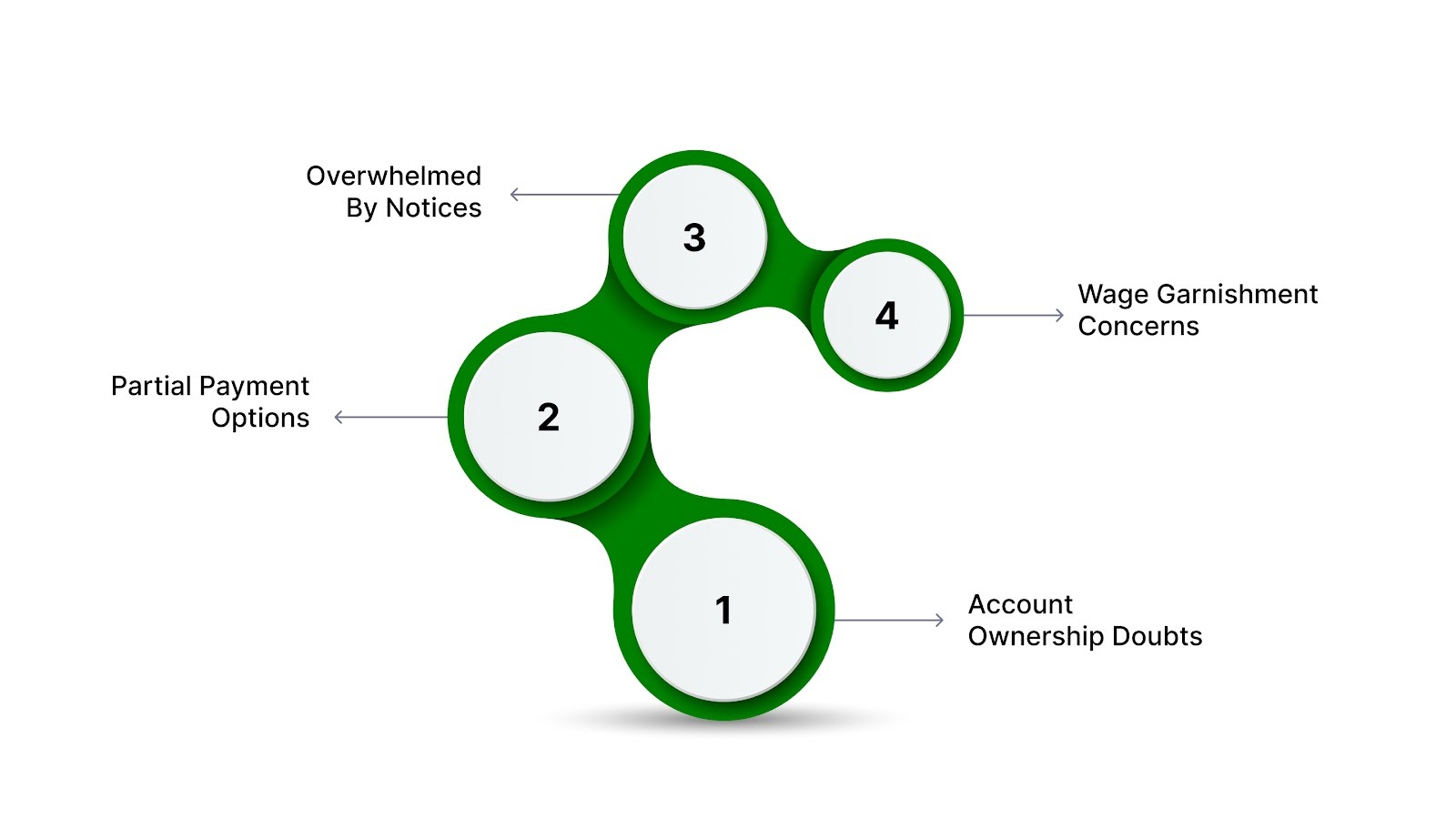
People dealing with account issues often share similar concerns, even though the details differ. Knowing what to do in common situations can make things feel more manageable and help you move forward one step at a time.
a) You’re Unsure the Account Is Yours
- Request validation details before making any payment
- Compare account dates, amounts, and identifying information
- Ask questions if anything seems unclear
b) You Can Pay Something, Just Not the Full Balance
- Ask about structured repayment options that match your budget
- Focus on consistent payments rather than large promises
c) You Feel Overwhelmed by Notices or Calls
- Set communication preferences that feel more manageable
- Start with one small step, such as requesting written details
d) You’re Concerned About Wage Garnishment
- Early communication can help you understand available options
- Structured repayment discussions may reduce immediate pressure
- Keep records of communication and payments for clarity
Warning Signs That Something Isn't Right
Most account communication should feel clear and structured, even if the situation itself is stressful. When things seem rushed, vague, or inconsistent, it’s a sign to pause and get more clarity before moving forward.
Paying attention to small warning signs can help you avoid confusion and protect yourself from mistakes.
Watch for these red flags
- Refusal to clearly explain the account details or balance
- Requests for unusual or hard-to-trace payment methods
- Communication that feels unclear, inconsistent, or overly forceful
- Pressure to act immediately without time to review the information
How The Forest Hill Management Supports You
Support should make things feel less complicated. When you’re trying to understand an account situation, the goal is to give you steady information, protect your personal details, and provide realistic ways to move forward.
At the Forest Hill Management, accounts are handled through compliant systems designed to keep communication clear, information secure, and repayment paths structured. What this support focuses on:
1. Clarity
- Helping you understand where you stand
- Explaining what typically comes next
2. Protection
- Safeguarding your personal and account information
- Following processes designed to respect your rights
3. Practical Payment Options
- Providing secure ways to make and track payments
- Helping you understand available options and next steps
This approach keeps communication consistent and gives you a clearer sense of direction instead of uncertainty.
Final Thoughts
You don’t have to sort through everything at once. When unfamiliar terms show up during an already stressful time, it’s natural to feel unsure, but understanding what's happening can bring a sense of steadiness and control.
Understanding portfolio management helps you see that there is a defined process behind account handling. The goal is clarity, fairness, and a way to move ahead at a pace that works for you, and that’s the approach taken by The Forest Hill Management.
If you need help understanding your account details or next steps, our Expert Advisors provide clear, consumer-focused support.
FAQs
Q1. Why is the term “portfolio management” mentioned in my account notice?
A1. The phrase is often used to describe how groups of accounts are handled through an organized process. It usually refers to structured record-keeping and communication, not an investment service.
Q2. Does portfolio management mean my account was sold?
A2. Not necessarily. The term can describe how accounts are overseen within a system, even when ownership hasn’t changed. If you’re unsure, you can ask for details about the account status and history.
Q3. Can I question or dispute details about my account?
A3. Yes. You can request clarification, review the information provided, and raise concerns if something doesn’t look right. Clear communication helps prevent mistakes and keeps records accurate.
Q4. What should I do if I can’t pay the full balance at once?
A4. You can ask about structured repayment options that match your situation. Consistent, manageable payments are often more realistic than trying to cover everything at once.
Q5. How can I make sure a payment is processed safely?
A5. Use official payment channels that provide confirmation and keep a record of the transaction. Avoid informal methods that don’t give clear documentation.