-p-500%20(1).png)
How to Get Out of Debt Without a Loan
Need Help Reviewing Your Account?
Contact UsMost people don’t question a debt consolidation loan when they first take it. It feels like a smart reset. Fewer payments, less confusion, and a clear structure to follow. The problem usually shows up later, when the balance doesn’t drop as quickly as expected, and the timeline starts to feel longer than anticipated.
But clarity can sometimes be misleading. What looks organized on paper can still feel slow in reality, especially when the balance doesn’t drop as quickly as expected. That is usually the moment people start asking a different question. Not how to manage the loan, but how to get out of it.
The shift matters. Managing a consolidation loan keeps things stable. Getting out of it requires a more deliberate approach, one that focuses on reducing the balance faster than the original schedule.
In this blog, you will learn how to get out of a debt consolidation loan, which strategies actually help reduce your balance faster, what to do if repayments become difficult, and how to move forward with more clarity and consistency.
Key Takeaways
- A debt consolidation loan simplifies multiple debts into one, but it does not reduce the total amount you owe or eliminate interest.
- Paying more than the minimum and focusing on principal reduction is the most effective way to exit the loan faster.
- Structured strategies like the avalanche or snowball method help create consistency and improve long-term repayment outcomes.
- Adjusting income and expenses intentionally can significantly accelerate how quickly you reduce your balance.
- Staying engaged with your account and taking early action during financial difficulty helps prevent complications and keeps your progress on track.
What a Debt Consolidation Loan Means?
A debt consolidation loan is often presented as a way to simplify your financial situation. In practical terms, it means taking out a new loan to pay off multiple existing debts, leaving you with one single balance and one monthly payment to manage.
This structure can make things feel more organized, but it is important to understand what is actually changing and what is not.
- Multiple debts are combined into one new obligation: Instead of managing several accounts, you now repay a single loan. This reduces the number of payments you track each month but does not eliminate the underlying debt.
- Your repayment is restructured, not reduced: The total amount you owe does not automatically decrease. In most cases, the original balances are simply transferred into a new loan, often with a different interest rate and repayment timeline.
- Monthly payments may feel lower, but timelines may be longer: A lower monthly payment can make the loan feel more manageable. However, this is often because the repayment period has been extended, which can increase the total amount paid over time.
- Interest still plays a central role: Even if the interest rate is lower, interest continues to accumulate over the life of the loan. The speed at which you reduce the principal becomes a key factor in how quickly you can exit the loan.
- It simplifies management, not financial behavior: Consolidation makes payments easier to track, but it does not address spending habits or financial patterns that may have contributed to the debt in the first place.
Also read: How to Manage Debt Stress: Practical Steps to Regain Control and Peace of Mind
In simple terms, a debt consolidation loan replaces complexity with structure. It gives you a clearer repayment path, but the responsibility to reduce the balance still depends on how consistently and strategically you manage that loan.
Why It Can Feel Hard to Get Out of a Debt Consolidation Loan?
Even though consolidation is meant to simplify repayment, many people find themselves feeling stuck in the loan longer than expected. This is not unusual, and it often comes down to how the loan is structured and managed over time.
- Lower payments can slow down real progress: While reduced monthly payments can ease short-term pressure, they often lead to slower principal reduction. This can make it feel like the balance is not decreasing as quickly as expected.
- Interest continues to extend the repayment timeline: If additional payments are not made, interest can stretch the duration of the loan. Over time, this can make the loan feel persistent even when payments are being made consistently.
- The structure can create a false sense of resolution: Consolidation can feel like a solution because multiple debts are cleared. In reality, the obligation has simply been moved into a new form, which can delay the urgency to actively reduce the balance.
- Lack of a focused repayment strategy: Without a clear plan to pay more than the minimum or accelerate repayment, progress tends to follow the loan’s default schedule, which is often longer than expected.
- Financial habits may remain unchanged: If spending patterns are not adjusted, new financial pressure can build alongside the consolidation loan, making it harder to stay consistent with repayment.
- Unexpected costs or rate changes can add pressure: Some loans include fees or variable terms that may increase costs over time, adding to the difficulty of paying off the loan faster.
What makes a debt consolidation loan feel difficult to exit is not the structure itself, but how easily it can shift the focus from actively reducing debt to simply maintaining payments.
Understanding this distinction is important, because it sets the foundation for what comes next: building a repayment approach that moves you out of the loan.
How to Get Out of a Debt Consolidation Loan in 7 Steps

Getting out of a debt consolidation loan usually comes down to one thing: how quickly you reduce the principal balance. The standard repayment schedule is designed for predictability, not speed. If you follow only the minimum terms, the loan will run its full course, often with interest accumulating along the way.
A more effective approach is to use a disciplined, accelerated repayment strategy.
Below are practical strategies that can help you move out of a consolidation loan more efficiently.
Pay More Than the Minimum
The single most effective way to exit a consolidation loan faster is to pay beyond the required monthly amount. This directly impacts how quickly your principal declines.
- Understand how payments are applied: In most installment loans, your payment first covers interest, and the remaining portion reduces principal. When you pay extra, that additional amount typically goes directly toward the principal, accelerating reduction.
- Reduce the amortization impact: Consolidation loans are amortized, meaning early payments are weighted more toward interest. Extra payments early in the loan term can significantly shorten the repayment period.
- Create a fixed “overpayment rule”: Instead of occasional extra payments, set a consistent rule such as paying 10–20% above the minimum each month. Consistency has a stronger impact than irregular large payments.
- Use lump-sum reductions strategically: Applying tax refunds, bonuses, or windfalls as lump-sum payments can immediately reduce the principal and recalibrate the remaining interest burden.
This approach works because it directly attacks the structure of the loan rather than working within it.
Use the Debt Avalanche Method
Even within a single consolidation loan, the concept behind the debt avalanche method still applies: prioritize reducing the highest-cost portion of your debt first.
- Focus on interest-heavy periods: Early stages of a consolidation loan carry higher interest portions. Making extra payments during this phase reduces the most expensive part of the loan.
- Minimize total repayment cost: By targeting interest-heavy balances early, you reduce the total interest paid across the life of the loan.
- Align extra payments with interest cycles: Making additional payments shortly after your scheduled payment ensures more of it goes toward principal rather than accumulated interest.
- Best suited for cost-conscious borrowers: If your goal is to reduce how much you pay overall, not just how fast you finish, this method is highly effective.
The avalanche approach is less about speed in the short term and more about efficiency over the full repayment period.
Use the Debt Snowball Method
The debt snowball method focuses on building momentum through visible progress, which can be critical for maintaining long-term consistency.
- Break the loan into milestones: Even though it is a single loan, you can segment your repayment into milestones such as reducing 10%, 25%, or 50% of the balance.
- Create short-term targets: Smaller, achievable goals provide psychological reinforcement, which helps maintain discipline over time.
- Reinforce positive repayment behavior: Each milestone reached strengthens consistency, making it easier to continue the repayment plan.
- Effective for maintaining engagement: This method is particularly useful if motivation drops during long repayment timelines.
While it may not always minimize interest the most, it increases the likelihood that you stay committed to the plan, which is equally important.
Increase Income and Redirect It
Accelerating repayment often requires increasing the amount available for debt, not just optimizing existing funds.
- Identify temporary or flexible income sources: Freelance work, part-time roles, or project-based income can provide additional funds without long-term commitment.
- Apply incremental income directly to debt: Even modest increases in income, when consistently applied, can significantly shorten repayment timelines.
- Use “income allocation rules”: For example, commit 50–70% of any additional income toward your loan rather than allowing it to blend into general spending.
- Avoid income-driven spending increases: A common pattern is lifestyle expansion as income grows. Preventing this ensures that higher income translates into faster debt reduction.
This strategy increases your repayment capacity without relying solely on cutting expenses.
Cut Expenses Strategically
Expense reduction works best when it is intentional and structured, not reactive or extreme.
- Categorize expenses by flexibility: Separate fixed expenses (rent, utilities) from variable ones (subscriptions, dining, discretionary spending) to identify realistic adjustment areas.
- Focus on recurring savings: Reducing a recurring monthly expense creates a continuous stream of funds that can be redirected toward debt.
- Avoid unsustainable cuts: Extreme reductions often lead to burnout and reversal. Sustainable adjustments maintain consistency over time.
- Reallocate immediately: Any savings identified should be redirected toward debt repayment immediately to prevent them from being absorbed elsewhere.
This approach ensures that expense reduction leads to actual financial progress, not just temporary savings.
Consider Refinancing
Refinancing can be effective, but only when it materially improves your loan terms.
- Lower interest rate impact: A reduced rate decreases both monthly payments and total interest paid, making repayment more efficient.
- Evaluate loan term changes carefully: A longer term may reduce monthly payments but increase total interest, while a shorter term may increase payments but reduce overall cost.
- Assess fees and eligibility: Origination fees, credit requirements, and terms should be evaluated to ensure refinancing is beneficial.
- Best used when financial position improves: If your credit score or income has improved since taking the original loan, refinancing may provide better options.
Refinancing is not always necessary, but when used correctly, it can optimize the structure of your repayment.
Stay Consistent With a Structured Plan
All strategies depend on one factor: consistency over time. Without it, even the best approach loses effectiveness.
- Track your loan balance and progress regularly: Monitoring your balance helps reinforce progress and identify whether your strategy is working.
- Maintain a fixed repayment schedule: Align payments with your income cycle to reduce the risk of missed or delayed payments.
- Adjust based on financial changes: If your income increases or expenses decrease, update your repayment plan to reflect the new capacity.
- Keep communication open if needed: If the loan becomes difficult to manage, staying engaged with the account helps prevent escalation and keeps options available.
When these come together, the loan stops feeling like something you are stuck with and starts becoming something you are actively reducing.
If your account is being managed by The Forest Hill Management, the process becomes easier to follow. You have clearer visibility into your balance, structured communication, and secure ways to manage your payments. This reduces confusion and helps you stay consistent with your plan.
Getting out of a consolidation loan is not about rushing or taking extreme steps. It is about having clarity, staying consistent, and working through a structure that supports your progress.
What to Do If You Are Struggling With Repayments
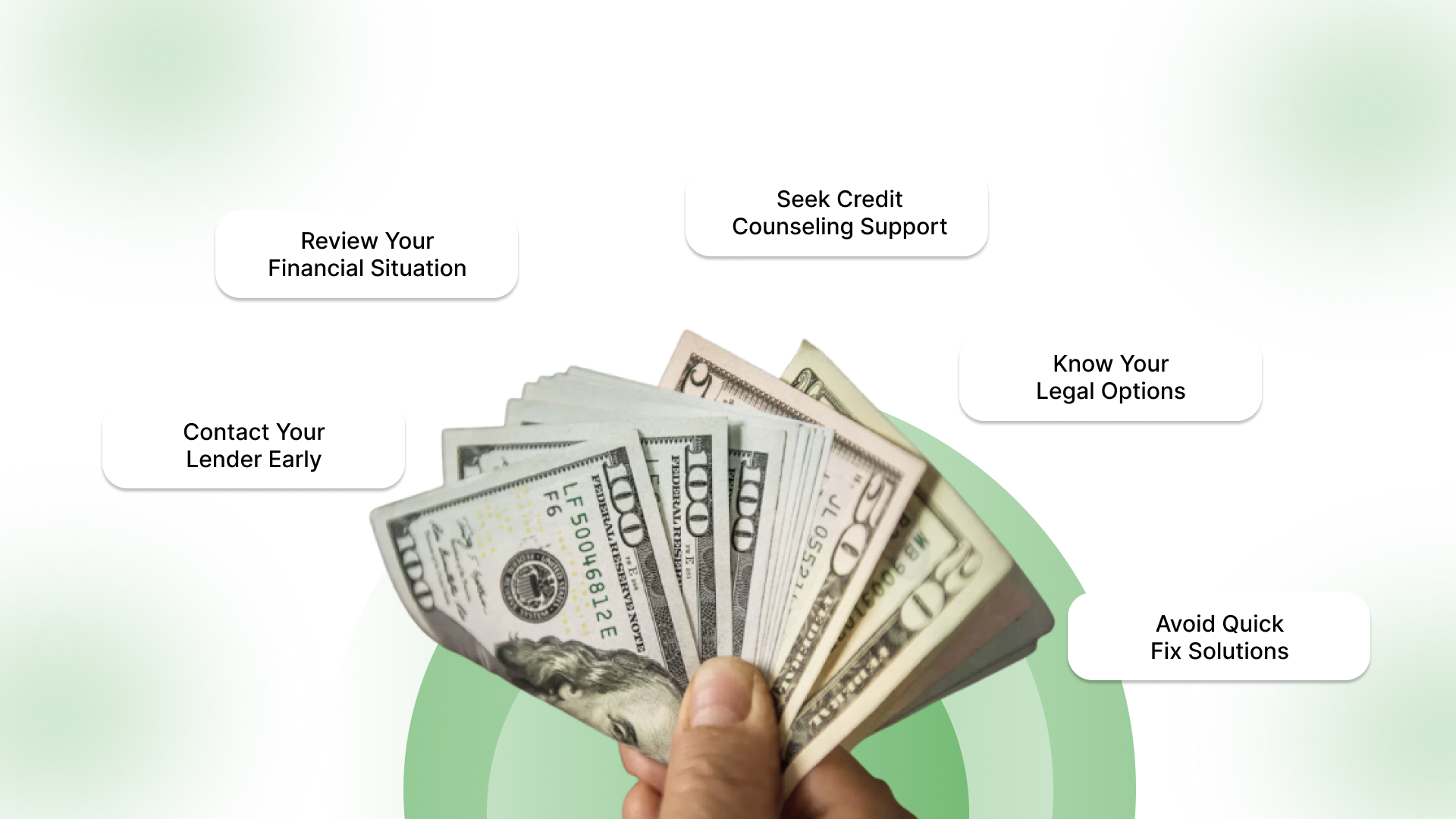
Falling behind on a debt consolidation loan can feel stressful, especially when the payment is fixed, and the balance still feels large. The important thing to remember is that struggling with repayments does not mean you have run out of options.
In most cases, there are structured ways to respond that can help you regain control before the situation becomes more complicated.
Contact Your Lender or Account Manager Early
If you anticipate difficulty in making a payment, reaching out early can make a meaningful difference. Many lenders or account managers have processes in place to support temporary financial challenges.
- You may be able to discuss short-term adjustments or alternative payment arrangements.
- Early communication helps prevent additional fees or escalation.
- It also ensures your account status remains clear and documented.
Taking this step shows intent to resolve the situation, which can help keep the process more manageable.
Review Your Current Financial Situation Honestly
When repayments become difficult, it is important to reassess your financial position without assumptions. This helps you understand what is realistically possible.
- Recalculate your monthly income and essential expenses.
- Identify areas where spending can be temporarily reduced.
- Determine a payment amount that you can maintain consistently.
A clear understanding of your situation helps you make practical decisions rather than reactive ones.
Explore Nonprofit Credit Counseling Support
If you need additional guidance, nonprofit credit counseling organizations can help you review your financial situation and create a structured plan.
- They can help you organize your debts and repayment priorities.
- They may assist in creating a debt management plan based on your income.
- Their guidance is typically focused on education and structured support.
This can be helpful if you are unsure how to move forward or need a more guided approach.
Understand Your Legal and Financial Options
If repayments become consistently unmanageable, it is important to understand all available options rather than delaying action.
- Some situations may involve formal repayment restructuring discussions.
- In more serious cases, legal options may exist, but they require careful consideration.
- Each option comes with long-term implications, so informed decisions are important.
Knowing your options helps you avoid making decisions under pressure.
Be Cautious of High-Risk Quick Fixes
When under financial stress, it is common to encounter solutions that promise fast results. Some of these may create more problems than they solve.
- Certain debt settlement services may involve high fees or require stopping payments.
- This can lead to additional penalties or legal complications.
- It is important to fully understand any service before committing.
Taking time to evaluate options carefully helps protect your financial position.
Also read: 9 Smart Strategies to Pay Off Debt in 2026
Struggling with repayments is a situation many people face at some point. What matters is how you respond to it. With the right information and a steady approach, it is possible to move forward with greater clarity and control.
Conclusion
A debt consolidation loan is meant to bring structure, but it is your approach to repayment that determines how long it stays with you. When you move from simply making payments to actively managing the balance, the process starts to feel more within your control.
Progress does not come from one big decision. It comes from consistent actions, clear tracking, and knowing how to adjust when your situation changes. Over time, these small, structured steps build into real movement toward closing the loan.
If your account is being managed by The Forest Hill Management, you are not left figuring this out on your own. With clear account information, secure payment options, and consistent communication, you have the support needed to move forward with confidence.
Take the first step toward resolving your balance.
FAQs
1. Does paying off a debt consolidation loan early affect my credit score?
Paying off a loan early can slightly impact your credit mix, but it may also improve your overall financial profile by reducing your debt burden.
2. Are there penalties for paying off a consolidation loan early?
Some loans include prepayment penalties, while others do not. It is important to review your loan terms or confirm with your account manager before making large extra payments.
3. Can I take another consolidation loan to pay off my current one?
This is possible, but it should only be considered if the new loan offers better terms. Otherwise, it may extend your repayment timeline rather than reduce it.
4. What happens if my consolidation loan is transferred to another company?
If your loan is transferred, the terms of your agreement generally remain the same, but the company managing your account changes. You should receive clear notification and updated contact details.
5. How do I know if I am making real progress on my loan?
Consistent reduction in your principal balance, fewer remaining payments, and improved financial flexibility are strong indicators that your repayment plan is working.