-p-500%20(1).png)
Collecting Money Owed Without a Lawyer Guide

Need Help Reviewing Your Account?
Contact UsLending money to someone you know often starts with trust. You may expect the money to come back quickly, but when repayment gets delayed or stops altogether, the situation can become uncomfortable. Many people hesitate to push the issue because they worry about damaging the relationship or creating conflict.
Money has a way of straining even strong relationships. In fact, 41% of Americans say they’ve experienced tension with a friend over money, and 36% say a friendship has ended because of it. When loans happen informally without clear agreements, misunderstandings about repayment can easily arise.
The good news is that recovering money does not always require hiring a lawyer. With clear documentation, structured communication, and a few practical steps, many people are able to resolve repayment issues on their own.
In this blog, we’ll explain how to collect money owed without a lawyer, including the options available to you, the challenges you may encounter, and the practical steps you can take to move the situation toward repayment.
Key Takeaways
- Recovering money without a lawyer is possible when you use a structured approach that includes clear communication, documentation, and organized follow-ups.
- Informal collection methods such as conversations, reminders, and repayment plans are often the first and most effective steps for resolving personal loan disputes.
- If informal efforts fail, formal options such as demand letters, mediation, small claims court, or collection agencies can help create accountability.
- Documentation such as payment records, written messages, and loan confirmations plays a critical role in proving the cost of debt and strengthening your claim.
- Professional support from a structured receivables management partner can help streamline the recovery process and improve the chances of resolving unpaid debts.
Challenges in Collecting Without Legal Assistance
Recovering money on your own can be possible, but it often comes with practical challenges. Without legal guidance or formal enforcement tools, individuals may face obstacles that delay or complicate repayment.
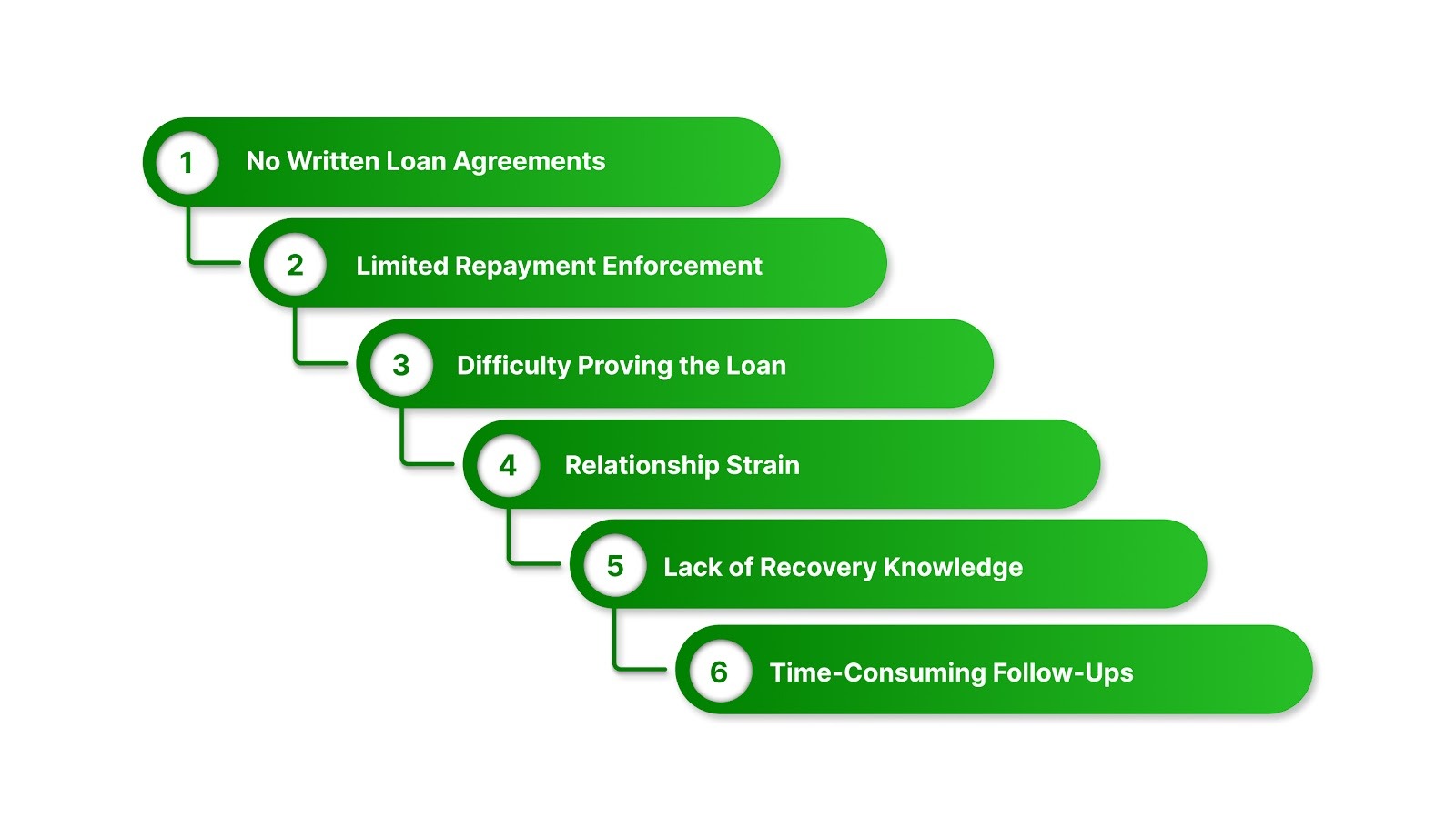
Below are some of the most common challenges people encounter when trying to collect money owed without legal assistance:
- Lack of Written Agreements: Many personal loans happen informally between friends, relatives, or acquaintances without written contracts. When there is no clear documentation outlining the amount loaned or the repayment timeline, disagreements can arise about whether the money was meant to be repaid and when.
- Limited Authority to Enforce Repayment: Without legal backing, it can be difficult to compel someone to repay a debt if they refuse or repeatedly delay payment. Informal requests rely largely on the borrower’s willingness to cooperate, which can limit your ability to resolve the situation quickly.
- Difficulty Proving the Loan: If the dispute escalates, you may need evidence that the money was actually loaned. Without bank transfer records, written communication, or payment confirmations, demonstrating that the funds were intended as a loan rather than a gift can become challenging.
- Emotional Strain in Personal Relationships: Asking someone you know to repay money can create tension or discomfort. Many people delay follow-ups because they want to avoid conflict, especially when the borrower is a friend, family member, or colleague.
- Lack of Knowledge About Recovery Options: Many individuals are unfamiliar with the steps involved in debt recovery, such as sending demand letters, using mediation services, or filing claims in small claims court. This uncertainty can cause delays and make the process feel overwhelming.
- Time and Effort Required to Follow Up: Recovering money without professional assistance often requires repeated communication, documentation, and monitoring of repayment promises. Managing these steps can take time and persistence, especially if the borrower avoids responding.
Understanding these challenges helps set realistic expectations and prepares you to approach the recovery process with a more structured strategy.
Once these common obstacles are understood, the next step is to look at the options available for recovering money without immediately turning to legal representation.
What Are Your Options for Recovering Money Without a Lawyer?
When someone owes you money, it does not always mean you need to hire a lawyer immediately. In many situations, people are able to recover money on their own by using approaches that range from simple communication to more structured legal processes.
Broadly, the ways to collect money owed without a lawyer fall into two categories: informal collection methods and formal collection methods.
Informal Collection Methods
Informal collection methods refer to efforts to recover money through direct communication and mutual agreement between both parties. These approaches rely on discussion, clarification, and negotiation rather than legal enforcement:
- Have a Direct and Clear Conversation: Start by speaking with the person who owes the money and clearly reminding them about the loan. A respectful conversation can often resolve misunderstandings about repayment timelines or financial circumstances.
- Send a Written Payment Reminder: A written message or email outlining the amount owed and requesting repayment can create clarity and show that you expect the debt to be taken seriously.
- Offer a Structured Repayment Plan: If the borrower cannot repay the full amount immediately, suggest smaller payments over a set period. Installment arrangements can make repayment more manageable and increase the chances of recovering the money.
- Document the Agreement in Writing: Confirm repayment discussions through messages or emails so both parties have a record of the agreed payment terms and timeline.
- Use Payment Platforms to Simplify Repayment: Providing convenient payment options such as bank transfers or digital payment apps can remove barriers that sometimes delay repayment.
They are typically used when the debt involves personal loans between friends, family members, or acquaintances, where both parties may still be willing to resolve the situation without involving courts or legal proceedings.
Formal Collection Methods
Formal collection methods involve more structured processes that create legal accountability for the debt. These methods may include written legal notices, mediation processes, or filing claims through courts that allow individuals to represent themselves.
- Send a Formal Demand Letter: A demand letter outlines the amount owed, repayment deadline, and the steps you may take if the debt remains unpaid. This formal notice often encourages repayment before legal action becomes necessary.
- Use Mediation or Dispute Resolution Services: Mediation involves a neutral third party who helps both sides discuss the issue and reach an agreement. Many communities offer low-cost or court-sponsored mediation services.
Also read: Debt Mediation and Repayment Strategies: A Clear Guide
- File a Claim in Small Claims Court: Small claims courts are designed for individuals to resolve financial disputes without needing a lawyer. If you have documentation showing the loan occurred, you may be able to file a claim and request repayment.
- Present Evidence to Support Your Claim: If the situation reaches a formal process, evidence such as bank transfer records, payment receipts, written agreements, or messages acknowledging the debt can strengthen your case.
- Work With a Debt Collection Agency: A debt collection agency can contact the borrower and attempt to recover the money through structured communication and repayment arrangements, often charging a percentage of the amount collected.
Formal approaches are generally used when informal discussions have not resulted in repayment or when clearer legal documentation and oversight are required to resolve the dispute.
Post-Judgment Ways to Collect Money
If you win a court judgment and the debtor still refuses to pay, the court allows several enforcement methods to recover the money owed. These steps usually require court authorization but can often be handled without hiring a lawyer.
- Wage Garnishment: A court can issue an order directing the debtor’s employer to withhold a portion of their paycheck and send it toward repayment of the judgment. The amount that can be garnished is usually limited by state law to protect a portion of the debtor’s income.
- Bank Account Levy: With a court order called a writ of execution, law enforcement or a levying officer can seize funds directly from the debtor’s bank account. The bank is instructed to freeze the account and release available funds to satisfy the judgment.
- Property Liens: You may place a lien on the debtor’s real estate or valuable property such as vehicles or business equipment. This legal claim prevents the debtor from selling or refinancing the property until the debt is paid.
- Debtor’s Examination (Asset Examination): If you are unsure where the debtor keeps their money or assets, the court can require them to appear and answer questions under oath about their income, bank accounts, employment, and property. This information helps identify assets that can be used to satisfy the judgment.
- Seizure or Sale of Non-Exempt Property: In some cases, a court can authorize the sheriff to seize certain non-exempt assets owned by the debtor and sell them to repay the judgment. The proceeds from the sale are then applied toward the amount owed.
Even with legal tools available, managing the recovery process on your own can be time-consuming. This is where professional assistance can help simplify and strengthen the collection effort.
How Debt Collection Agencies Help Recover Money?
When informal reminders, payment requests, or repayment discussions do not lead to results, a debt collection agency can help move the process forward. These agencies specialize in recovering overdue payments and act as a professional intermediary between the person owed money and the debtor.
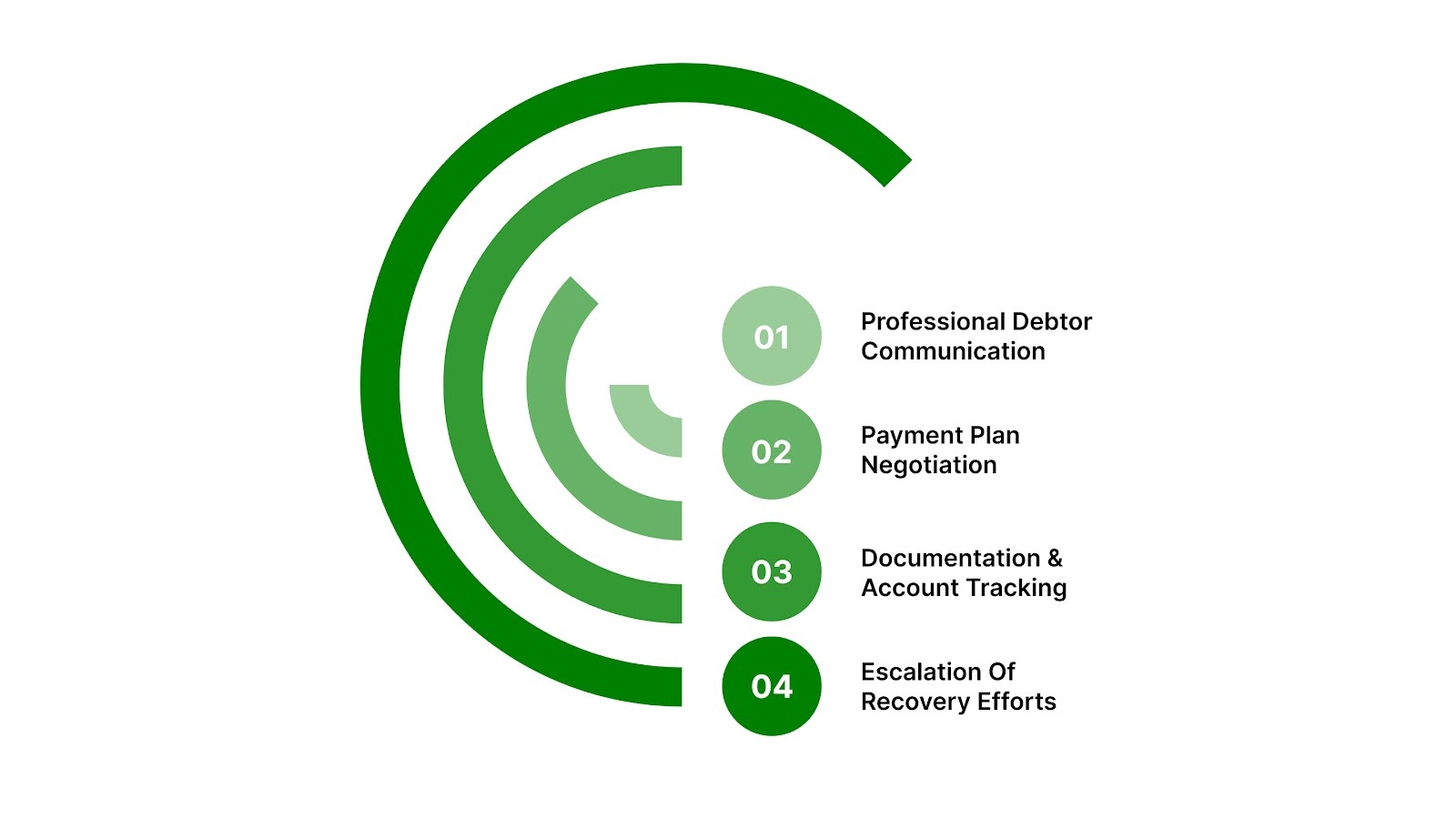
Working with a collection agency can make the process more structured and effective while still allowing you to pursue repayment without personally hiring a lawyer.
- Professional Communication With the Debtor: Collection agencies contact the borrower through calls, letters, emails, or other formal communication methods. Their structured and consistent follow-ups often prompt responses from debtors who may have ignored personal requests.
- Negotiating Payment Plans and Settlements: Agencies are experienced in negotiating repayment arrangements. They may work with the debtor to establish installment payments, settlement offers, or other solutions that increase the likelihood of recovering at least part of the debt.
- Handling Documentation and Account Tracking: Debt collectors maintain detailed records of communication, payments, and account status. Proper documentation strengthens the recovery process and ensures that all collection steps follow regulatory guidelines.
- Escalating Recovery Efforts if Necessary: If negotiation attempts fail, collection agencies may recommend further steps such as legal notices or court action. Their experience helps determine when escalation is appropriate and whether pursuing the debt further is worthwhile.
Also read: How Outsourcing Debt Collection Helps You Manage Debt More Confidently
In many cases, involving a professional collection agency increases the chances of recovering unpaid money while reducing the time and effort required to manage the process yourself.
Conclusion
Recovering money someone owes you can be uncomfortable, especially when the loan began with trust and good intentions. But leaving the situation unresolved rarely improves it.
If you find that reminders, repayment discussions, or formal requests are not leading to results, professional support can help bring order to the process. The Forest Hill Management provides structured account oversight, professional communication, and secure payment options designed to help individuals resolve outstanding debts in a fair and organized way.
Contact The Forest Hill Management today to take the next step toward recovering the money owed to you with greater clarity and confidence.
FAQs
1. Is there a time limit for collecting money someone owes you?
Yes. Most debts are subject to a statute of limitations, which varies by state and by the type of debt involved. Once that period expires, you may lose the legal ability to file a claim in court, so it is important to act within the allowed timeframe.
2. Can I charge interest on money someone owes me?
Interest can typically be charged only if both parties agreed to it in advance or if a court awards interest after a judgment. Without an agreement or court order, charging interest may not be enforceable.
3. What if the person who owes me money moves to another state?
You may still be able to pursue repayment. In some cases, a court judgment can be transferred to another state through a process known as “domesticating a judgment,” allowing you to enforce it where the debtor currently lives.
4. Can social media or public posts be used to pressure someone to repay a debt?
Using public pressure can create legal and reputational risks, especially if it is seen as harassment or defamation. It is generally safer to keep communication private, documented, and respectful.
5. What should I do if the borrower completely stops responding?
If repeated attempts to communicate receive no response, the next step may be to send a formal written demand, explore mediation, or consider small claims court. In some situations, working with a professional debt collection agency can also help reopen communication.