-p-500%20(1).png)
Debt Resolution Programs: How They Work and What to Expect
Need Help Reviewing Your Account?
Contact UsDebt doesn't collapse all at once. It tightens slowly. First, a missed payment. Then late fees. Then calls you stop answering. By the time you look for real options, you're already juggling balances you can't cover and choices that all feel expensive.
That's usually when a debt resolution program comes into play. Not as a rescue fantasy, but as a trade. You pursue lower balances through negotiated settlements, knowing upfront your credit will take a hit before it recovers.
Here's the reality most guides skip: debt resolution works by creating pressure through delinquency, then using saved funds to close accounts for less than owed. The reduction is real, so is the damage to your credit profile, which can linger for years.
In this article, you'll learn how debt resolution programs work, who they're for, what they offer, what they cost, and how to evaluate them before you commit.
Key Takeaways
- Debt resolution uses missed payments and saved funds to negotiate lower balances; it’s a trade, not a quick fix.
- Your credit score will drop during the program and may take years to recover, even though debts shrink.
- Success depends on consistent deposits, realistic settlements, and working with a trustworthy company.
- Programs often take 2-4 years, but the main challenge is managing stress, collection calls, and uncertainty.
- Best for those behind on payments, with significant unsecured debt, able to save, and willing to accept short-term credit damage to avoid bankruptcy.
What a Debt Resolution Program Actually Is
A debt resolution program is a structured negotiation service where a company attempts to settle your unsecured debts for less than the full balance you owe.
The endpoint is specific. Once a creditor accepts the settlement offer and you pay the agreed amount, that debt is legally resolved. You walk away owing nothing further on that account, though the settled status will appear on your credit report.
This isn't debt management, where you pay the full amount on a modified schedule. It's not consolidation, where you combine debts into one loan. It's a reduction through negotiation, based on the creditor’s decision to accept less than the full balance under specific circumstances.
Also Read: Why One-Size-Fits-All Debt Solutions Don't Work for Real Relief
Now let’s break down how a debt resolution program actually works, so you can understand each step and what to expect.
How Debt Resolution Programs Work Step by Step
The process follows a predictable pattern, even if the timeline shifts based on how much you owe and how quickly creditors respond. Each phase builds toward the same goal: converting delinquent accounts into settled ones, using saved money as leverage.
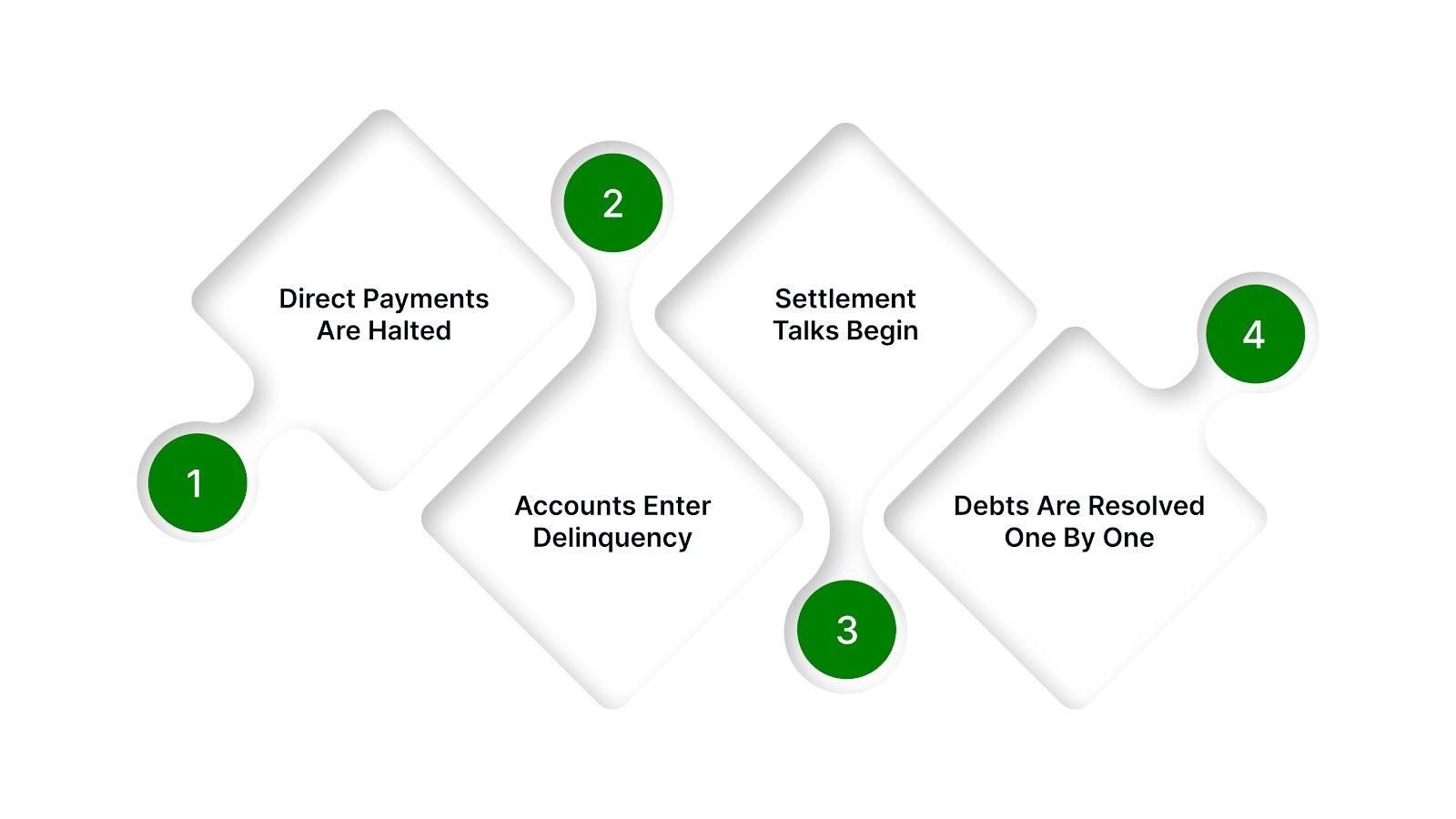
Here's how it unfolds from the first month to the final payment.
1. You Stop Paying Creditors Directly
Once you enroll, the program instructs you to stop making payments to your creditors entirely. Instead, you deposit a monthly amount into a special-purpose account controlled by you or a third party.
This account becomes your settlement fund; the resource the company will use to negotiate on your behalf. No money goes to creditors during this phase. The goal is accumulation, not payment.
2. Your Accounts Become Delinquent
Because you've stopped paying, your accounts are now in arrears. Late fees stack up. Interest continues to accrue. Creditors start calling. Your credit score drops, sometimes significantly, as missed payments get reported each month.
This delinquency is intentional. It signals to creditors that you're in financial distress and unable to meet the original terms, which makes them more open to accepting less than what's owed.
3. The Company Negotiates Settlements
Once your savings account has enough money to make a meaningful offer, the resolution company contacts your creditors to discuss potential settlement options. They propose a lump-sum payment in exchange for the creditor agreeing to close the account and forgive the rest.
Not every creditor accepts. Some may counter with a higher percentage. Others refuse entirely and pursue collections or legal action instead.
4. You Pay Off Each Debt Sequentially
When a settlement is reached, you authorize the payment from your savings account to the creditor. The debt is marked as settled, and you move on to the next account. This happens one debt at a time, not all at once. Smaller balances may settle first. Larger ones take longer.
The full process typically runs two to four years, depending on how much you owe and how much you can save each month.
The process is clear, but the real question is whether debt resolution fits your financial situation.
Who Should Consider Debt Resolution
This option makes sense for a specific type of financial situation, not all of them. It’s for people who can’t realistically follow traditional repayment but still earn enough to save for settlements and want to avoid bankruptcy’s long-term consequences.

Debt resolution fits when you're:
- Already behind on payments: If you're current and managing minimums, other options like debt management or consolidation loans will do less damage to your credit.
- Carrying $10,000 or more in unsecured debt: Credit cards, medical bills, personal loans; secured debts like mortgages and car loans don't qualify for settlement programs.
- Unable to afford minimum payments but capable of saving lump sums: The program requires consistent monthly deposits into your settlement account, usually less than your old minimums but still substantial.
- Willing to accept credit damage in exchange for debt reduction: Your score will drop during the program, and settled accounts remain on your report for seven years
- Trying to avoid bankruptcy: If you’re considering legal debt relief like Chapter 7 (full debt discharge) or Chapter 13 (repayment plan), debt resolution offers a middle path with potentially less severe long-term effects.
This isn’t for someone who can still manage their debt with budgeting adjustments, nor for someone with no income to put toward settlements. Before deciding, it’s important to understand the benefits and trade-offs of a debt resolution program.
Weighing Debt Resolution: What You Gain and What You Give Up
Every financial tool has friction. Debt resolution reduces what you owe, but it extracts payment in other forms: credit damage, legal risk, upfront fees, and time. The question isn't whether the downsides exist; it's whether the trade makes sense for your specific situation.
Here's what you're actually getting and what you're actually risking.
The reductions are real, but they come after months of delinquency, collection calls, and the possibility of lawsuits. The program doesn't prevent creditors from pursuing legal remedies; it just creates conditions in which they're more likely to negotiate. Some will. Some won't.
Fees are based on enrolled debt, not settled debt, meaning you pay a percentage of what you started with, even if settlements come in lower than expected. And if a creditor forgives more than $600, the IRS may treat that forgiven amount as income, which could affect your tax bill the following year.
If your goal is debt elimination and you can absorb the credit hit, the math often works. If you're hoping to preserve your score or avoid any legal risk, it doesn't.
Also Read: Financial Literacy Resources for Students and Adults
A good next step is understanding how to pick a trustworthy company, because the program’s benefits only materialize if you work with a reputable, transparent provider.
How to Choose a Legitimate Debt Resolution Company
Not every company offering to settle your debt operates the same way, and some don't operate legally at all. The industry has standards, but enforcement is inconsistent, which means the responsibility falls on you to separate legitimate services from predatory ones.
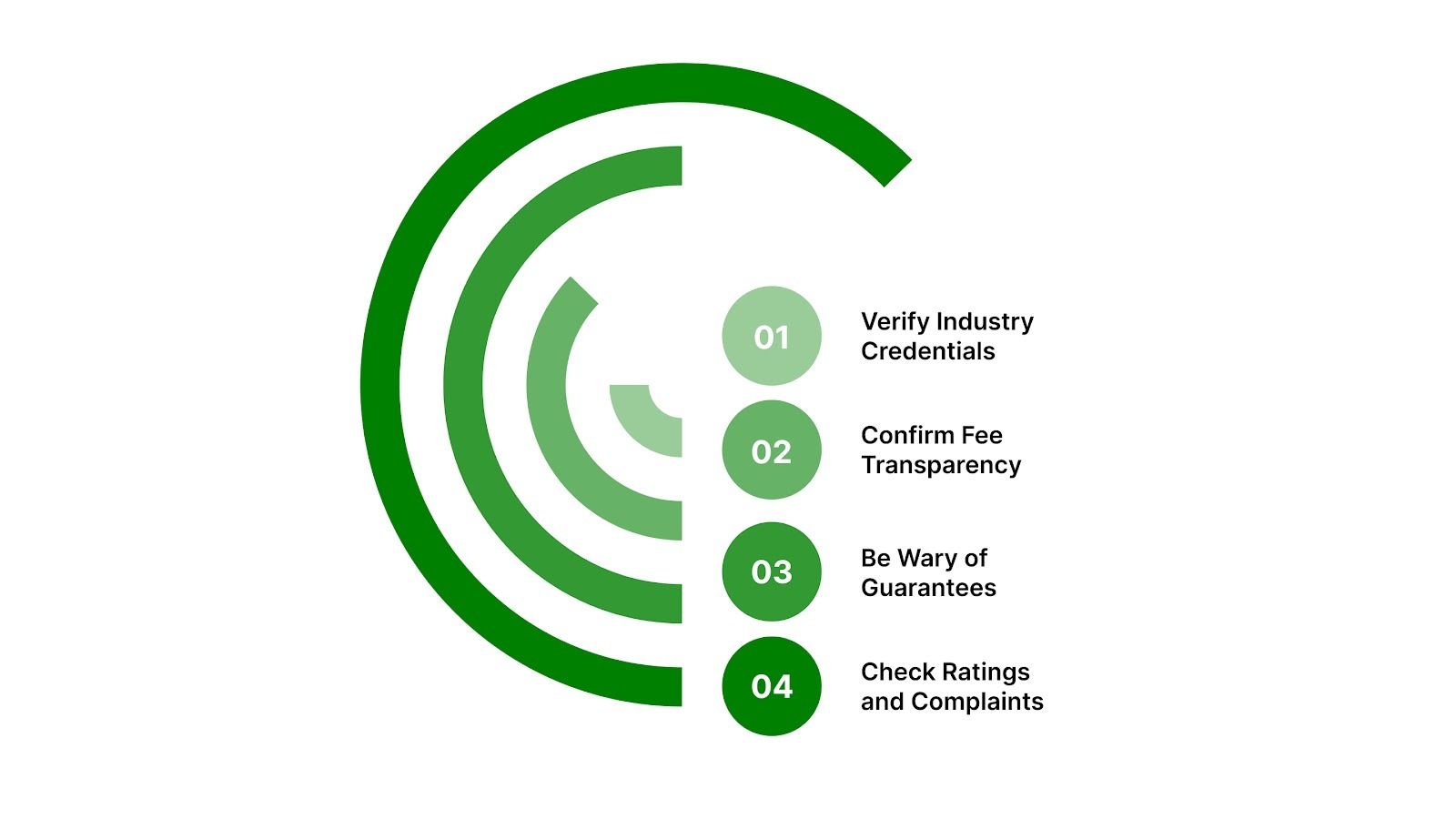
What you're looking for is transparency, accreditation, and realistic expectations.
1. Check for Industry Accreditation
Legitimate debt resolution companies are typically members of industry groups like the American Fair Credit Council (AFCC) or the International Association of Professional Debt Arbitrators (IAPDA).
These organizations require members to follow ethical guidelines, including prohibitions on misleading advertising and requirements for clear disclosure of risks. Membership doesn't guarantee quality, but the absence of it is a red flag.
2. Demand Transparent Fee Structures
Under federal law, debt settlement companies cannot charge upfront fees before settling at least one of your debts. Fees should be based on enrolled debt or settled debt, clearly stated in your contract, and only collected after you've approved a settlement and made the payment.
If a company asks for money before delivering results, walk away. If the fee structure is vague or shifts during enrollment, that's another warning sign.
3. Ignore Guarantees and Look for Honesty
No company can guarantee specific settlement percentages, timelines, or outcomes. Creditors decide whether to settle, not the resolution company.
If you're told "we'll reduce your debt by 60% in 18 months," you're being sold a story, not a service. Legitimate companies explain the process, acknowledge the risks, and set expectations based on what typically happens, not what always happens.
4. Review Ratings and Complaint History
Check the company's rating with the Better Business Bureau (BBB) and read through complaints, not just the score. Look for patterns: repeated issues with fees, unresponsive customer service, or failure to settle debts as promised.
A few complaints are normal for any company; dozens of unresolved ones aren't. Also, check state licensing requirements. Choosing a company is about finding one that operates within the law and treats your situation realistically.
Once you know how to identify a legitimate company, the next step is understanding what participation actually looks like
What to Expect During a Debt Resolution Program
The timeline matters less than the pattern. Most programs take two to four years, but what happens during those years follows a predictable emotional and financial arc.
Note that the specific month ranges and emotional phases described below aren’t literal industry benchmarks. They illustrate a typical experience that can vary depending on individual circumstances.
Here's what the experience actually looks like:
- Months 1-3: Adjustment and accumulation: You stop paying creditors and start depositing into your settlement fund. Creditors begin calling. Your credit score starts to decline. This phase feels manageable because you're taking action, even if the action is uncomfortable.
- Months 4-12: Peak pressure: Accounts are now seriously delinquent. Late fees have piled up. Some creditors may threaten legal action or turn accounts over to collection agencies. This is the hardest phase emotionally, and it's when most people question whether they made the right choice.
- Months 12-18: First settlements begin: Your savings account has grown enough to make offers. The company starts negotiating. You'll likely see your first settlement during this window, which provides psychological relief. One debt is gone. The rest feel more manageable, even though they're still unresolved.
- Months 18-36: Sequential progress: Settlements happen one at a time, usually starting with smaller balances. Each closed account reduces your overall stress, but the delinquent ones still generate calls and credit damage. The finish line is visible, but you're not there yet.
- Months 36-48: Final accounts and closure: The last few debts are settled. You've completed the program. Your credit report shows settled accounts, which will remain for seven years from the date of first delinquency, but the worst of the damage is behind you.
The experience isn't smooth, but it's survivable if you know what's coming and can tolerate the middle stretch.
Also Read: How a Portfolio Management Service Helps You Stay on Track
Knowing what to expect is only half the battle; having clear information and compliant communication can help make the process easier to understand.
How Forest Hill Management Supports Account Resolution
When an account is placed with Forest Hill Management, it doesn't mean your options are gone. It means there's now a structured, compliant way to move forward, without added pressure or confusion.
We work with individuals who are already dealing with financial stress, missed payments, or ongoing resolution efforts. Our role is to provide clear account information and maintain compliant communication so you understand your account status and available options.
That support includes:
- Clear explanations of your balance, status, and available options
- Clear information about available payment options so you can understand what may apply to your account
- Secure online payment options that give you control and visibility
- Time to review your account details and understand available options without pressure
- Transparent communication so you understand your account status and any updates
Our goal is to provide clear, compliant account management and secure payment support.
Conclusion
Debt resolution isn't a clean solution. It trades credit damage for financial reduction, and the process demands patience through months of delinquency, creditor calls, and uncertainty.
But for people already drowning in balances they can't pay, it offers something other options don't: a realistic endpoint where the debt actually shrinks instead of just stretching out. If you're considering this path, go in knowing what you're signing up for. The savings are real, so is the damage, and so is the stress in the middle.
Choose a legitimate company, understand the timeline, and be honest about whether you can handle the pressure before things get better. If you're working with an account that's already been placed for resolution, you're not starting from scratch; you're already in the process of finding a way forward.
Contact our team if you need assistance understanding your account or accessing secure payment options.
FAQs
1. Can debt resolution programs help with debts owed to family or friends?
No. Debt resolution programs negotiate only with formal creditors such as banks, credit card companies, and medical providers. Informal personal loans or debts to family and friends aren’t handled by these programs.
2. Are debt resolution programs available for people outside the U.S.?
U.S.-based debt resolution companies operate under U.S. federal and state regulations. Other countries may have similar services, but the rules, legal protections, and program structures differ. International participants should research local options.
3. Do debt resolution companies offer financial education or budgeting tools?
Some companies may provide optional financial coaching or money management support, but it’s not guaranteed. Clients should confirm before enrolling if budgeting tools or educational resources are included.
4. Can debt resolution affect co-signers or joint account holders?
Yes. Settling a debt may impact anyone legally responsible for it, including co-signers or joint account holders. Creditors can still pursue these individuals, and their credit may also be affected.
5. Is there a minimum age requirement to enroll in a debt resolution program?
Participants generally must be legal adults (18+ in the U.S.) because contracts for settlement accounts and negotiations require the legal capacity to enter binding agreements.