-p-500%20(1).png)
Alternative Dispute Resolution: Types, Methods, and Strategies

Need Help Reviewing Your Account?
Contact UsWhen debt disputes arise, they can feel complex and time-consuming. Traditional litigation often adds pressure, cost, and uncertainty. Alternative Dispute Resolution, or ADR, changes that experience.
ADR focuses on communication and cooperation instead of confrontation. It allows both creditors and debtors to find practical, fair solutions without entering the courtroom.
Whether through mediation, negotiation, or arbitration, ADR turns disagreements into productive conversations that lead to faster outcomes.
If you manage debt recovery or face challenges collecting payments, understanding ADR helps you save time, protect relationships, and recover funds efficiently.
Now, let’s explore what ADR means in debt recovery and why it’s becoming the preferred approach for resolving financial disputes.
Key Takeaways
- ADR simplifies resolution. It replaces lengthy legal steps with open, solution-focused dialogue.
- You stay in control. Both parties shape outcomes that feel fair and practical.
- Privacy builds trust. ADR keeps financial details secure and relationships intact.
- Expert support drives success. The Forest Hill Management helps you resolve disputes efficiently and regain financial confidence.
What Is Alternative Dispute Resolution in Debt Recovery?
Alternative Dispute Resolution, or ADR, is the process of settling financial disputes without going to court. In debt recovery, it offers a practical way to resolve payment disagreements through dialogue, fairness, and structure.
Instead of relying on formal court judgments, ADR uses independent facilitators, known as mediators or arbitrators, to guide both parties toward a mutually acceptable outcome. This makes the process faster, more confidential, and often more cost-effective.
How ADR Fits Into Debt Recovery
Debt recovery can involve tension, delayed communication, and different expectations. ADR provides a framework that encourages both parties to focus on solutions instead of blame. It helps you:
- Discuss payment terms clearly and calmly.
- Find common ground before problems escalate.
- Avoid lengthy and expensive court procedures.
ADR vs. Traditional Litigation
In simple terms, ADR allows you to solve the problem directly rather than fight over it publicly. It helps maintain professionalism and dignity throughout the process, especially when ongoing relationships or reputations matter.
Now that you know what ADR means, the next section explains why it matters and the key benefits it brings to successful debt recovery.
Also Read: Mastering Debt Collection: Essential Recovery Strategies and Skills
Why ADR Matters & Key Benefits in Debt Recovery?
Debt recovery often becomes stressful when communication breaks down. Court cases add time, cost, and emotional strain. Alternative Dispute Resolution (ADR) changes this experience by making the process faster, fairer, and more personal.
Why ADR Matters in Debt Recovery
ADR helps you manage debt disputes efficiently by focusing on resolution instead of confrontation. It encourages collaboration, allowing both parties to explain their perspectives calmly and respectfully.
When used effectively, ADR:
- Saves time by reducing waiting periods tied to legal systems.
- Lowers costs by avoiding extended legal representation.
- Keeps discussions private, which is vital when reputation matters.
- Protects professional and personal relationships by replacing conflict with communication.
In debt recovery, these advantages translate into better outcomes and faster payment resolution, without losing trust between creditors and debtors.
Key Benefits of ADR in Debt Recovery
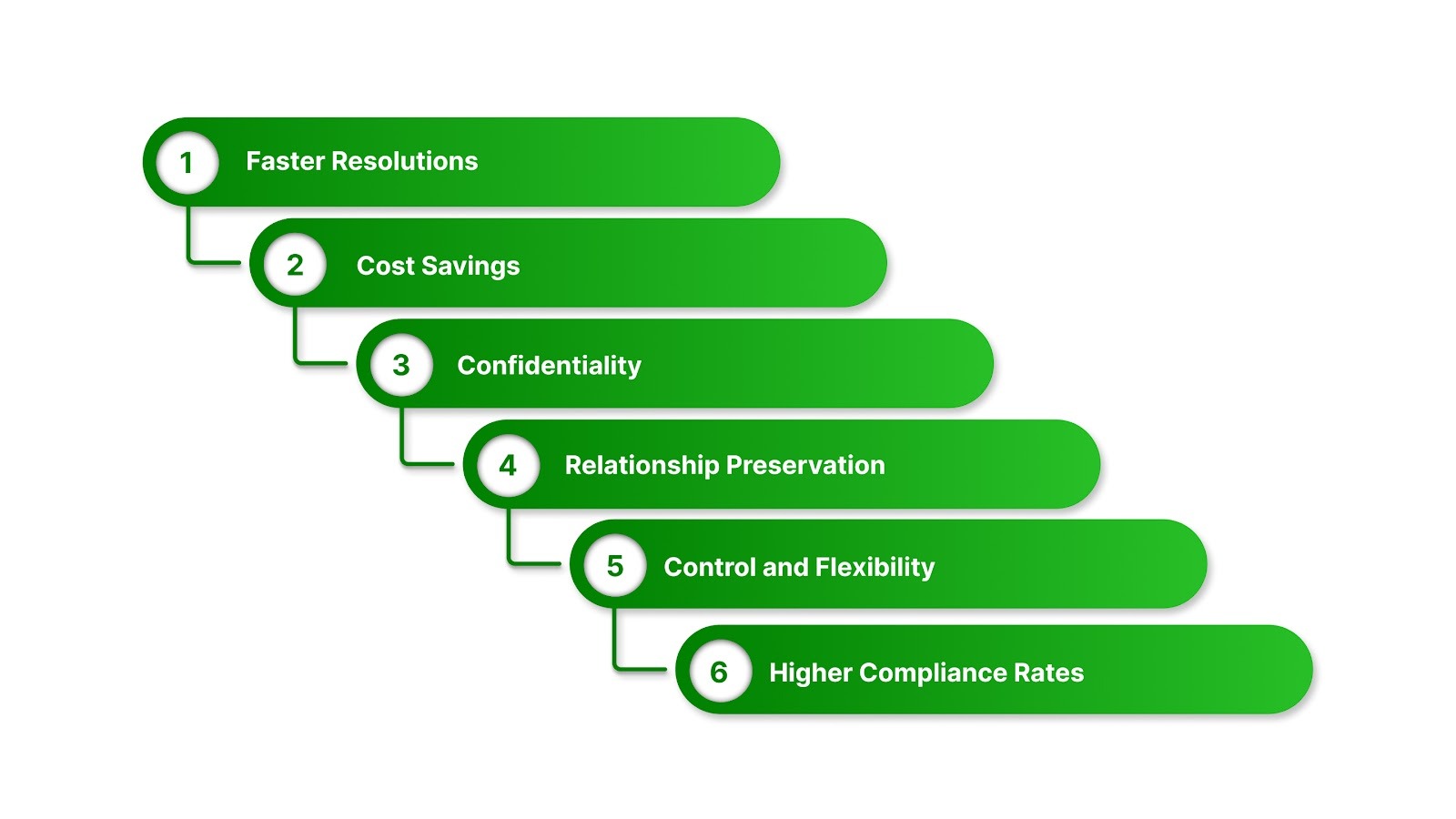
1. Faster Resolutions
ADR moves at your pace. You set meetings and timelines that work best for all involved. This flexibility means you recover payments faster, maintain cash flow, and focus on future opportunities instead of long disputes.
2. Cost Savings
Litigation often includes multiple fees, travel, and documentation costs. ADR avoids most of these expenses. When you manage disputes through ADR, every dollar saved in legal costs adds to your overall recovery.
3. Confidentiality
Court cases are public, but ADR sessions remain private. This privacy protects your financial information and professional reputation. You handle issues discreetly and maintain credibility in your business or personal dealings.
4. Relationship Preservation
Debt disputes can damage valuable partnerships. ADR focuses on restoring communication and understanding.
Both sides work together toward a balanced solution, allowing relationships to continue even after resolution.
5. Control and Flexibility
ADR gives you control over the outcome. You and the other party can design creative, realistic repayment plans that suit both sides. Unlike court rulings, ADR solutions reflect your unique situation.
6. Higher Compliance Rates
When both parties participate in shaping the solution, they are more likely to follow it. This cooperation leads to stronger commitment and smoother implementation.
ADR gives you clarity, efficiency, and balance, everything traditional litigation struggles to deliver.
Now that you know why ADR works so well, let’s explore the key methods you can use to resolve debt disputes effectively.
Also Read: How To Pay Debt in Credit Collection Services
Core ADR Methods Used in Debt Disputes
Different situations call for different approaches. ADR offers several methods that help you resolve disputes depending on the level of complexity, relationship, and desired outcome.
1. Negotiation
Negotiation is the simplest form of ADR. It involves direct discussions between you and the other party to reach a repayment agreement. You can hold meetings, calls, or written exchanges to propose solutions.
When to Use:
- The dispute is minor or recent.
- Both sides are open to communication.
- You prefer to maintain full control over the outcome.
Advantages:
- No third party required.
- Flexible and fast.
- Builds trust through direct interaction.
Pro Tip: Prepare before discussions. Know your goals, acceptable terms, and potential compromises.
2. Mediation
Mediation introduces a neutral third party — a mediator — who guides both sides toward a voluntary agreement. The mediator does not make decisions but helps create understanding.
When to Use:
- Disputes involve emotional tension or miscommunication.
- You need structured dialogue to avoid escalation.
Advantages:
- Non-binding and flexible.
- Encourages open communication.
- Often leads to creative, win-win solutions.
Example: A business owes payments for a service but faces cash flow issues. Through mediation, both sides agree on a new timeline and avoid damaging their relationship.
Also Read: Role of Mediation in Resolving Debt Disputes
3. Arbitration
Arbitration is a structured ADR process where a neutral arbitrator reviews evidence and makes a binding decision. It’s similar to court but much faster and more flexible.
When to Use:
- You want a legally enforceable decision.
- The dispute involves complex documentation or high amounts.
Advantages:
- Quicker than court litigation.
- A final and binding decision provides closure.
- Customizable rules and timelines.
4. Conciliation
Conciliation is similar to mediation, but the conciliator takes a more active role by proposing solutions. It’s especially effective in business-to-business debt disputes.
When to Use:
- The dispute involves a misunderstanding over terms.
- Both parties trust a neutral expert’s judgment.
Advantages:
- Maintains cooperation.
- Provides expert guidance without confrontation.
- Encourages compliance through clear recommendations.
Each of these methods empowers you to manage disputes proactively, fairly, and efficiently.
Next, we’ll look at how the ADR process works step by step so that you can approach it with confidence and clarity.
Also Read: How to Recover from Debt: A Simple, Step-by-Step Guide (2025 Update)
How ADR Works: Step-by-Step Process
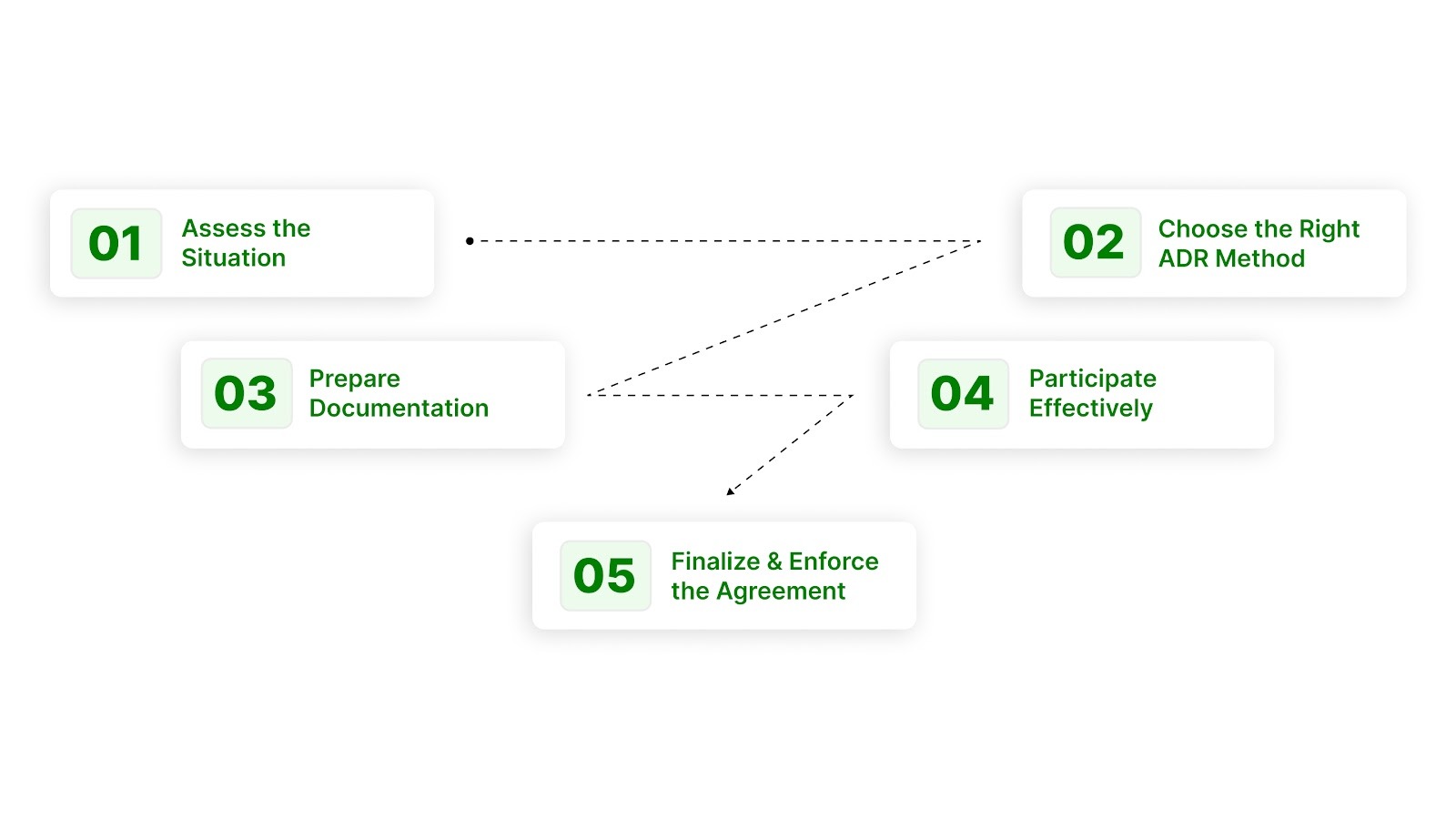
Understanding how ADR works helps you feel prepared and confident. Each step is designed to create fairness, encourage communication, and achieve a balanced outcome that works for both parties.
Step 1: Assess the Situation
Before starting ADR, take a clear look at the dispute. Ask yourself:
- What caused the disagreement?
- What outcome are you seeking?
- Is the other party willing to cooperate?
If both sides show a willingness to communicate, ADR can save time and cost. If the debt is small or involves ongoing business, ADR often delivers faster, friendlier results than litigation.
Step 2: Choose the Right ADR Method
Select the process that fits your needs:
- Negotiation for early, direct discussions.
- Mediation for guided conversations.
- Arbitration when a binding decision is needed.
- Conciliation for expert-assisted solutions.
Choosing the right method ensures the process matches your case complexity and desired level of formality.
Step 3: Prepare Documentation
Bring everything relevant to the dispute. This may include:
- Contracts or agreements.
- Payment receipts or invoices.
- Communication history, such as emails or letters.
- Any repayment offers or previous resolutions.
Organized records make your case clear and help the process move smoothly.
Step 4: Participate Effectively
During ADR sessions, stay focused on solutions instead of assigning blame. Listen actively, remain professional, and keep communication respectful.
When you explain your needs clearly, you create room for understanding and cooperation.
Tip: Be open to creative outcomes. Flexibility often leads to resolutions that satisfy both parties.
Step 5: Finalize and Enforce the Agreement
Once both sides agree, formalize the outcome in writing. This document should outline payment amounts, timelines, and any conditions discussed.
In arbitration, the decision is legally binding. In mediation or negotiation, both sides can convert the agreement into a contract for enforcement.
ADR empowers you to control the process rather than letting external forces decide the outcome. Now, let’s see how ADR compares with litigation and traditional debt collection methods.
Also Read: Financial Management Services That Strengthen Your Debt Collection Strategy
ADR vs. Litigation vs. Traditional Collections
When managing a debt dispute, choosing the right resolution method is crucial. Each approach, ADR, litigation, or traditional collections, has its advantages, but ADR often delivers the best balance of speed, cost, and cooperation.
ADR stands out for combining fairness, efficiency, and long-term relationship value. It transforms the resolution process into an opportunity for understanding instead of confrontation, helping you recover debt while protecting your professional reputation.
Next, we’ll look at common challenges you might face during ADR and the practical solutions that help you overcome them.
Common Challenges and How to Overcome Them
Alternative Dispute Resolution (ADR) simplifies debt recovery, but like any process, it comes with challenges. Understanding these helps you manage them confidently and achieve better results.
1. Reluctance to Compromise
Some parties hesitate to participate or make concessions. They might fear losing control or appearing weak.
How to Overcome It:
- Focus on shared benefits, not personal losses.
- Highlight that ADR creates balanced solutions where everyone gains something.
- Use a neutral facilitator who ensures fairness and open communication.
When participants feel heard, they become more willing to cooperate.
2. Emotional Tension
Debt disputes can trigger frustration and anxiety. These emotions can block progress if not handled calmly.
How to Overcome It:
- Keep discussions professional and respectful.
- Let mediators or conciliators manage the conversation.
- Focus on practical outcomes, such as repayment timelines or settlements.
You maintain control when you separate facts from emotions and keep attention on the resolution.
3. Complex or High-Value Disputes
Some disputes involve large sums, multiple contracts, or unclear documentation. These can slow progress or create confusion.
How to Overcome It:
- Choose structured arbitration for legally binding decisions.
- Work with professionals experienced in debt dispute resolution management.
- Prepare all supporting evidence before the process begins.
Preparation prevents surprises and strengthens your position during discussions.
4. Unclear Agreements
Sometimes, settlements fall apart because terms were vague or poorly documented.
How to Overcome It:
- Put every agreed term in writing.
- Specify payment schedules, amounts, and responsibilities.
- Request both parties to sign and acknowledge the final document.
Clear agreements eliminate misunderstandings and create accountability.
5. Enforceability Concerns
Parties sometimes worry about whether ADR outcomes can be enforced.
How to Overcome It:
- Opt for arbitration when enforceability matters most.
- Convert mediated agreements into legally binding contracts.
- Use professional facilitators familiar with compliance laws.
This ensures that your final settlement is both fair and enforceable.
Also Read: 10 Successful Debt Collection Techniques for Maximizing Success
When ADR Is Not the Right Choice?
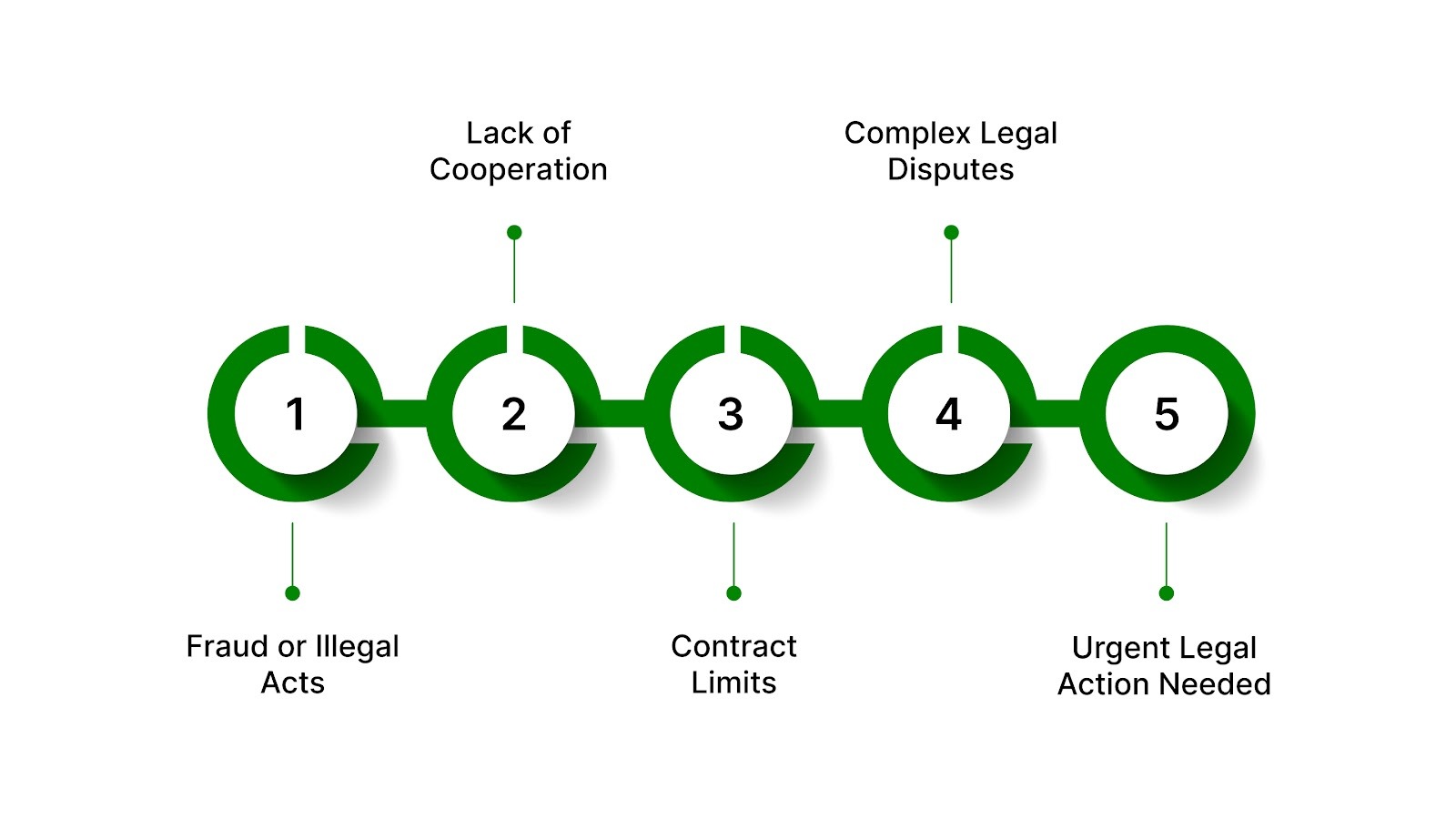
ADR is highly effective in most debt recovery cases, but not every situation fits its framework. Recognizing when ADR may not be suitable saves time and ensures you choose the best path forward.
1. Cases Involving Fraud or Criminal Behavior
When fraud, misrepresentation, or illegal actions are involved, ADR is not appropriate. These cases require formal legal action because they need official investigation and judgment.
What to Do Instead:
- Contact legal authorities or counsel for advice.
- Use evidence to build a clear legal case.
- Protect your rights through the court system.
2. Complete Lack of Cooperation
If one party refuses to communicate or ignores invitations to participate, ADR cannot function effectively. The process relies on mutual participation and transparency.
What to Do Instead:
- Send a final written notice requesting cooperation.
- Document all attempts at communication.
- Consider moving the case to formal litigation if responses remain absent.
3. Contractual Restrictions
Some agreements contain clauses requiring specific legal forums or processes. If your contract mandates court resolution, ADR may not be valid without consent from both sides.
What to Do Instead:
- Review the contract terms carefully.
- Discuss with a legal advisor before proceeding.
- Negotiate with the other party for voluntary ADR participation if possible.
4. Highly Contested or Complex Legal Matters
When disputes depend heavily on legal interpretations or precedent, ADR might not provide the clarity courts offer.
What to Do Instead:
- Seek arbitration only if both sides agree on its authority.
- For multi-party or technical disputes, consider litigation with legal representation.
5. Urgent Cases Requiring Immediate Action
If you need a court order or injunction to stop harmful activity, ADR takes too long. Legal intervention is faster for emergency cases like asset freezes or fraud prevention.
When to Reconsider ADR Later
Even if ADR is not right at the start, it can still play a role later. For example:
- After an initial court judgment, ADR can help finalize payment terms.
- During enforcement, mediation can smooth communication and compliance.
How The Forest Hill Management Help You Resolve Debt Disputes?
When debt disputes feel complicated, The Forest Hill Management makes the process clear, fair, and efficient. The team helps you recover outstanding payments while maintaining trust and professionalism.
You gain access to:
- Personalized financial guidance to understand your options and choose the right dispute resolution approach.
- Structured repayment plans designed to match your budget and priorities.
- Secure online payment tools for fast, transparent transactions.
- Supportive advisors who communicate with empathy and clarity throughout every step.
If you want to resolve debt challenges smoothly and professionally, The Forest Hill Management gives you the expertise and structure to reach a fair solution that restores confidence and peace of mind.
Conclusion
Debt recovery does not have to be complicated or adversarial. Alternative Dispute Resolution (ADR) offers a balanced, efficient, and respectful way to settle disputes while maintaining financial and professional integrity.
By focusing on communication and cooperation, ADR helps you resolve issues faster, save costs, and preserve valuable relationships. It replaces stress with structure and turns conflict into opportunity.
With expert guidance from The Forest Hill Management, you gain clarity, confidence, and practical solutions tailored to your needs. Their personalized support ensures that every discussion stays productive and fair, helping you resolve with dignity and control.
If you are ready to manage debt disputes more effectively and move toward financial balance, the right time to act is now.
Contact Forest Hill Management today to start your journey toward a smoother, smarter, and more cooperative path to debt recovery.
FAQs
1. What is ADR in debt recovery?
It’s a fair process to settle payment disputes without court involvement, saving you time and legal costs.
2. Is ADR legally enforceable?
Yes. Arbitration results are binding, and mediation agreements can be converted into contracts.
3. How long does ADR take?
Most cases close within weeks, depending on cooperation and complexity.
4. Why choose ADR over litigation?
ADR is faster, private, and more cost-effective. It helps preserve relationships while achieving practical repayment outcomes.
5. How can Forest Hill Management help?
Forest Hill Management provides structured guidance, flexible payment plans, and expert support to make debt resolution stress-free and fair.