-p-500%20(1).png)
Portfolio Analysis and Resource Optimization Guide
Need Help Reviewing Your Account?
Contact UsFinancial obligations rarely become complicated overnight. More often, they build gradually. When many accounts reach this stage at the same time, financial institutions often review them collectively using portfolio management analysis to understand what is happening and how accounts should be managed responsibly.
This process has become increasingly important as consumer debt continues to grow. In the United States, total household debt reached about $18.8 trillion by the end of 2025, according to the Federal Reserve Bank of New York. At the same time, around 4.5% of that debt is now in some stage of delinquency, meaning millions of accounts are behind on payments and require structured management.
For individuals, these numbers highlight something important: financial challenges are not uncommon. What matters most is having a clear process that helps you understand your account, review your options, and move toward resolution with confidence.
In this blog, you will learn what portfolio management analysis means, how portfolio analysis and resource optimization work, and how structured account management can help you navigate the process with greater clarity.
Key Takeaways
- Portfolio management analysis helps review groups of accounts together to identify patterns in payment behavior, account status, and repayment timelines.
- Analyzing accounts as a portfolio helps create structured communication, clearer documentation, and more consistent account management practices.
- Portfolio analysis supports responsible resource allocation by organizing account data and prioritizing follow-up based on account history and repayment activity.
- Structured account management improves transparency by ensuring balances, payment records, and communication history remain accurate and organized.
- Consumers benefit from clearer information, secure payment options, and manageable repayment pathways when accounts are handled through structured portfolio oversight.
What Is Portfolio Management Analysis?
When large numbers of accounts are managed, they cannot review each one in isolation. Instead, they often analyze groups of accounts together to understand patterns, risks, and repayment activity. This process is known as portfolio management analysis.
In simple terms, portfolio management analysis involves reviewing a collection of accounts as a portfolio to determine how they should be tracked, communicated about, and managed. By examining accounts collectively, you can identify trends in payment behavior, delinquency timelines, and account status.
Several factors are typically reviewed during this process:
- Account payment history: Reviewing past payment activity helps understand whether an account has a history of consistent payments, recent disruptions, or long-standing delinquency. This context helps guide how communication and repayment discussions should proceed.
- Account balance and aging: Accounts are often categorized based on balance size and how long they have been overdue. This helps determine the account's stage and identify what type of follow-up or support may be appropriate.
- Repayment patterns across similar accounts: Examining trends across many accounts helps us identify how accounts are resolved. These insights help guide structured communication and repayment options.
- Documentation and account verification records: Maintaining clear records helps confirm account details, ownership, and balances. This documentation supports transparency and ensures that information shared with consumers is accurate.
Analyzing accounts as part of a portfolio allows you to manage information more clearly and apply consistent account management practices.
Also read: What Is Portfolio Analysis? How It Helps You Understand and Manage Your Debt
Once the concept is clear, the next step is understanding how this analysis is carried out in practice and what elements are typically reviewed when accounts are evaluated as part of a portfolio.
How Portfolio Management Analysis Works?
Portfolio management analysis is a structured process that helps understand how groups of accounts behave, what risks exist, and how resources should be allocated to manage those accounts responsibly. When applied to receivables and past-due accounts, this analysis helps create a clearer framework for communication, documentation, and repayment pathways.
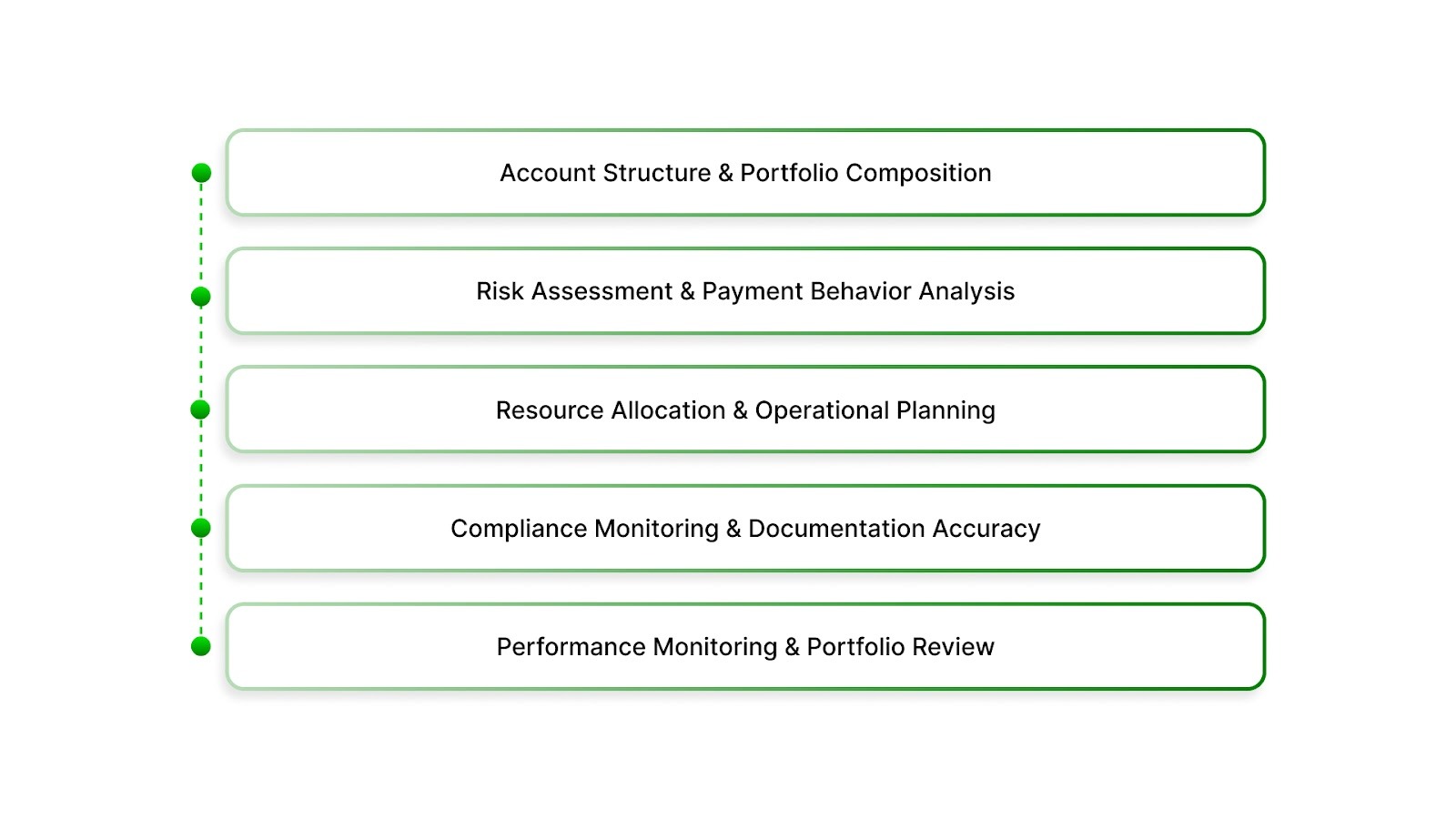
Several core elements form the foundation of effective portfolio management analysis. Here are a few:
Account Structure and Portfolio Composition
The first step in portfolio analysis is understanding how accounts within a portfolio are structured. A portfolio may contain accounts with different balances, repayment timelines, and delinquency stages. Reviewing the overall structure helps understand how these accounts relate to one another and how they should be managed collectively.
- Account balance distribution: Accounts are reviewed to understand how balances are spread across the portfolio. Some accounts may involve smaller balances that can be resolved quickly, while others may require longer repayment timelines.
- Account aging patterns: Accounts are categorized based on how long they have been overdue. This helps identify whether accounts are newly delinquent or have been outstanding for a longer period.
- Portfolio composition overview: Understanding the mix of accounts within a portfolio allows for organizing communication strategies and servicing priorities more effectively.
Analyzing the portfolio structure creates a foundation for responsible account oversight and helps ensure accounts are managed consistently.
Risk Assessment and Payment Behavior Analysis
Another critical aspect of portfolio management analysis involves evaluating payment behavior and potential repayment risks. Patterns are reviewed across multiple accounts to better understand how payment activity changes over time.
- Historical payment activity: Reviewing previous payments helps identify whether accounts had a consistent repayment history before becoming overdue. This context helps guide repayment discussions.
- Delinquency trends: Studying patterns across the portfolio allows us to see whether certain groups of accounts are experiencing similar challenges.
- Repayment probability indicators: Payment behavior, account age, and previous communication history can provide insights into how accounts may be resolved.
Evaluating these factors helps prioritize communication and provide repayment pathways that align with each account’s situation. Portfolio analysis is often used to assess the structure and risk exposure of debt obligations, helping identify potential vulnerabilities and plan management strategies accordingly.
Resource Allocation and Operational Planning
Managing large portfolios requires careful use of operational resources. Portfolio analysis helps determine how communication efforts, support teams, and technological systems should be allocated.
- Prioritizing account review efforts: Individuals can use portfolio insights to determine which accounts require follow-up communication or documentation verification.
- Segmenting accounts for management purposes: Accounts may be grouped based on shared characteristics such as balance size, repayment activity, or account status.
- Supporting operational efficiency: By organizing accounts into manageable segments, teams can maintain consistent servicing practices and improve response times.
This structured approach helps manage large portfolios without creating unnecessary pressure or confusion for consumers.
Compliance Monitoring and Documentation Accuracy
Portfolio analysis also supports regulatory compliance and documentation accuracy. Because debt management involves strict consumer protection requirements, maintaining accurate records and consistent communication practices is essential.
- Account verification records: Documentation helps confirm account details, balances, and creditor information so consumers receive accurate information.
- Communication tracking: Maintaining records of communication ensures that contact practices follow regulatory guidelines and remain transparent.
- Data accuracy and reporting oversight: Accurate reporting helps prevent discrepancies and ensures account information remains consistent across servicing systems.
These practices are especially important because managing financial accounts requires balancing operational goals with regulatory responsibilities and consumer protections. Portfolio management practices generally focus on evaluating risks, allocating resources efficiently, and maintaining organized oversight of financial assets.
Performance Monitoring and Ongoing Portfolio Review
Portfolio management analysis is not a one-time process. Accounts change over time as payments are made, balances are updated, or repayment plans are established. Regular portfolio reviews tracks progress and adjust strategies when necessary.
- Tracking repayment outcomes: Monitoring how accounts are resolved helps understand which repayment approaches are most effective.
- Reviewing portfolio trends over time: Regular analysis reveals how payment patterns evolve across the portfolio.
- Improving account management practices: Insights gained from ongoing reviews help refine communication strategies and maintain consistent servicing practices.
Continuous portfolio monitoring maintains organized oversight while supporting clearer communication and structured repayment pathways for consumers.
Also read: Steps to Achieve Financial Stability
After accounts are analyzed and organized within a portfolio, the insights gathered from that analysis help guide how resources are used more effectively.
How Portfolio Analysis Helps Optimize Resources
When your account becomes part of a larger portfolio, it may feel like it is simply one among many. Instead of treating every account the same, this process helps account managers organize their time, communication, and support efforts in a way that makes the process more manageable for you.
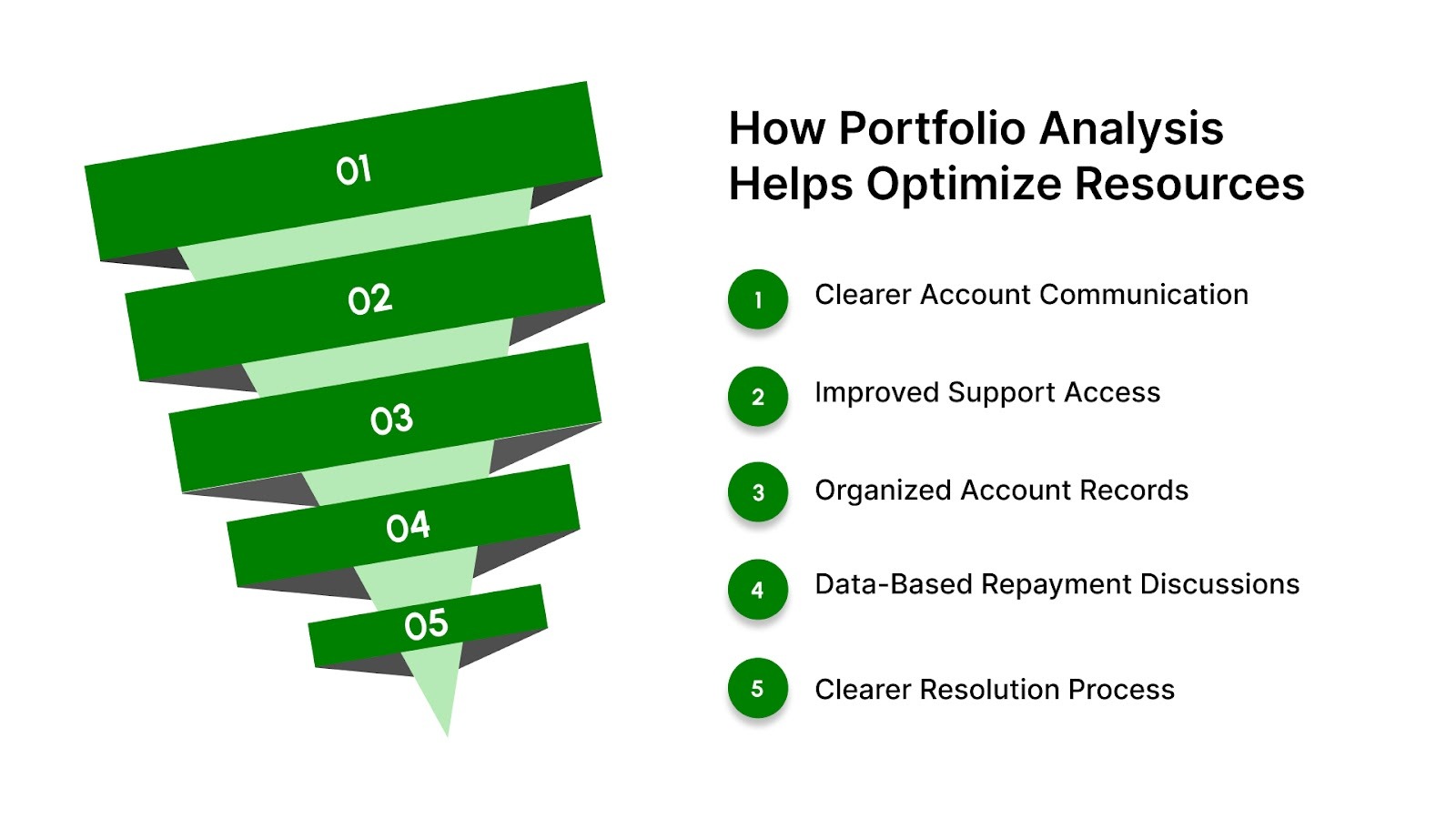
Resource optimization in portfolio analysis is ultimately about making sure information is handled clearly, communication remains organized, and repayment discussions are structured in a realistic way.
Here are several ways this process can help create a more predictable and transparent experience for you.
- Clearer communication about your account: When accounts are analyzed as part of a portfolio, account managers can maintain structured communication timelines rather than contacting individuals randomly. This helps ensure that when you receive communication, it contains accurate information about your balance, payment history, and available options.
- Better use of support resources: Portfolio analysis helps ensure that customer support teams and account representatives are available to respond to questions and explain account details. This means when you reach out for clarification, there are systems in place that allow representatives to access your account information and provide accurate guidance.
- More organized account information: Portfolio management systems keep account balances, payment activity, and communication records organized in one place. For you, this means fewer discrepancies and clearer answers when you review your account or request documentation.
- Repayment discussions based on real account history: Analyzing account data helps account managers understand your payment history and current balance more accurately. This context can make repayment discussions more practical because they are based on the actual timeline and circumstances of your account.
- Reduced confusion during the resolution process: When portfolio analysis is used effectively, account information is documented and reviewed consistently. This reduces the likelihood of conflicting details about balances, payment records, or account status, helping you move through the resolution process with greater clarity.
In simple terms, portfolio analysis helps create structure behind the scenes so that your experience managing an outstanding account feels more organized and transparent.
While these internal processes help organize account oversight, their most important impact is the clarity they create for individuals who are trying to understand and resolve their accounts.
How Structured Account Management Brings Clarity
When you are dealing with a past-due account, confusion often comes from scattered information, unclear communication, or uncertainty about what step comes next. Structured account management is designed to reduce that uncertainty by organizing how your account is tracked, communicated about, and resolved.
Several practices help bring this clarity to the process:
- Clear visibility into your account details: Structured account management ensures your balance, payment history, and account activity are documented consistently. This allows you to review accurate information about your account rather than relying on incomplete or conflicting details.
- Secure handling of your personal information: Your personal and financial information is protected through secure systems and privacy safeguards. These protections help ensure your account details are shared only with authorized parties involved in managing the account.
- Clear documentation of payments and agreements: When payments are made or repayment arrangements are discussed, structured records help confirm the terms and progress of your account. This documentation provides reassurance that your payments are properly recorded and your efforts toward resolution are recognized.
- Defined steps toward resolving your balance: Structured account management focuses on creating a clear pathway forward. Whether you are reviewing your account, exploring repayment options, or confirming payment activity, each step is organized so you know what to expect next.
When your account is managed through an organized and transparent process, it becomes easier to understand your situation and make informed decisions.
Conclusion
When you are dealing with a past-due account or financial uncertainty, what often creates the most stress is not the balance itself but the lack of clarity about what comes next. Portfolio management analysis helps bring order to that situation by organizing how accounts are reviewed, communicated about, and managed over time.
If your account is being managed by The Forest Hill Management, the focus is on helping you understand your situation and move forward with confidence. Through structured account oversight, secure online payment options, and flexible repayment discussions, the process is designed to give you clear information and practical steps toward resolving your balance.
FAQs
1. Does portfolio management analysis affect how often I am contacted about my account?
Portfolio analysis helps establish structured communication timelines so that outreach follows clear guidelines rather than occurring randomly or excessively.
2. Can I request a breakdown of the balance on my account?
Yes. You have the right to request documentation explaining the balance, including the original amount, payments made, and any permitted adjustments.
3. What should I do if the information on my account looks incorrect?
If something appears inaccurate, you can request clarification or supporting documentation before making any decisions about repayment.
4. How can I keep track of my payments during the resolution process?
Maintaining your own records, such as payment confirmations and account statements, can help you monitor progress and ensure payments are properly reflected.
5. Can repayment arrangements change if my financial situation improves or becomes more difficult?
In many cases, repayment discussions can be revisited if your financial circumstances change, allowing adjustments that better reflect your situation.